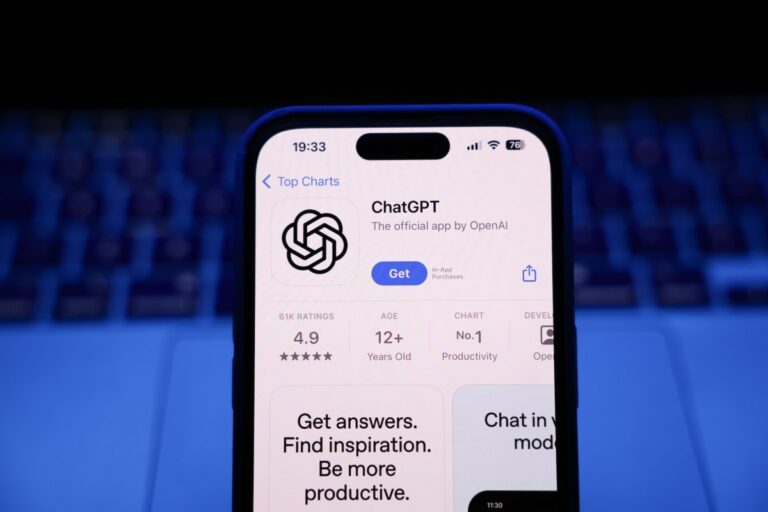
OpenAI has made its Decisions API model widely available, entering the fast, cheap intelligence market that recently turned TypeSafe into a $7.6 billion company.
TypeSafe’s Jev model created a category for deep learning systems that act as super classifiers. Given a set of options, they make choices quickly and offer a confidence rating. Software developers found these decision or System One models could replace LLMs in various workflows, operating faster and at a dramatically lower cost.
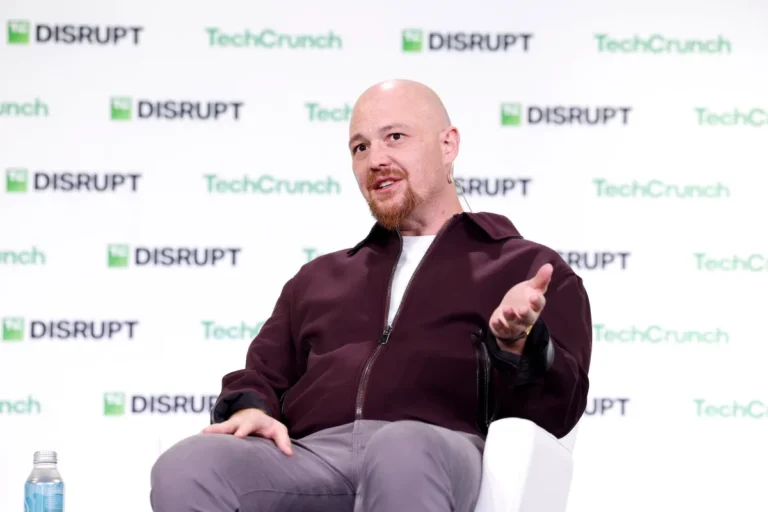
Nikunj Handa, product lead for OpenAI’s APIs, told TechCrunch that his colleagues saw Jev and said “wow, we we have like a million use cases for this.” Handa’s team sprinted to offer their own version. Rather than building a specifically calibrated decision model, the team took ChatGPT Luna and reconfigured it to speed up the inference and lower the cost.
“The big unlock with Decisions API has been the speed, shrinking things from one to three seconds to 100, 120, 180 milliseconds,” Handa said. “In the future, we may sort of like have specific training to make our models like even better in these ways. But right now, it’s just plain old Luna that gets the job done.”
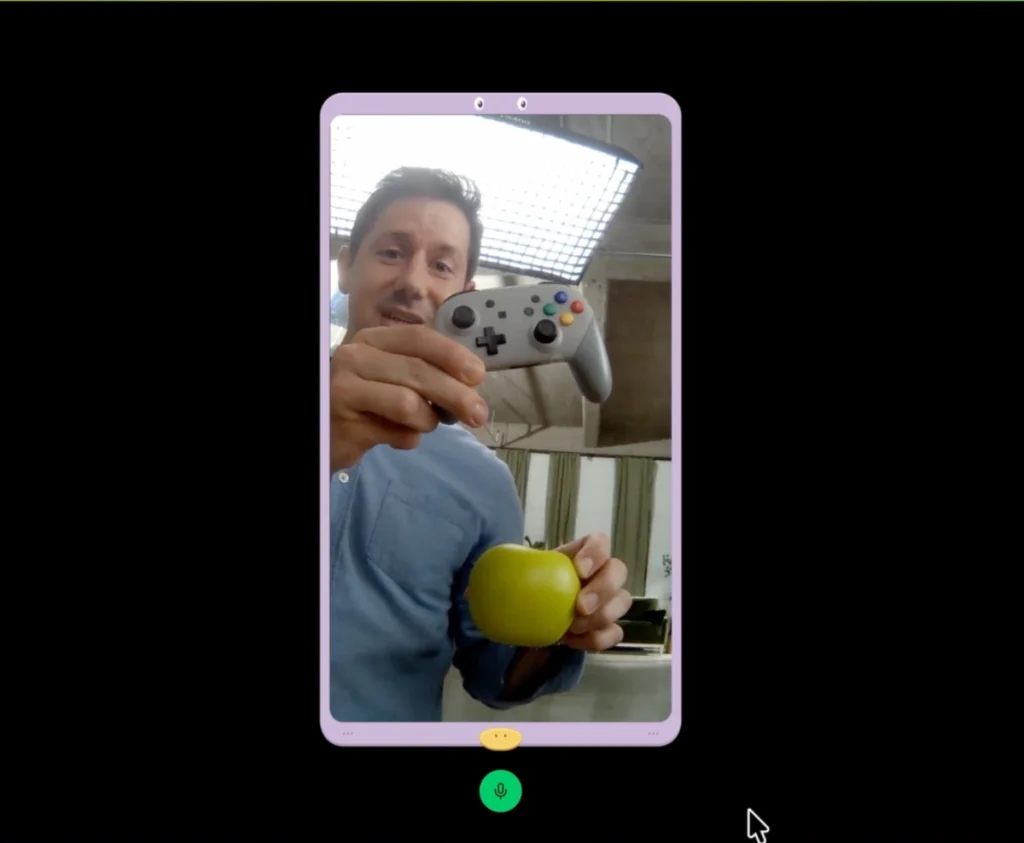
Announced at the company’s developer day on September 29, the Decisions API became available to all customers on Thursday. OpenAI added new voice and visual modalities to the public version, and worked to ensure lower latency in regions around the world by targeting its inference resources geographically.
Initial trials with customers like Box, Datadog, Ramp, and Speak saw engineers use the API to replace OpenAI’s LLMs with higher throughput. Andrew Hsu, the CTO at Speak, which builds AI language tutors, said the Decisions API allowed the company to cut the time between actions from 1.4 seconds to .13 seconds. OpenAI also used the product to improve their Dots voice assistant’s responsiveness.
Still, it is not clear exactly what makes a good decision model, other than “it works for you” — optimization across intelligence, cost, calibration, and speed seems to differ by workload. TypeSafe CEO Diogo Almeida distrusts benchmarks and urges people to trial the models in their own work, but even TypeSafe released its own rankings last week alongside the release of its latest Jev model, which includes new features including support for images and smart-if statements.
Public benchmarks like the AIM System One Index and the Artificial Analysis Decision Index tend to favor D1 Ultra, a new decision model that Liquid released last week, and Base Lab’s Elephant-1. The latest Jev model remains competitive on both indices, in seventh and third, with OpenAI’s Decision Model falling eighth and fourteenth, respectively. However, TypeSafe’s offerings are, for now, the most widely-queried on OpenRouter.
The most fun Jev benchmark, however, is JevMan, a benchmark where decision models play PacMan; the latest Jev model tops that ranking. Felix Wunderlich, the chief growth officer at Opper AI, which built the benchmark, said the classic game “is an interesting test because of its nonstop stream of quick, high-stakes decisions. At every junction the model must decide where to go in a few hundred milliseconds.”
Where OpenAI’s arguably more capable model may have an advantage is in multi-modality—for image classification, “Luna is extremely powerful and has been showing better calibrations,” Handa told TechCrunch, adding that OpenAI customers want the Decisions API to be more flexible about using images as outputs as well.
Handa also saw further increases in speed enabling new use cases: “Can we get this to something like you know 60 milliseconds, and then you could imagine like an API like call like for every single frame in like a video?”
As these offerings get faster and cheaper, we can expect them to live up to Jev’s namesake, an economist who explained how using a resource more efficiently makes it more ubiquitous. Or, as Handa sees it, there will be an expanding “crazy set of use cases” that were hiding in plain sight until the decision models revealed them.
What it means
For the people building these tools, the shift is practical. The primary change is a drop in response times from roughly three seconds to under 200 milliseconds. This speed allows applications to react in real time rather than waiting for a response. Developers can now run decision logic for every frame of a video stream or handle user inputs with near-instant feedback. The trade-off is that OpenAI is using a repurposed model for this specific task, whereas TypeSafe built a system from the ground up to handle decisions.