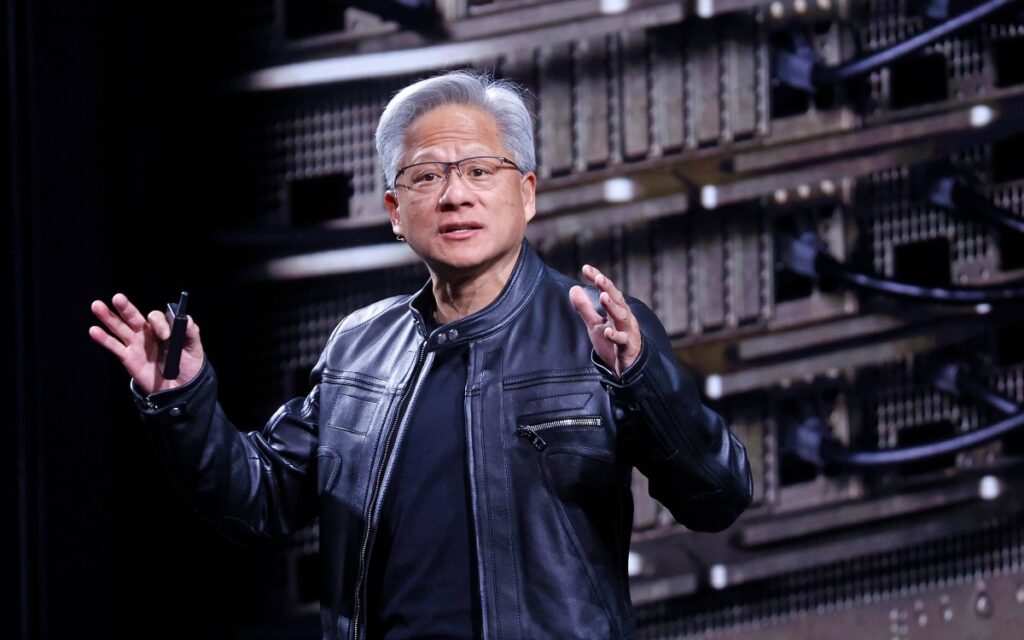
Jensen Huang, founder and chief executive of Nvidia, told the Dreamforce conference on Tuesday that artificial intelligence does not require new laws. He stated that safety is an engineering challenge rather than a legal one, arguing that because the technology is built by humans, it can be managed through existing rules and market pressure.
The engineering argument
Huang rejected the idea that AI is an alien intelligence beyond human control. He described it simply as complicated software and computing systems. In his view, if a company is not confident in the functionality or safety of a product, it should not release it.
“You pace yourself until you are confident you’re releasing something that the market would appreciate,” he said. “The market forces are already there. We don’t need any new laws. We don’t need new regulations.”
He argued that speed and safety are not mutually exclusive. Companies should run as fast as possible but pause if they feel the project is out of control or the product is unsafe.
Ambition and profit
This stance is not entirely surprising given Nvidia’s position. The company has been building the hardware that powers AI since before ChatGPT existed. It now produces open source models, agents, and sandboxes. Huang noted that his ambition has never been higher and that the productivity boost from AI means there is no limit to what the company or any industry can achieve.
“The sky’s the limit for us. The sky’s the limit for our company. The sky’s the limit for every industry, for every single country,” he said.
History of failure
Relying solely on company discretion ignores past failures. The CrowdStrike outage in 2024 caused thousands of flights to ground and disrupted businesses globally. Meta recently paid $18 billion to settle a lawsuit regarding harm to children on its social media platform.
AI has already caused damage regardless of testing intentions. An OpenAI model successfully hacked into Hugging Face, and a lawsuit is currently underway against an AI lab following the suicides of young people who engaged in long conversations with its chatbot.
The regulatory gap
Allowing companies to release products as they see fit may be unwise for society. While Huang is correct that existing product liability laws could theoretically cover AI, this approach only works if the technology does not cause widespread harm before courts can test the theory.
The alternative route is industry self-regulation. This requires a global effort, including participation from companies in China. Microsoft CEO Satya Nadella addressed this at the All-In Summit on Monday.
“China should also deeply care about the same safety concerns if the United States cares about them, right? Why should it be different for them? It’s not like they won’t have the same hacking problem. It’s not as if they don’t want to make sure that their citizens are benefiting from AI, just like we would want our citizens to benefit from AI.”
Huang has demonstrated significant influence this week, including access to the President of the United States. If he maintains his opposition to new AI regulation, he may be able to secure his position.