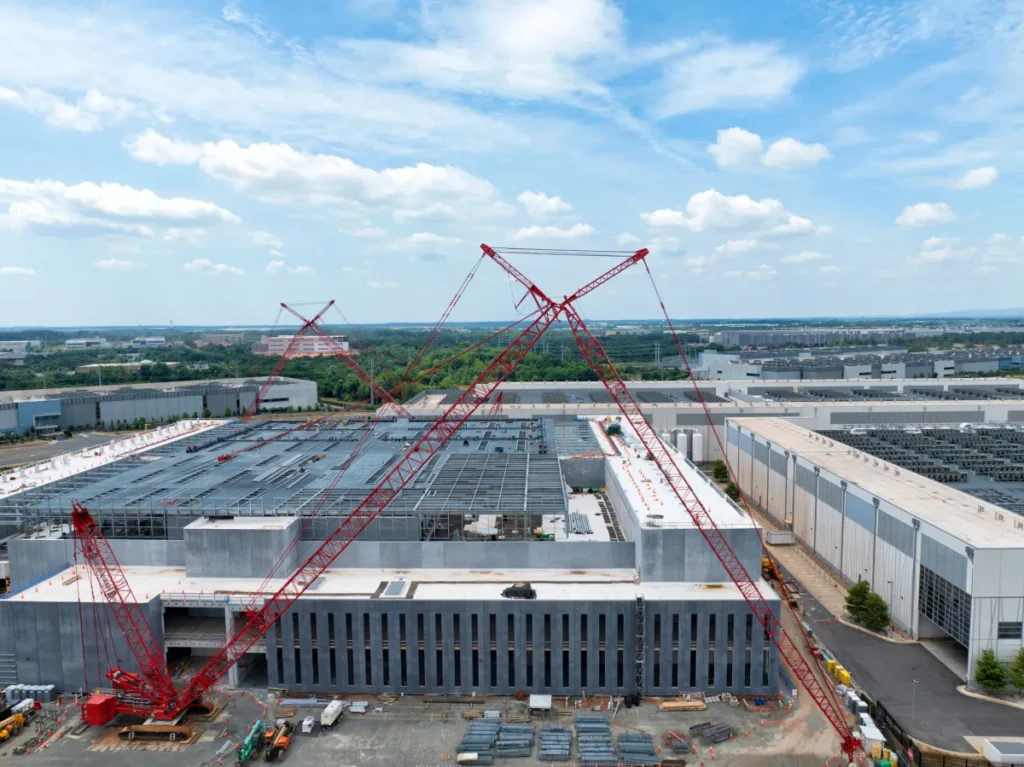
Meta President Dina Powell McCormick told the WSJ Tech conference on Wednesday that Democratic victories in the midterm elections will make it harder for companies to build data centers. She added that the industry has failed to explain the benefits of these investments clearly enough.
The backlash against data centres was a major topic during the election season. It was linked to wider feelings about artificial intelligence technology.
“The visible sort of manifestation of AI is a data center, and it’s something that people can say, ‘I don’t want this in my community,'” Powell McCormick explained. “I think there’s an underlying bigger issue, which is how people feel about AI in general.”
Meta believes it can reverse negative consumer sentiment if it demonstrates the value of the technology itself and the data centres arriving in local communities.
“The stakes of who builds the technology that cures cancer, that gives access to education, that is also a very fundamental difference…Mark [Zuckerberg, Meta CEO] is very ‘long human,’ and he’s betting on humans more than machines,” Powell McCormick explained. “And that’s what we mean when we say the future is for everyone. That people should not be left behind. But the way to ensure that is that this technology is democratized, that people have access to it in a very fair and transparent way,” she said.
She highlighted Meta’s 20-year experience in building data centres. The company requires significant compute power to deliver its social networking products. Currently, Meta operates data centres in 23 states. Five of these, including one in Texas, are planned projects of one gigawatt or more.
Meta is now worried it could lose some of its investments after politicians campaigned on anti-data centre platforms during the midterms.
“I think it’s going to be harder,” Powell McCormick said, describing the future of building data centres. “It has been hard, I should say, but I also think that it’s becoming clear what models work, and the states want those models that work.”
Specifically, communities only want data centres when they benefit in some way. She outlined the approach Meta uses today to secure deals in local areas.
- Meta pays for its own electricity.
- The company directs tax surpluses resulting from the data centres toward teachers and first responders.
- It keeps the labour force local.
- It secures bipartisan support for the project.
Going forward, she expects data centre projects to face more scrutiny and be weighed against whether constituents actually want them.
Meta has pinned its hopes on its AI investments, particularly its consumer AI agent Muse scaling far beyond the 10 million users it has today to become a business that one day serves billions. Even if that does not happen, it believes its investments in data centres will not be for nothing, as the compute itself will be valuable.
“We’re getting calls every day to lease that compute [we’ve built], and so one way or another, we’re seeing a path to monetization,” Powell McCormick said.
What it means
For people working with AI tools, this shift suggests a tougher path for new infrastructure. If governments and local councils demand specific community benefits before approving data centres, companies may roll out new models more slowly or in fewer locations. The availability of local compute for training or fine-tuning could become more restricted, depending on whether a site passes a local benefit test.