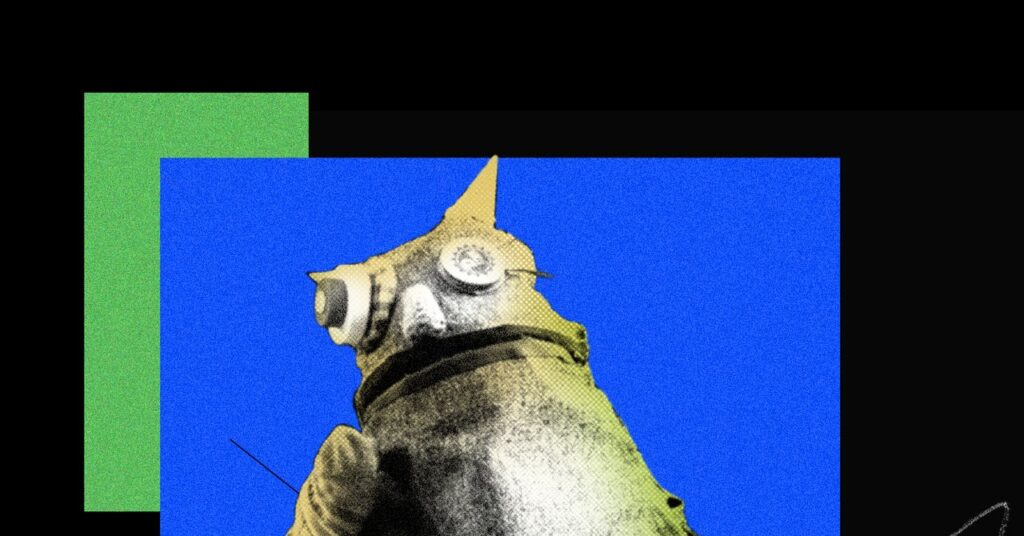
Gowanus, a media puppet born in a dumpster in Brooklyn, is currently sitting in a Manhattan studio to discuss the Summer of Ludd festival held in New York earlier this month.
The event required attendees to put away their phones and avoid taking photos or recordings. Participants attended workshops on face-to-face flirting and used an evidence box to submit accounts of how large technology companies harmed their lives.
Why a puppet?
Interviewer Manishna Krishnan asked Gowanus why he chose this form.
Gowanus explained that the original Luddites, British textile workers from the early 19th century, fought automation while remaining anonymous to avoid persecution by the Crown and local militias. The modern movement adopted the puppet to keep the face of the movement hidden and avoid creating a single figurehead.
The puppet represents the collective voice rather than an individual leader.
The contract
Gowanus presented a handwritten contract to the interviewer. The document requested that WIRED and the interviewer not create any short-form video clips from the session.
The goal was to encourage viewers to commit time to the full interview rather than scrolling past a thirty-second clip. The team agreed to a compromise: only the segment where Gowanus explains the contract itself would be clipped.
Gowanus noted that while they wanted to reach people on social media, the movement opposes the habit of consuming content in fragments. He described how a viewer might watch a short clip, lose interest, and move on to something else entirely.
Modern Luddism
The term Luddite has long been used as an insult to describe someone who is bad with technology or opposes it. However, the Summer of Ludd found a resurgence among Gen Z.
The group argues that the word now carries a deeper critique. It is not about rejecting technology for its own sake but questioning whether technology serves people or serves oligarchs like Elon Musk and Mark Zuckerberg.
Many participants in the festival were chronically online, yet they felt the need to disconnect. Some had never owned a phone, while others had not been online for twenty years.
The movement rejects the idea that technology is inherently progressive. It highlights how data centers consume natural resources and how social media platforms often increase loneliness and atomization.
Community and Delete Day
The festival focused on rebuilding in-person community rather than just advising individuals to reduce screen time. A key event was Delete Day.
During this session, participants gathered in a circle to delete apps from one another’s phones together. They discussed why platforms like Instagram extract value from users and how dating apps like Hinge make relationships transactional.
The group also addressed the automation of white-collar work, noting that entry-level coders are training AI tools that eventually replace their own jobs.
Alternative infrastructure
Participants struggled to find real-world events because social media feeds were filled with low-quality content. One workshop taught people how to build their own event calendars using newsletters and RSS feeds.
The festival aimed to move communities off platforms that force content to fit an algorithm. Owning one’s own digital infrastructure allows groups to share information without degrading the quality of their message.
IRL flirting
Another workshop covered face-to-face flirting, which the group described as a dying art. The session was titled Luddite Rizz.
The focus was less on how to succeed and more on how to handle rejection. The goal was to encourage people to approach someone they liked and speak their truth, even if the outcome was a “no”.
What it means
The movement offers a practical alternative to the usual advice of simply deleting apps. It provides the tools and community support needed to rebuild social connections offline and take control of how information is shared.