For the makers and artists building the future of production, the dream of the “generalist” factory robot is finally moving from science fiction to a funded reality. While humanoids remain too clumsy for the shop floor, manufacturers facing acute labour shortages are hungry for automation that doesn’t require retraining for every new product line.
The end of the single-task robot
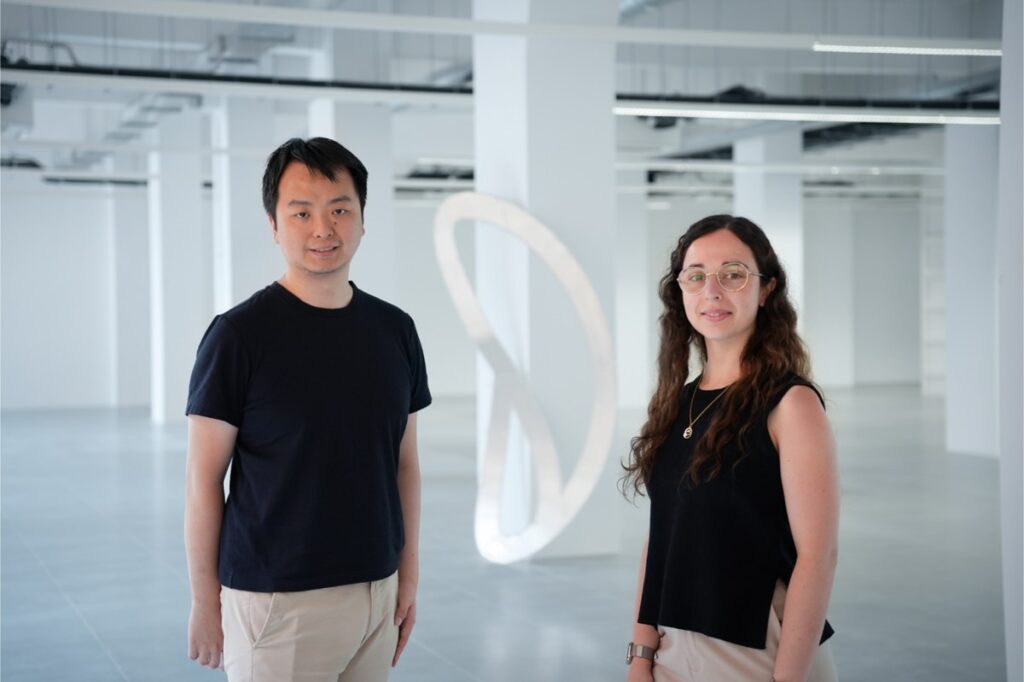
Theker is betting that the industry’s next leap isn’t about making robots stronger, but making them more flexible. Co-founder Carla Gómez Cano argues that rigid automation works only for repetitive loops, like placing a specific cookie in a specific box. Most real-world manufacturing is chaotic and variable.
Unlike the fixed-form machines developed by giants like Boston Dynamics, Theker’s hardware is designed to be reconfigured. The arms, hands, and even the chassis can be swapped or resized on the fly. This allows a single unit to handle diverse tasks, from sorting parcels to packing garments or managing heavy bottles and cans in a warehouse.
From retail to heavy industry
The fact that Inditex, the parent company of Zara, signed on as an early backer signals the company’s immediate foothold in retail, but the ambition extends further. The goal is to conquer heavier industrial environments where the complexity and scale of manual labour are significantly greater.
Europe’s largest Series A
This generalist approach has vaulted the Barcelona-based startup into the spotlight as one of Europe’s most watched robotics firms. They have just secured $85 million in what they are calling “Europe’s largest ever robotics Series A,” a claim we have verified against our records.
Arriving less than a year after a record-breaking seed round, this funding was led by American venture capital firm CRV. The round was bolstered by a mix of traditional and strategic investors, including Samsung and Aglaé Ventures, the investment arm linked to LVMH chairman Bernard Arnault.
Gómez Cano clarified that Samsung is not yet a client, though advanced discussions are underway. Theker would love to secure a position where Samsung acts as a customer, supplier, and investor simultaneously. Such a trifecta would provide the startup with immediate revenue and the credibility needed to scale manufacturing operations.
Skipping the pilot phase
The founders are keen to note that Theker was not built to run endless proof-of-concept pilots. Instead, the team bypasses innovation departments entirely, going straight to logistics and operations where deals are concrete and timelines are short.
To prove delivery capability, the company maintains a showroom in central Barcelona, with plans to open similar facilities as it expands across Europe, the U.S., and Asia. The team is also ramping up headcount across technology, deployment, and sales functions.
“We already received 15,000 job applications and have to filter like crazy,” Gómez Cano admitted. She estimated the workforce could grow from its current dozens to up to 120 people by year-end. She then paused, noting the irony: “I am saying that, but I also said that we’d raise $30 or $40 million!”
Successfully raising twice their target reinforces the conviction to keep their headquarters in Barcelona. The city is emerging as a growing robotics hub, and the founders believe Europe’s tech ecosystem is an asset, not a barrier, to their acceleration.
Key takeaways
- Theker’s $85 million Series A marks a significant milestone for European robotics, validating the shift toward reconfigurable, general-purpose factory hardware.
- By focusing on operational deployment rather than pilot programs, the startup aims to solve the real-world labour shortage by replacing rigid automation with adaptable systems.
- Strategic backing from Inditex and discussions with Samsung suggest a potential roadmap for scaling from retail logistics to heavy industrial manufacturing.