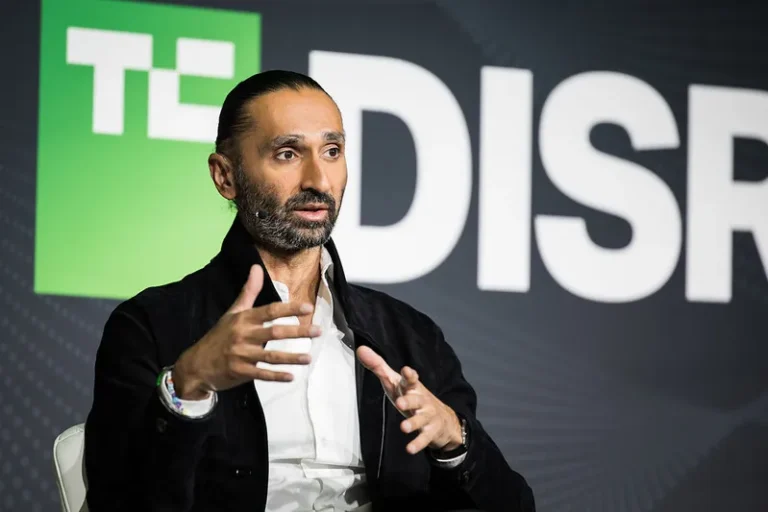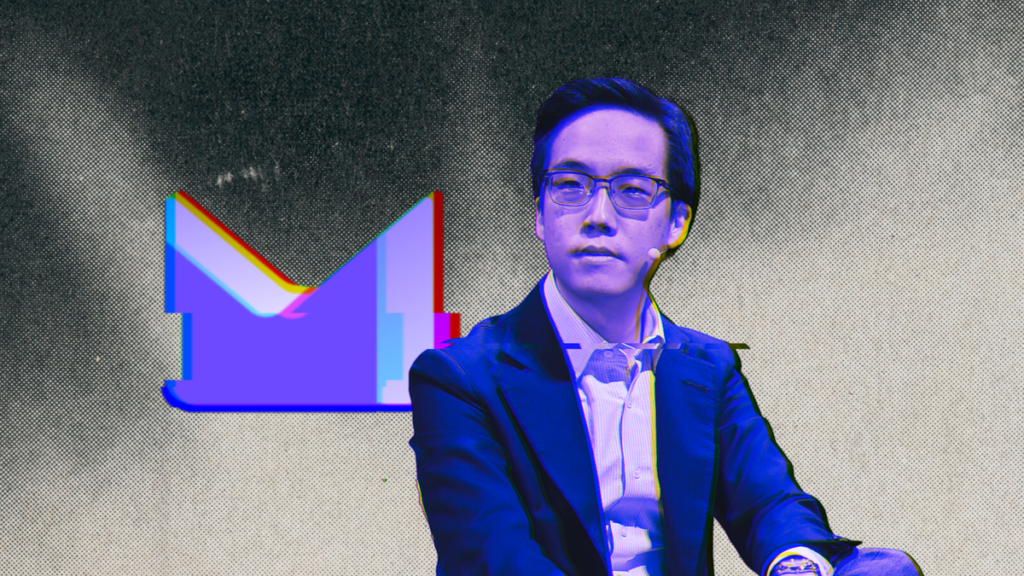
Andy Yen, CEO of Proton, told an employee in the company security Slack channel that taking time to pentest new code before deployment was “bullshit and loser thinking.” In late August, Yen argued it is possible to be both fast and secure, asking staff to stop trying to slow down and instead focus on speed. A follow-up message reinforced this view, stating that “only losers think like that,” before telling the team to stop handcrafting code and use AI more.
That exchange was part of a wider push by Yen and other executives to drive Proton toward artificial intelligence. The Swiss firm is known for Proton Mail, an encrypted email service, along with a suite of privacy-focused tools including an encrypted drive, an authenticator app, and a password manager.
Over the last few months, Yen created an email address for staff to report anything blocking AI adoption, enabling leadership to “ruthlessly smash everything that stands in the way of AI velocity.” The company installed software on workers’ computers to track AI code generation. Yen stated this would be the final year for hiring engineers, with future staff instead hired to build things using AI.
Recent reporting by 404 Media indicated Proton would re-interview staff regarding their use of AI, suggesting employment status could depend on how willing employees were to embrace the technology. Interviews with eight current employees and one former staff member, alongside reviews of Slack chats and meeting recordings, reveal a culture of fear. Many workers hesitate to critique Yen’s views or discuss engineering problems due to concerns about being berated publicly or facing dismissal.
One source described the situation to 404 Media by saying the CEO is in full AI psychosis. The reporting suggests a reality inside the company that contrasts with the public image of a firm dedicated to protecting privacy. An internal document obtained by 404 Media noted the company is not on track to meet its annual recurring revenue target due to insufficient velocity. Another document stated year-over-year growth is “far away from what the market today considers to be good,” adding that by all metrics, the company is underperforming.
A Proton spokesperson did not dispute the reporting or characterisation of events inside the firm. They said it is clear some people are unhappy with the direction or misunderstand it, and many are anxious. The spokesperson noted that in the determination to move fast, the company has sometimes been too blunt or slow in explaining itself, but promised to work on that.
Internal culture and public persona
Yen, a former CERN particle physicist, projects a measured approach publicly but acts differently internally. One employee described him as a “petulant child.” In May, Proton announced the implementation of post-quantum cryptography to protect against future attacks from quantum computers. The work took years, with a caveat that it would not protect older emails, only those written after the feature launched.
Yen was unhappy with the limitations. In a Slack channel dedicated to thanking staff, he wrote “Get it fixed,” referring to the announcement. He added, “Now Reddit is pissed and we look worse than Tuta,” comparing Proton to a competitor. When employees explained the nuances of the encryption and why immediate implementation was not possible, Yen wrote, “I find this whole thing stupid. You cannot announce this in this way.”
He presented the situation as two options: deprioritise more important tasks to re-encrypt old emails, or constantly get attacked online for not doing so. He asked staff to enlighten him on which choice to take. Yen added that in the future there are two options: either the team is confident enough not to fuck it up, or they follow his advice to ensure it is not fucked up. He then instructed a team member to go on Reddit with their personal account to comment and set the record straight.
He wrote, “Perception is more important than truth, the truth doesn’t matter if you don’t win on perception.”
One employee told 404 Media that whatever persona Yen has outside Proton, he is a straight up bully inside. The employee said he routinely breaks his little facade in Slack and calls people losers and stupid, often for work they are paid to do.
The AI push
Since launching Proton Mail in 2014 following the Snowden revelations, the company has steadily introduced new products, making Proton more of a worksuite than a simple email provider. More recently, those products focused on AI. In June, Proton launched version 2.0 of Lumo, a large language model chatbot the company says does not log conversations or train on user data.
Up until recently, Yen’s public comments on AI were relatively tame. In an August interview with WIRED, he said Proton is building AI features and tools because if privacy companies do not find a way to step in to build privacy-first AI, they are essentially ceding the future to tech companies that do not have the best interests of users at heart. He said the company was capitalising on the backlash to corporatized, invasive AI from companies like Google. Last year, Yen and Proton faced criticism for statements suggesting the Republican Party and Donald Trump would be harder on Big Tech than Democrats.
Toward the end of August, Yen’s internal tone on AI shifted to urging Proton to use it as much as possible and as quickly as possible. In a message to the security Slack channel, he wrote, “The train is coming, get onboard or get crushed. Don’t be the professional fax machine operator in the internet age.”
He predicted that by the end of the year most developers would stop programming and start writing specs for tests that AI would code and run. He added that this would be the last year they hire engineers, and starting next year they would hire what they used to call product managers to build things with AI.
AI is changing how cybersecurity works, with AI agents hacking into companies and assisting in the discovery of gaping vulnerabilities in important code. Many companies across the privacy and security space are grappling with how to deal with AI, either in product development or in defence against hackers. Some do this carefully. Others try to do it as quickly as possible for profit. This account of Proton’s own reckoning with AI provides an unprecedented insight into what is happening inside one security-focused company users especially trust.
Initially, using AI was banned inside Proton, but the company has since approved AI for all sorts of use cases internally. This includes processing financial data, drafting customer-facing responses on Reddit and LinkedIn, and writing code. An internal Proton document seen by 404 Media stated this applies “except when that source code contains information that would give immediate advantage to a competitor” or is related to “innovation or R&D [research and development].” In October, 90% of code at Proton was written by AI, the company’s CTO Bart Butler said in a meeting. Much of that code is written with Anthropic’s Claude, multiple employees told 404 Media. Yen tells employees in Slack chats to use Claude, too.
One employee told 404 Media, “We are a tech company against Big Tech who are spending loads on Claude.”
In the conversation about “bullshit and loser thinking,” another employee pushed Yen for specifics on ensuring AI-generated code was free of security issues. The engineer said, “AI won’t magically solve our problems, because security is low in our prioritization at present.” Yen did not respond directly and went on to insult one of the other employees in front of the entire channel. He wrote, “I’m saying only losers think like that,” adding that workers should prompt better. He noted, “You have the models and the time every developer should be doing this and checking their code which they were doing before manually but now they can do faster with AI.”
The second clear signal that Proton was going deep into AI for many employees happened when Butler, the CTO, published a self-described AI manifesto one Friday afternoon last month. “Your old job is gone,” the manifesto, posted to Slack, told engineers. It laid out a future for Proton that fully embraced AI and said if the company did not do so, that posed an “existential threat to the success of the mission itself.”
Butler said Proton needs to change in three key ways: accept that an engineer’s job is now to help LLMs write better code faster; get to the point where most code is not reviewed by humans but by AI; and more fundamentally change the company as a whole, and “commit, as an organization, to the” transformation.