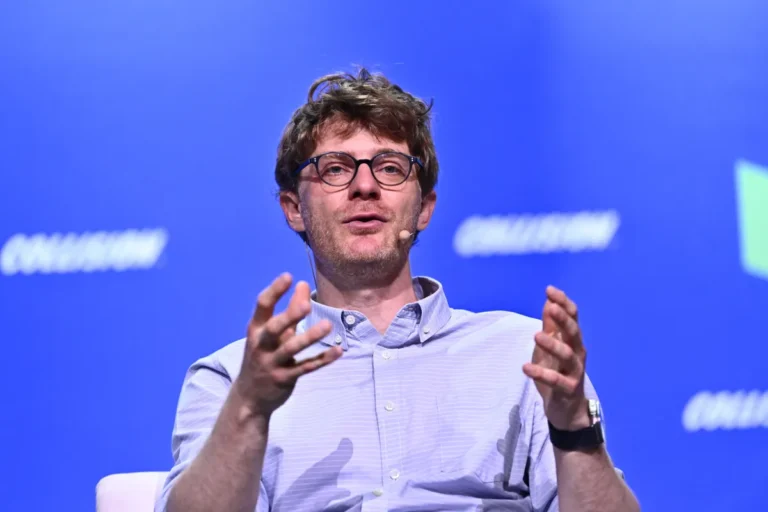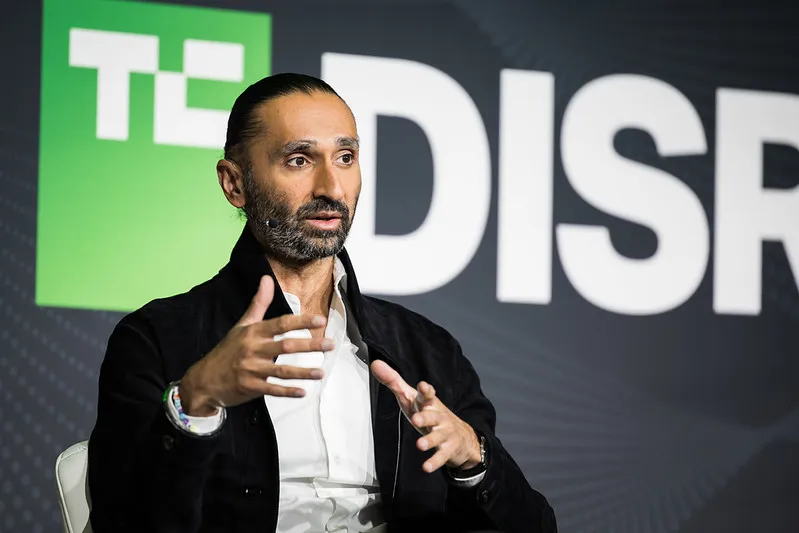
Jas Khaira told an audience at TechCrunch Disrupt last week that Blackstone is positioning itself at the heart of the artificial intelligence boom.
The private equity firm is writing checks for various strategies, from offering large loans to data centers to investing in frontier models and applications.
Earlier this year, the group launched Blackstone N1, a San Francisco hub for its AI initiatives. Khaira leads the effort and moved from New York to be closer to the work.
Unlike earlier tech cycles such as mobile or SaaS, which allowed companies to reach significant scale with moderate capital, the transition to AI requires staggering amounts of investment. That need for capital is precisely why Blackstone, with $1.3 trillion in assets under management, could play such a critical role in this tech shift.
Khaira emphasised that Blackstone sets itself apart from traditional venture capitalists through its focus on compute financing and its ability to offer flexible capital structures, ranging from debt to equity. It has been investing aggressively.
“We’re the largest owner of compute outside of the hyperscalers today, whether it’s investments in neo clouds, investments in data centers, and being able to use that compute strategically to support companies,” Khaira said.
For instance, Blackstone N1 played a key role in several compute-related deals. Among them was Crux AI, a neocloud launched in partnership with Google to commercialise its custom TPUs, to which Blackstone committed $5 billion as an investor. It also backed four-year-old Etched, a chip startup whose rapid development has caught investor attention. Neoclouds are cloud providers that rent out AI GPU infrastructure.
Blackstone pioneered a financing structure that allowed it to lend massive sums to venture-backed cloud neoclouds by analysing both committed customer contracts and using GPUs pledged as collateral.
Blackstone’s first such deal came in 2023 with CoreWeave, shortly after that neocloud saw demand explode following the launch of ChatGPT. Despite having only $30 million of revenue and minimal profitability at that time, according to Khaira, CoreWeave approached Blackstone for a $2.3 billion loan.
CoreWeave was borrowing against the considerable value of its large collection of Nvidia GPUs, with Nvidia also an investor. Blackstone also grew more comfortable with the loan because CoreWeave had contracts with blue-chip customers like Microsoft.
That transaction quickly became the financing model for how Blackstone and other credit institutions provided billions in follow-on debt to CoreWeave and rival neoclouds.
“One of the primary things that we’re looking to is the nature of the customer. And if the customer is an investment-grade customer — let’s say it’s Microsoft or let’s say it’s Meta — the risk gets priced relative to that customer,” Khaira said.
Building on its success with CoreWeave, Blackstone struck other neocloud financing deals, including co-leading alongside Coatue a $10 billion credit facility for Australian GPU provider Firmus earlier this year.
Khaira acknowledged that in recent weeks, the large debt burdens accumulated by these companies and other neocloud operators have begun to raise red flags. CoreWeave’s debt alone has since ballooned to about $50 billion, causing Altimeter Capital founder Brad Gerstner to note in a recent CNBC interview, “The collateral that CoreWeave is putting up which is really only GPUs is not good enough anymore. They used that in the past to get cheap debt.”
Khaira said that on the credit side, the market jitters stem from a combination of factors. Interest rates ticked up in September, and hotter-than-expected inflation signals that borrowing costs may keep climbing. The flood of AI infrastructure debt offerings isn’t helping either.
“We’re also seeing higher credit spreads,” Khaira said, explaining that lenders are charging higher premiums on top of already higher base interest rates to finance the AI buildout. “The cost of capital to price in debt for a Meta or a Microsoft has widened out,” he added, pointing out that even tech giants with massive balance sheets and solid earnings are paying more to borrow.
Concerns about the rising cost of debt have spilled into the stock market. Shares of CoreWeave dropped over 20% in recent days, while Firmus scrapped its planned IPO on the Australian Securities Exchange at a target valuation of roughly $30 billion.
“Ultimately, the market wasn’t there at that valuation, and so I think as a result, that deal didn’t get done,” Khaira said about Firmus’ cancelled listing.
“The market is thinking what is the right price for neoclouds, what is the right price for these businesses in this moment when interest rates are moving up,” he said.
Despite those pressures on some infrastructure providers, AI companies simply can’t get enough compute to power their models. Their appetite continues to drive data center buildout.
Khaira downplayed worries of doom-mongers that the massive accumulation of AI infrastructure debt could lead to a widespread credit crisis, or worse, crash the economy altogether. “This doesn’t feel like something where you’ve got 2008 banks that are shaky credits,” he said.
Instead, he pointed out that because the vast majority of data centers are built for hyperscalers, the debt financing them is ultimately backed “by the most creditworthy companies in the world.”
Beyond funding data centers, Blackstone is helping companies adopt AI through a $1.5 billion joint venture called “Ode with Anthropic,” formed alongside Anthropic and Hellman & Friedman this year. Ode supplies forward-deployed engineers to help companies adopt AI and integrate it into their operations, starting with Blackstone’s 280 portfolio companies.
When asked if Blackstone-owned companies are seeing tangible gains from AI, Khaira conceded that “there is definitely ROI, but it is uneven.” He described technology adoption as something that could move in a “sawtooth-type pattern,” which, to skeptics, can look like an oversupply of compute before adoption catches up.
What it means
For companies building AI tools, the immediate reality is access to capital remains open, though the terms are getting tighter. Lenders are charging higher premiums, and the window to secure cheap debt is closing. This means startups and established firms alike must justify their compute needs more rigorously. The era of borrowing billions against GPUs with little oversight is effectively over, replaced by a stricter focus on the creditworthiness of their actual customers. For portfolio companies, the payoff from AI is real but inconsistent, suggesting that widespread transformation will happen in fits and starts rather than a single smooth rollout.