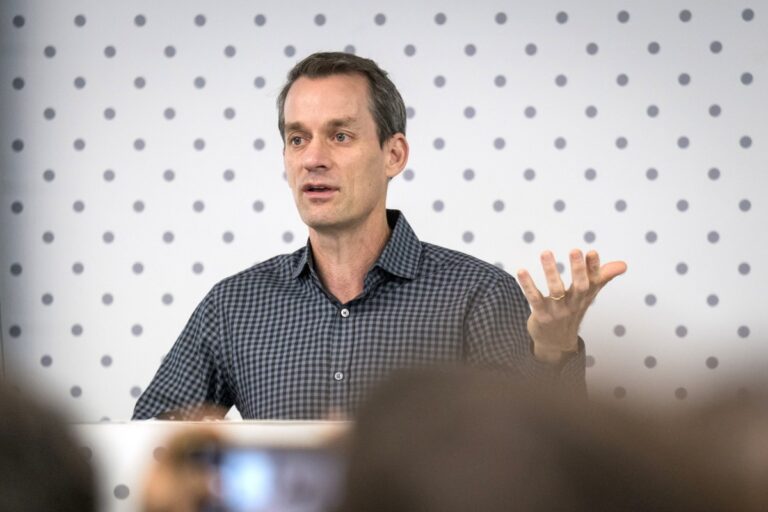
Jeff Dean spoke to 6,000 would-be founders at Y Combinator’s Startup School on July 25 at the Chase Center in San Francisco. The legendary engineer, who cofounded Google Brain and leads Google DeepMind, told the crowd that the most vital task for any startup is to pick something exciting and useful. He then described an automated version of the scientific method: propose an experiment, build the tools to run it, evaluate the outcome, and repeat. Running thousands of these loops could drive progress in science, biology, chip design, and AI.
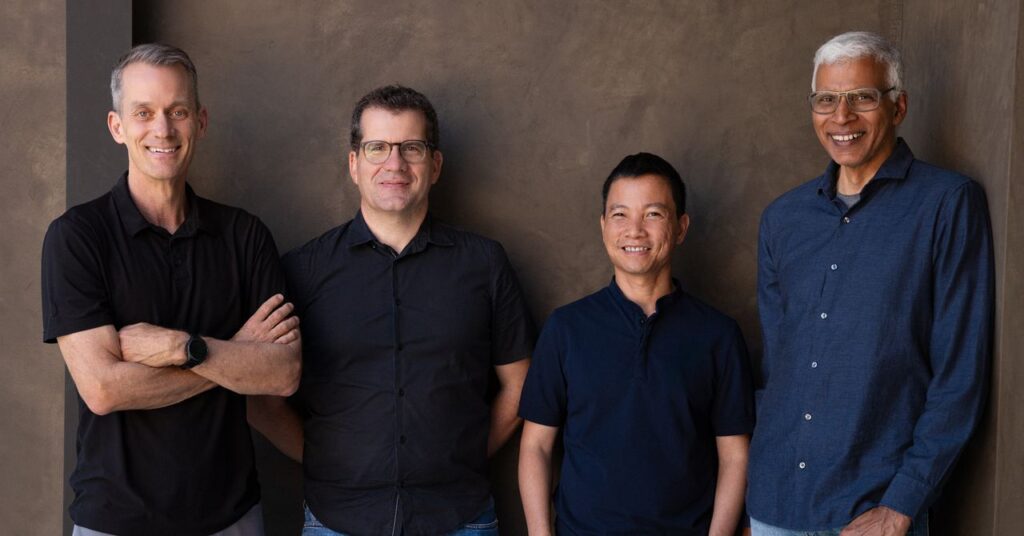
Unbeknownst to the audience, Dean was describing his own new company. After nearly 27 years at Google, he has left alongside Sanjay Ghemawat, two other senior scientists, and two venture capital firms to launch Discovery Loop.
The departure
The exit is a significant blow to Google as it races to maintain its position in the AI model competition. Dean and Ghemawat were among the company’s earliest hires, and their departure is comparable to Mick Jagger and Keith Richards leaving the Rolling Stones. They are joined by Oriol Vinyals, vice president of research at DeepMind and a technical lead for Gemini, and Quoc Le, a cofounder of Google Brain and the scientist behind AutoML-Zero.
Dean told me in an interview that the idea emerged only a few weeks ago. He was quickly joined by the other three, who are long-time colleagues and friends who vacation together. “We were working on different things, but we were all starting to see the possibility of AI being able to automate scientific and engineering loops,” he says.
The plan
The team built a roadmap where Discovery Loop would be its own first customer. The autonomous experiment loops created initially will target the improvement of the company’s advanced machine learning algorithms. That improved software will then become the core of an AI system capable of tackling problems in subsequent domains. “I’m very excited about automating machine learning,” says Le. “It might be that we will discover a different transformer architecture.”
From there, Discovery Loop intends to make superhuman advances in chip design, biology, drug discovery, and material design. “As we create the core intelligence and the discovery loop fundamentals, we’ll be able to quickly generalize to other domains,” says Vinyals. “One of the things that we’ll be obviously very focused on is how these models come up with new ideas to try. That’s not something that they’re super strong at.”
Initially, the team envisions these ideas being co-developed with humans, though the goal is deep automation. If successful, a few dedicated individuals could use Discovery Loop to out-invent the world’s largest research organisations. Presumably, those small teams will become customers of Discovery Loop. The startup may also run its own loops to seek and monetise breakthroughs.
Funding and the pitch
The founders assembled a simple pitch deck and began meeting with venture capitalists. They set up the company as a public benefit corporation. “We just put a few slides with our backgrounds and a rough sketch of how we think our approach will be successful in a bunch of different ways,” says Dean. They did not use AI to create the deck. Their presence spoke louder than any PowerPoint could.
Vinod Khosla, a venture capitalist who met the group in his Sand Hill Road office on a Saturday, said he would not have needed to know their background before backing them. “It’s the ultimate superstar team,” Khosla says. He also liked the idea: “Humans have been using AI to do research, not using AI to be a researcher,” he says. “The fundamental thing [in Discovery Loop] is that AI is the researcher.”
Other meetings took place at Dean’s house. Khosla Ventures and Radical Ventures invested, along with a handful of other firms. The founders are not sharing the funding amount or valuation, but consider that some companies pay tens or hundreds of millions for a single AI superstar, and these are considered the greatest of all time. “Building something to solve all those problems is a powerful idea,” says Radical managing partner Jordan Jacobs, who will join the startup’s board. “These people have been doing this kind of work in the past so they know what they’re doing.”
Leaving Google
Negotiating the exit from Google was more painful. Dean says that Alphabet CEO Sundar Pichai tried over multiple meetings to convince them to keep their badges. Ultimately, the team decided they wanted the fun and freedom of doing a startup.
“In a large organisation there is always a lot of inertia you have to overcome to make any radical changes,” says Vinyals. “We want to build something different.” Google ultimately gave the departing engineers its blessing, along with an investment and an arrangement to provide compute power for the first year.
“Over 27 years, Jeff and Sanjay helped to drive some of the most significant technology transitions, from our early search infrastructure to the neural networks that helped create the modern AI era,” Pichai said in a statement. “We’ll continue to work with Discovery Loop as a founding investor and Cloud partner, and collaborate on a research framework for ML systems and related infrastructure advances.”
The challenge ahead
Partly because of the impact this mini-exodus will have on Google, Dean and his cofounders have taken pains to maintain stealth. To date, they have not yet begun to hire a team, which may mean even more defections from Google, or even to rent office space. When I ask who the CEO is, there is a brief pause. “I think I’m the CEO,” says Dean, sheepishly. “Everyone pointed at me.”
Discovery Loop’s mission is not novel. Just about every major figure in AI—Dario, Sam, Jenson—has claimed at one point or another that AI will become an engine of scientific discovery, solving problems that humans could never crack on their own. This team is betting that their knowledge and skills will prevail in building a system that actually makes such breakthroughs. Short of that, Discovery Loop faces a narrower mark for success: Will the work they do as a startup be as significant as the talent gap they’re creating by leaving Google?