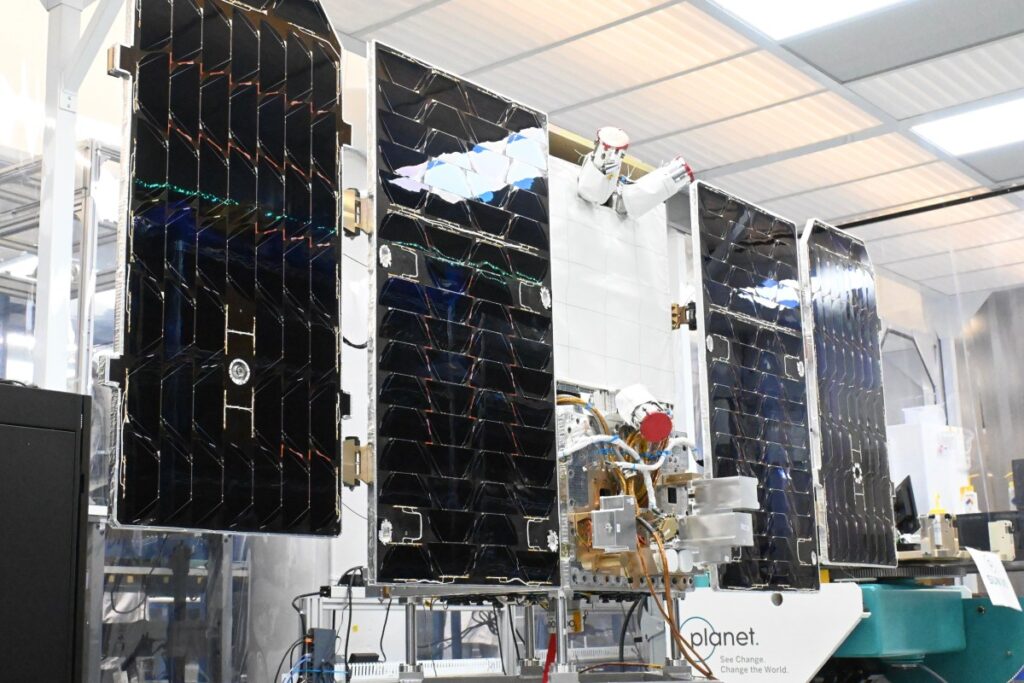
A prototype orbital compute satellite launched from California today aboard a SpaceX rocket, marking the first time a Google Tensor Processing Unit has been sent into space.
Built by Planet Labs, the craft will test whether a TPU can function in orbit. The mission requires supplying continuous power, managing heat, and running models to check for failures. Travis Beals, the executive leading Project Suncatcher, noted that ground testing cannot fully replicate the conditions of space.
“We’ve done testing on the ground, but you know, there’s no test that’s completely as good as the real thing,” said Beals.
The satellite will run its chip in fifteen-minute bursts to protect the power and cooling systems. This unit uses a standard platform from Planet Labs. The two firms are preparing a demonstration expected next year involving two purpose-built satellites linked by laser communications.
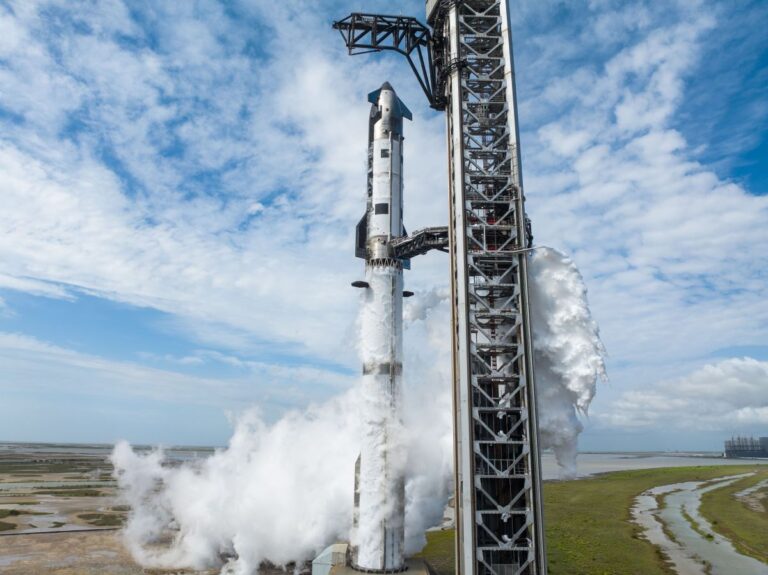
The SpaceX rocket carrying this payload also includes over 100 other missions from companies such as Satlyt and Cowboy Space Company. Google differs from these startups and SpaceX itself because it is committing to a long-term project.
Beals describes this as a “long-term moonshot” focused on the infrastructure and AI workloads of the future. The plan involves a network of 81 satellites flying in close formation to process data in parallel.
“The bandwidth and the latency between TPUs really, really matters when you’re trying to run a multi-rack workload…we’re trying to look ahead to not just what workloads exist today, but where they will be in five years,” Beals said.
Current rockets cannot scale orbital data centers cost-effectively. Google has released a peer-reviewed white paper in the journal Joule to analyse how compute reaches orbit.
The paper argues that SpaceX has achieved a price-reducing learning curve of roughly 20% per year since the Falcon 1 launch. Researchers expect launch prices to reach approximately $200 per kilogram by 2035.
Google is a major investor in SpaceX and relies on the company to get spacecraft into orbit. To achieve that price target, Starship must deliver 370,000 tons of payload into orbit. This requires about 1,800 launches over the next decade, or 180 a year, assuming each mission carries 200 metric tons.
That is a significant ask for a vehicle that has flown fewer than five times in a year. SpaceX predicts a higher rate. Elon Musk has suggested Starship could fly hourly by 2029, though he often changes his estimates.
Google’s updated research suggests its chips will survive space radiation. The company had to redo tests using a particle accelerator because the chip configuration offered more shielding than expected. This produced slightly more errors in the logic circuitry, but the firm remains confident the chips can handle large inference workloads for the five-year lifespan of a satellite.
“The error rate is very low if you’re thinking about typical inference operations, right? Like one in a million,” Beals said. “On the other hand, it was already problematic for doing, say, some mega-scale training run where you’re going to have many thousands of chips running for months.”
What it means
For people making things, this means AI training in space remains limited. The technology is viable for inference tasks where a one-in-a-million error rate is acceptable. However, large-scale training runs involving thousands of chips running for months will face significant issues due to radiation-induced errors.