Anthropic is building the Model Hardware Standard to let AI agents control physical devices
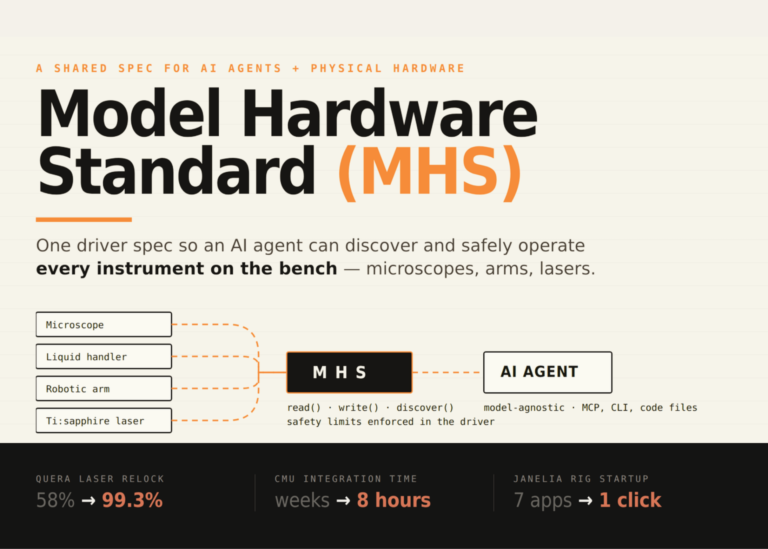
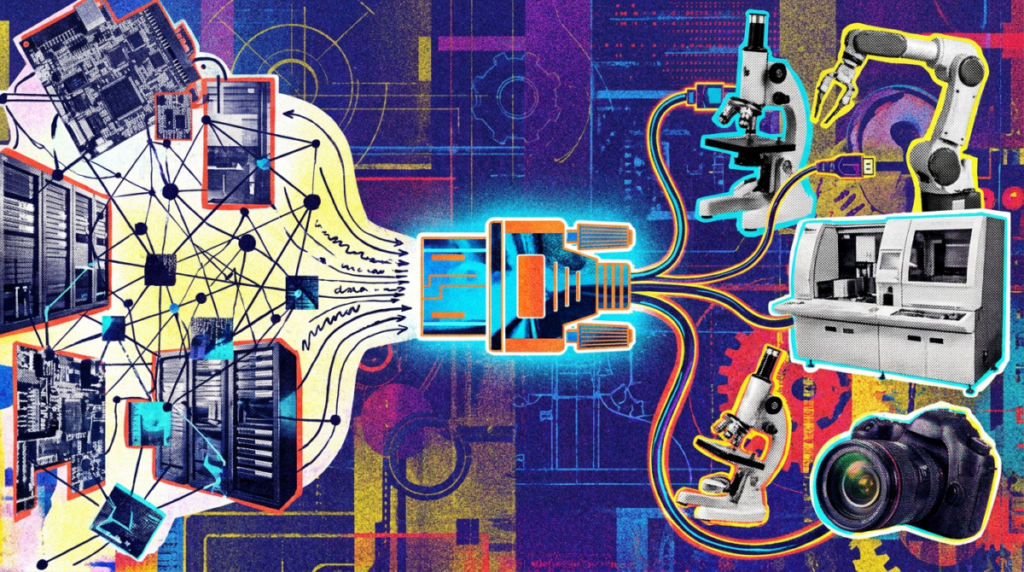
Anthropic is developing the Model Hardware Standard (MHS), a unified interface designed to allow AI agents to read data from and control physical equipment such as microscopes and robotic arms in laboratories and factories.
The company is using standardized drivers to make every device discoverable in a common format. Anthropic states this approach cuts integration time for connecting multiple machines from weeks or months down to hours or minutes.
Early tests with partners show that AI can independently optimize workflows and generate scripts that run without a language model. However, the system still struggles with understanding physical cause and effect, so human oversight remains a must.
Standardised drivers replace custom integrations
The idea builds on a project Anthropic already shipped for software. The Model Context Protocol (MCP) gives AI models a standard way to access external data sources and tools. MHS extends that approach to machines.
Each device gets an MHS driver that unifies basic functions like reading and modifying data. The driver makes the device discoverable in a common format and can include details software alone cannot capture, such as a robotic arm’s weight or its safety limits. Users can add this information in natural language, and MHS turns it into a reference file for the agent.
An agent can then pick up the capabilities and limits of a device it has never seen before and operate it through a single interface. Someone still has to write a driver for each piece of hardware, but once it exists, it can be reused rather than rebuilt for every combination of device and controller.
According to Anthropic, MHS is model-agnostic and works with any device that has a programmable interface. Agents can coordinate multiple devices and save workflows as conventional scripts that then run without a language model.
Claude tested against real lab equipment
Anthropic tested MHS with several partners. At biotech company Genentech, Claude coordinated a liquid handler, a robotic arm, and a plate reader to automate a protein assay, a test that measures protein concentration. The agent optimized pipetting parameters for different liquids on its own, but ran into trouble when bubbles formed in a viscous solution and caused errors. Claude kept restarting the process in the same vessel with tweaked parameters, which made things worse. It took a human explaining the physical cause before the agent found a workable fix.
At Carnegie Mellon University, researchers connected a liquid handler, a plate reader, a robotic arm, and several monitoring cameras across three computers with fundamentally incompatible interfaces. The team says the drivers and orchestration layer took about eight hours to build, compared to the several weeks a vendor setup would typically require. Claude also noticed that a first experimental run had not produced a good enough measurement curve, lowered the maximum concentration of the substance being tested, and got a much better result on the second try.
At quantum computing company QuEra, Claude used MHS across hundreds of automated runs to develop a control program that brings a laser back to a stable operating state after disruptions. The resulting script succeeded in 695 out of 700 attempts in a blind test, a 99.3 percent success rate, running entirely on its own with the language model out of the loop.
All three examples come from partner projects presented by Anthropic and have not been independently verified.
Expert oversight remains part of the setup
Because Claude learns about the physical world through text and images, its spatial and physical reasoning has limits that still require expert oversight, Anthropic says. In the Genentech tests, researchers had to guide Claude to recognize that errors caused by foaming samples were physical failures rather than software bugs. During the research preview, the company plans to build additional safety evaluations with its partners and is developing a physical safety roadmap to guard against misuse.
If the approach holds up, it could make it much easier for AI agents to move beyond purely digital tasks into labs, factories, and other physical systems. Several manufacturers and organizations are already building MHS support or testing the spec, including AWS, Doosan Robotics, QIAGEN, Tecan, Universal Robots, Hugging Face, and Raspberry Pi.