AI security startup AIR has raised $50 million to monitor the skills and add-ons that artificial intelligence agents use inside corporate systems.
The company emerged from stealth with the capital split between two seed rounds. The first round brought in $10 million led by Sequoia, followed weeks later by a $40 million round led by Greenoaks. Other backers included Swish, Netz, Zach Frankel, Yinon Costica, Ofir Erlich, Anne Neuberger, Omer Adam, and Varun Anand.
Yair Saban, CEO, and Niv Hoffman, CTO, both former members of Israel’s Unit 8200 intelligence corps, built AIR to address a specific gap in enterprise security. As companies grant AI agents access to their infrastructure, a new software supply chain is forming around the tools these agents consume. This includes skills, plugins, MCP servers, and add-ons that allow interaction with the internet.
How the platform works
AIR scans an organisation’s environment to locate active AI agents. It identifies employees using unapproved tools or personal accounts. Once active agents are found, the system intercepts their actions to analyse requests for new skills or external content.
The platform checks every tool against a whitelist maintained by AIR. The team evaluates publicly available skills and add-ons for malicious behaviour or changes. A package previously approved could become risky if a developer’s account is compromised or if the software it downloads is updated.
Saban noted that the current filters block about 27% of the add-ons and skills found online.
The startup currently serves more than 20 customers. Roughly a quarter of these are large enterprises. Demand remains strongest in heavily regulated sectors, specifically financial services and pharmaceutical companies.
Competitors in the space
AIR is not the only company addressing this need. Noma Security provides discovery, access controls, and runtime monitoring for agents, MCP servers, and skills. Zenity sells similar governance tools. Astrix Security’s identity platform allows companies to discover and control agents, while Operant AI offers protections alongside an MCP gateway.
Venture capital activity in the category is high. Zenity raised $125 million in a Series C round in August, and Noma secured $100 million in a Series B last year.
Building a defensible position
Saban argues that AIR’s advantage lies in the continuous vetting of the growing ecosystem surrounding AI agents. He stated that gaining visibility into endpoints is easy and that every competitor will achieve it. The real challenge is creating a moat around the continuous verification of skills and plugins.
While AI labs may eventually build security checks into their own products, companies will likely still require an independent solution that functions across different vendors.
“This is not a scanning problem, it is a continuous re-verification problem,” Bogomil Balkansky, a partner at Sequoia, said in a statement. “Inspecting every skill, plugin, MCP server and sub-agent an enterprise’s agents touch, re-inspecting each one every time it changes, in real time and across an entire company’s agent fleet, is an infrastructure problem long before it is a security problem. Air has spent the last year building that pipeline. You do not catch up to it by writing a better scanner.”
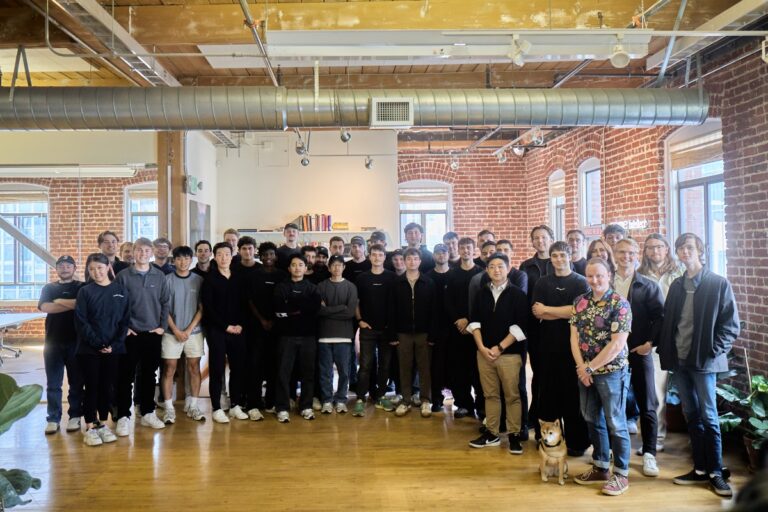
The new funding will primarily fund hiring researchers and expanding go-to-market efforts in the United States and Europe. AIR currently employs around 40 people.