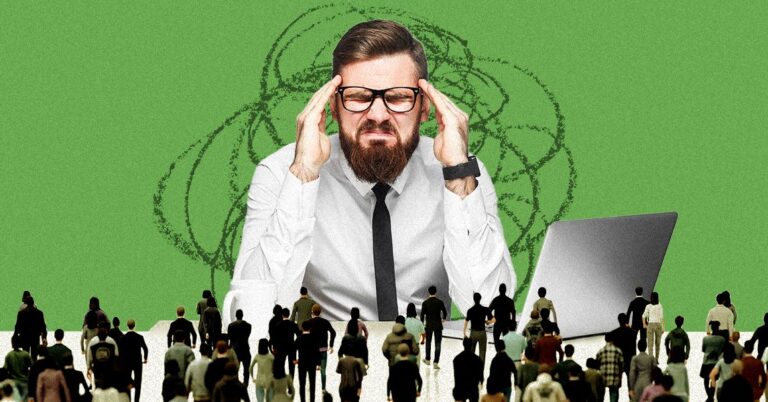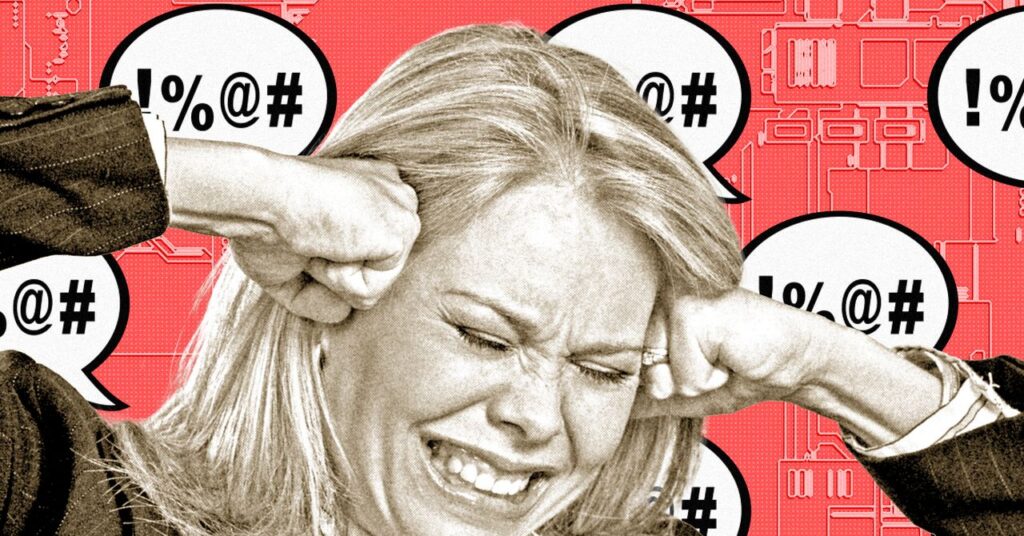
Claims adjusters on Glassdoor are the most vocal critics of artificial intelligence in the US workforce. Recent data shows that 98 percent of their reviews mentioning AI are negative.
One reviewer wrote that forcing humans to stop using their brains is a major turn off. Another called the company’s AI apps trash. They do not want AI pushed on them or their clients.
Ahmad Jackson worked for a major insurer about a year ago. His employer deployed AI for initial loss reporting. The plan was to automate simple claims and let humans handle complex ones.
Instead, Jackson and his colleagues faced a flood of misclassified claims. These errors required rerouting to the correct departments. He also encountered AI hallucinations in claim summaries. When he passed these mistakes to claimants or attorneys, he faced their anger. He left the company shortly after.
AI gets things wrong, Jackson told WIRED. It adds more work for adjusters.
Geoffrey Conrad, a claims executive in Mobile, Alabama, says there is AI fatigue. He notes that workers are exhausted from the amount of AI being shoved down their throats.
Chris Martin, a senior economist at Glassdoor, did not expect this level of hostility. He took a double take when he saw the results and started digging. He concluded the profession is in the midst of a reckoning.
The Bureau of Labor Statistics reported a projected drop of 18,900 claims adjusters in the US over the next decade. This represents a 5 percent decline. Employment in the sector fell 21 percent between May 2025 and May 2026, according to BLS data.
The decline was sharper for early-career workers. Entry-level postings have dropped 50 percent since 2025, Glassdoor data shows.
Technology is a major driver of this decline. AI startups like Liberate and Pace raised millions based on promises to reinvent insurance. Insurers have scaled their use of AI to handle more claims.
In practice, this means talking to a chatbot to file a claim instead of speaking to a person. AI tools might analyze photos or videos of damaged homes to provide payout estimates. Medical records could be summarised by AI to pull out crucial details. An insurer’s tool might process uploaded photos, videos, documentation, and receipts then send a payout within seconds.
Lemonade has promised to replace bureaucracy with bots and machine learning since its founding in 2015. By the end of last year, its proprietary chatbot, AI Jim, handled initial reports 96 percent of the time. Automation handled roughly 55 percent of all claims.
Traditional insurers like State Farm emphasise that claims require a mix of human and digital expertise. Some adjusters still worry they are training their replacements.
Paul Staats, a Lemonade spokesperson, told WIRED that AI will impact many jobs and threaten incumbents in insurance and the economy. He added that automating allows employees to focus their empathy, care, and expertise on the most complex claims.
Staats said Glassdoor’s report should be taken seriously across the industry.
Chris Martin noted there are no jobs and no good job prospects. When workers sense layoffs looming, their reviews become increasingly anti-AI. Martin says reviewers also express skepticism when a subpar product is forced upon them or their clients.
Conrad says people in his profession feel like they are being replaced by AI models. He insists AI is just a tool and should never be given the keys.
Sandy Avina, a claims adjuster turned industry consultant, says adjusters do not have a lot of faith in the output. A smudge in a document from an attorney can result in a hallucination and an incorrect payout. A missing point in an AI summary of a medical report can do the same. Customers often do not realise when AI is the root cause of confusion or misinformation. They assume the adjuster made the mistake.
Conrad understands that many people see claims adjusters as soulless vultures circling after a catastrophe. He insists a good adjuster is both empathetic and determined to get the policyholder as much money as possible. He knows because he has been there.
Twenty-five years ago, before Conrad started working in insurance, his house burned down. It was a total loss. He said if someone had told him that photographs would generate an estimate via AI, he probably would have lost his mind.
He needed somebody to make sure he was OK and his family was safe. AI can be helpful, but not when it is used as a replacement for humanity. Conrad called that a dangerous strategy.
What it means
Workers feel the pressure of job losses when AI is introduced. They resent tools that force them to clean up errors. The profession is struggling with a lack of entry-level roles while companies push for full automation.