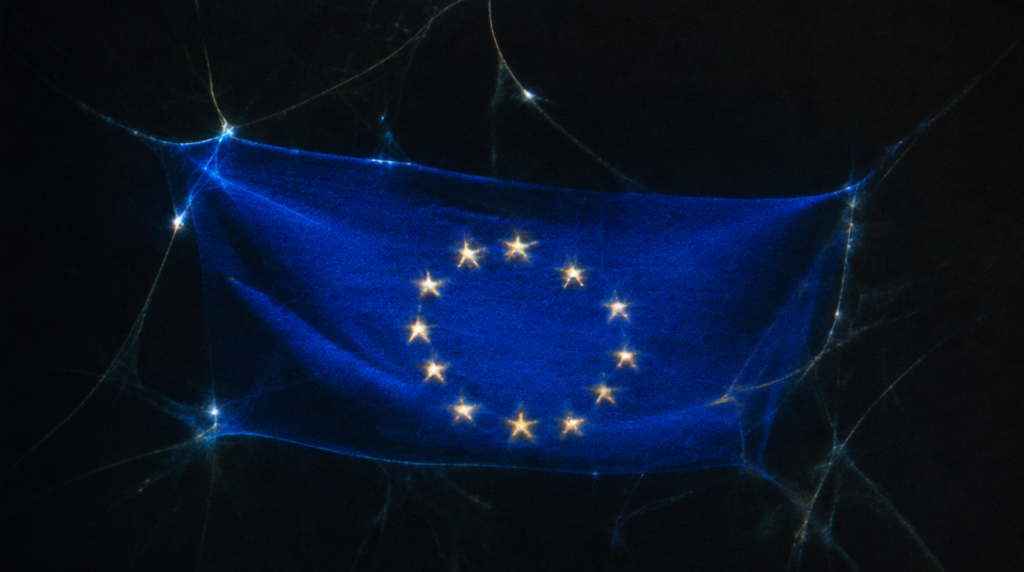
For creators and brands navigating the current regulatory landscape, the distinction between a malicious forgery and a standard product shot is becoming dangerously blurred. The European Union’s new AI legislation, set to take effect on 2 August, mandates clear labelling for content classified as a “deepfake”. However, a coalition of major retailers is arguing that this definition is too broad, threatening to stifle legitimate advertising.
Eurocommerce, a trade body representing a roster that includes Amazon, H&M, Inditex, and Ikea, has formally requested an exemption for AI-generated advertising from these transparency rules. In correspondence obtained by Reuters addressed to EU tech commissioner Henna Virkkunen, the association contends that images designed solely for commercial promotion, rather than deception, should not require the same warnings as manipulative content.
The regulatory grey area
The proposed rules distinguish between three categories of AI content, each requiring specific labelling:
- Base Icon (AI): Applied when AI contributes to the creation of deepfake content (image, audio, or video) or published text, or when custom labels and interactive layers are used. An example would be a video featuring the text label “Voices generated with” alongside the base icon.
- Fully AI-generated (AI Generated): Reserved for content created entirely by AI without human creative input or editorial control beyond prompting. This covers fully synthetic videos of politicians or fictional events, AI-composed music, and generated news summaries.
- Partially AI-modified: Used when pre-existing human-created content is altered by AI to become a deepfake or cover topics of public interest. Examples include replacing a person’s face in a photograph with an AI counterpart or furnishing an empty apartment using synthetic imagery.
Christel Delberghe, Director General at Eurocommerce, argues that a photorealistic image of a living room used to display a sofa should not fall under this strict definition. She warns that mandating labels for such ubiquitous content would impact a vast portion of advertising, effectively diluting the transparency rules’ value for consumers. The EU Commission has yet to respond to this appeal.
When a sofa isn’t a deepfake
The scale of AI adoption in commerce highlights the friction with current terminology. Zalando reports that 90 percent of marketing content on its platform is now AI-generated. Matthias Haase, VP of Content Solutions at Zalando, notes that generative AI has shifted the industry from a “planning” mindset to a “reacting” one, reducing production time from weeks to days. The company aims to go live within 24 hours of spotting a trend.
Similarly, H&M and Zara utilise AI-generated clones of models for their campaigns. This widespread application challenges the semantic weight of the term “deepfake”. Originally rooted in non-consensual pornography and strongly associated with fraud or criminal activity, the word now encompasses benign product photography under the proposed legislation. This semantic drift reveals just how ill-defined the current framework remains.
Key takeaways
- Major retailers like Amazon and H&M are lobbying for an exemption from the EU AI Act’s labelling requirements for standard AI-generated advertising, arguing it is not deceptive.
- The 2 August enforcement date for the EU AI Act creates immediate pressure on brands using generative tools, despite the EU Commission not yet responding to industry pushback.
- Applying the term “deepfake” to commercial product imagery, such as AI-generated sofas or model clones, ignores the tool’s criminal origins and blurs the line between fraud and creative efficiency.