Deploying artificial intelligence into daily operations remains difficult for most businesses. Caterpillar has spent decades solving a similar problem in the physical world, and it is now applying that experience to software deployment.
From mining to construction
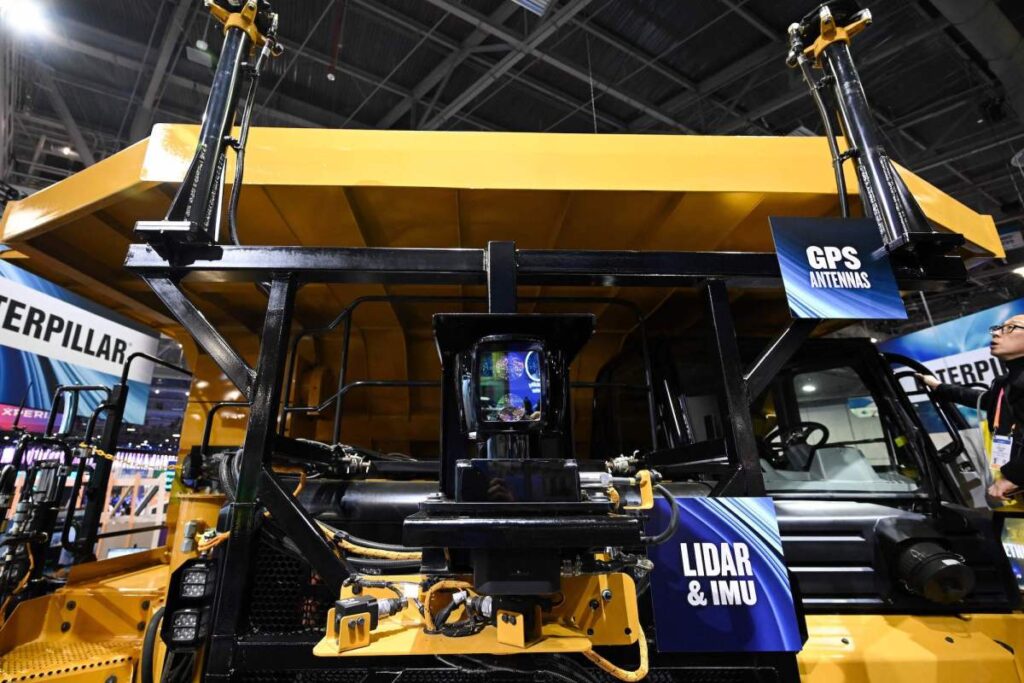
The company began its move into automation with mining, where labour shortages and dangerous conditions made the shift practical. It now sells autonomous haul trucks, drilling rigs, underground loaders, dozers, and remote-controlled construction equipment. Its toolkit also includes a software command centre, fleet management, and remote terrain intelligence.
“Now we’re in this super exciting time where we can take all of that learning from mining and bring it into much more dynamic environments, jobsites, quarries, and construction sites,” Jaime Mineart, the company’s chief technology officer, told TechCrunch at the Ai4 conference in Las Vegas earlier this month.
Tools for technicians
Caterpillar is now applying AI more broadly, including in tools for technicians and its own staff. The Cat AI Assistant allows field workers standing next to a machine to use voice commands to access repair procedures, troubleshoot issues, and identify needed parts before work begins. Mineart said the tool is currently in use by customers, operators, and technicians.
The assistant relies on Caterpillar’s proprietary data, which comes from its connected machines. Mineart stated the company has about 1.6 million connected assets globally and more than 16 petabytes of structured data.
The firm is also using AI to power software for scanning sites and generating digital twins in manufacturing to analyse operations. Like many other organisations, Caterpillar uses AI across its enterprise operations and for software development. “We use AI agents to modernize legacy code, generate and test new software, and identify defects earlier,” Mineart said.
Workflows and training
Mineart noted that building the technology is only part of the challenge. Deploying an autonomous machine is not the same as transforming a site to use AI. Companies must rethink how people work alongside the technology and how existing processes need to change.
“The hard part about autonomy and about physical AI is incorporating that technology into the customer jobsite and into the workflows,” she said.
Mineart said the company relies on experienced operators to help train AI systems, using institutional knowledge built over decades. As machines become more autonomous, some operators may shift from controlling a single machine to overseeing multiple machines from a remote command centre.
That transition is creating a new challenge for Caterpillar: training its 118,000 employees. Mineart said the company plans to spend $100 million over the next five years to train its workforce in AI, autonomy and robotics.
Revenue and data centres
That investment is likely being put towards helping the company make the most of the broader boom in AI infrastructure, which is already helping its top-line. Caterpillar’s quarterly revenue reached an all-time high of $20.5 billion in the second quarter, helped by strong demand for power-generation equipment used in data centres. Its power-generation division saw sales spike 72% to $3.10 billion, and CEO Joe Creed said that “no one is slowing down” when it comes to demand for cloud computing and generative AI infrastructure.