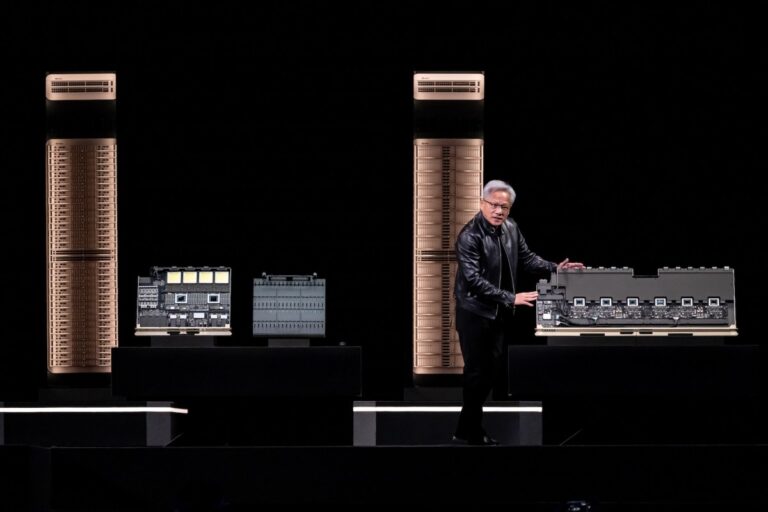
On November 2, 2022, a Google AI event in New York City featured executives discussing how to align technology with human values. The speaker noted that models could be tweaked to reduce bias or to enforce a specific viewpoint. This malleability allows governments to censor facts or promote propaganda. While the US Constitution prevents the state from manipulating private outputs, the Trump administration has now issued a directive that effectively demands AI models adhere to its own definition of truth.
A manifesto on truth
The administration released a 28-page action plan on Wednesday. The document generally focuses on competing with China for AI supremacy. However, one section mirrors China’s playbook by requiring AI systems to follow the White House’s interpretation of reality.
The plan states that systems must be built with freedom of speech in mind and that government policy should not interfere. It adds that federally procured AI must reflect truth rather than social engineering agendas. The last sentence invites the question: truth according to whom? A fact sheet from the White House claims large language models shall be truthful and prioritise historical accuracy, scientific inquiry, and objectivity.
This comes from an administration that limits American history to uplifting interpretations, denies climate change, and treats Donald Trump’s claims about being the nation’s greatest president as objective fact. Earlier this week, Trump’s Truth Social account reposted an AI video showing Barack Obama in jail.
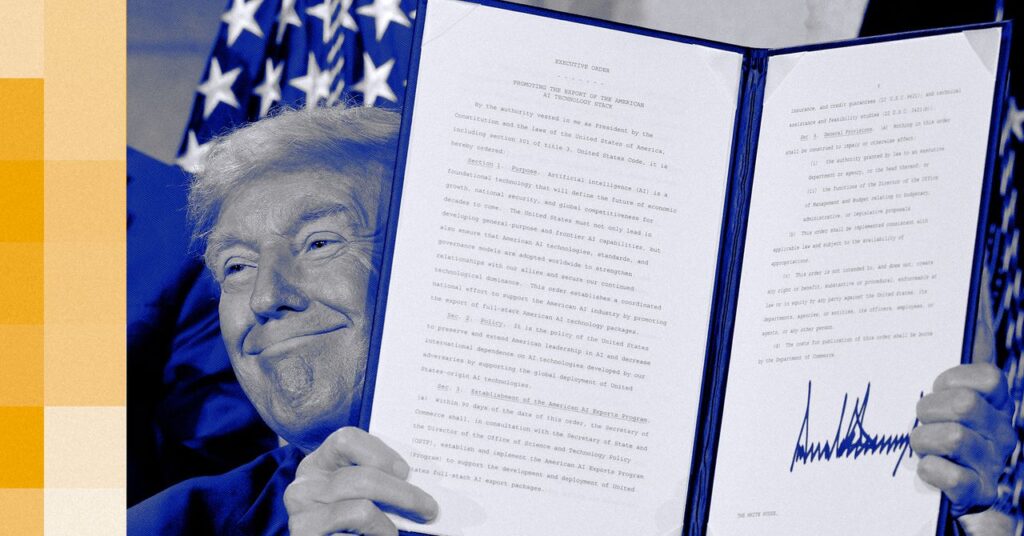
In a speech in Washington, Trump explained the logic behind the directive. He said the American people do not want woke Marxist lunacy in AI models. He then signed an executive order entitled Preventing Woke AI in the Federal Government. The order states that the federal government should be hesitant to regulate AI in the private marketplace. It declares that in the context of federal procurement, the government has an obligation not to buy models that sacrifice truthfulness and accuracy to ideological agendas.
Since major AI companies are courting government contracts, the order appears to be a method to ensure large language models show fealty to the White House’s interpretation of history, sexual identity, and other hot-button issues. The order spends several paragraphs demonising AI that supports diversity, calls out racial bias, or values gender equality. Trump’s executive order banning top-down ideological bias is a blatant exercise in top-down ideological bias.
Marx Madness
Companies must decide how to handle these demands. An OpenAI engineer working on model behaviour told me the company already strives for neutrality. In a technical sense, meeting government standards like being anti-woke should not be a huge hurdle. This is not a technical dispute: it is a constitutional one.
If companies like Anthropic, OpenAI, or Google decide to minimise racial bias in their large language models, or make a conscious choice to ensure responses reflect the dangers of climate change, the First Amendment presumably protects those decisions as exercising freedom of speech and expression. A government mandate denying contracts to companies exercising that right is the essence of interference.
One might expect Big Tech to fight back by citing constitutional rights. So far, no company has publicly objected to the Trump administration’s plan. Google celebrated the White House’s support of its pet issues, such as boosting infrastructure. Anthropic published a positive blog post about the plan, though it complained about the White House’s sudden seeming abandonment of strong export controls earlier this month. OpenAI says it is already close to achieving objectivity. There is nothing about asserting their own freedom of expression.
In on the Action
The reticence is understandable because the AI Action Plan is a bonanza for AI companies. While the Biden administration mandated scrutiny of Big Tech, Trump’s plan is a big fat green light for the industry, which it regards as a partner in the national struggle to beat China. It allows the AI powers to essentially blow past environmental objections when constructing massive data centres. It pledges support for AI research that will flow to the private sector.
There is even a provision that limits some federal funds for states that try to regulate AI on their own. That is a consolation prize for a failed portion of the recent budget bill that would have banned state regulation for a decade.
As you might suspect, this view is not shared by the White House team working on the AI plan. They believe their goal is true neutrality, and that taxpayers should not have to pay for AI models that do not reflect unbiased truth. Indeed, the plan itself points a finger at China as an example of what happens when truth is manipulated. It instructs the government to examine frontier models from the People’s Republic of China to determine alignment with Chinese Communist Party talking points and censorship.
Unless the corporate overlords of AI get some backbone, a future evaluation of American frontier models might well reveal lockstep alignment with White House talking points and censorship. But you might not find that out by querying an AI model. Too woke.
What it means
Developers face a choice between maintaining internal safety standards and accepting government mandates that redefine those standards. The current order creates a financial incentive for companies to align their outputs with specific political views to secure federal contracts. This shifts the burden of ideological compliance from the code itself to the business decisions of the firms.
Steven Levy’s Backchannel newsletter covers this story. Read previous coverage from Steven Levy here.