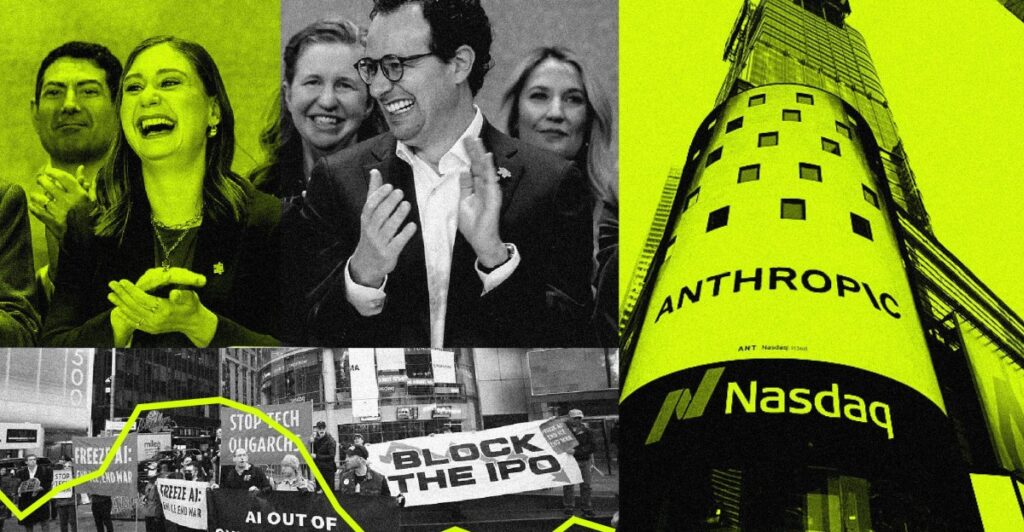
Anthropic went public on the Nasdaq last Thursday, priced at $83 a share and briefly reaching $111.
The numbers are massive, yet the real story lies in what happens next. The company must balance its reputation for AI safety with the demands of public shareholders. It also needs to grow revenue enough to cover compute costs estimated to total roughly $900 billion over the coming years.
Hayden Field, senior AI reporter for The Verge, joined me to discuss how this tension plays out. We covered the company’s governance structure, the reaction from OpenAI, and why the safety pitch now conflicts with profit targets.
The market reaction
The IPO day felt like a victory lap for investors. Law firms updated their homepages to congratulate the team. Field noted that this is peak AI hype, the first time an AI lab has gone public, and it set a record.
He observed that thousands of new millionaires and hundreds of centimillionaires will emerge from this event. Field spoke with tech workers who reported their companies are pushing for more AI work even when it reduces productivity. He believes a reckoning is coming, but right now the hype is swelling.
OpenAI’s strategy
OpenAI seems content to let Anthropic go first. Field heard that Sam Altman was previously obsessed with beating Anthropic to the market. However, OpenAI faced bad press and public backlash this year. They appeared to take a step back to see how the market valued a competitor before launching their own IPO story.
OpenAI can now ride on Anthropic’s coattails. They might not beat the valuation record, but they know things could have gone worse if Anthropic had not succeeded.
Business fundamentals
Field pointed out that investors expect returns. They want profits or a clear path to them. Field cited an estimate from Steve Rattner suggesting Anthropic needs to increase revenue roughly 17-fold within the next 10 years to match returns of some tech competitors.
Corporate governance experts and law professors told Field that Anthropic is not beholden to shareholders in the traditional sense. Shareholders cannot vote out executives. Founders and a special trust hold the power.
Despite this structure, the pressure to make money remains. Field warned that the company will face a huge reckoning. He suggested they may have to cut expensive safety efforts to buy compute and catch up with rivals.
What it means
For users and developers, the immediate product experience should remain stable. However, the company’s priority may shift toward revenue growth. If Anthropic faces pressure to cut costs, safety features or research initiatives could face budget reductions. The core business model relies on selling tokens for more than the cost to generate them, a margin that needs to expand significantly.