New York has opened a registration portal for large AI developers, setting a January 1, 2027 deadline for companies like OpenAI and Anthropic to sign up under the state’s new RAISE Act.
The law applies to frontier AI labs generating more than $500 million in annual revenue. These firms must publish safety frameworks on their websites, report critical safety incidents within 72 hours, and issue public model transparency reports.
The Office of Digital Innovation, Governance, Integrity, and Trust (DIGIT) will manage the RAISE Act. Penalties for non-compliance start at $1 million for a single violation and rise to $3 million for subsequent breaches.
State officials can take enforcement action against companies that fail to register. A spokesperson declined to provide further details on the specific consequences.
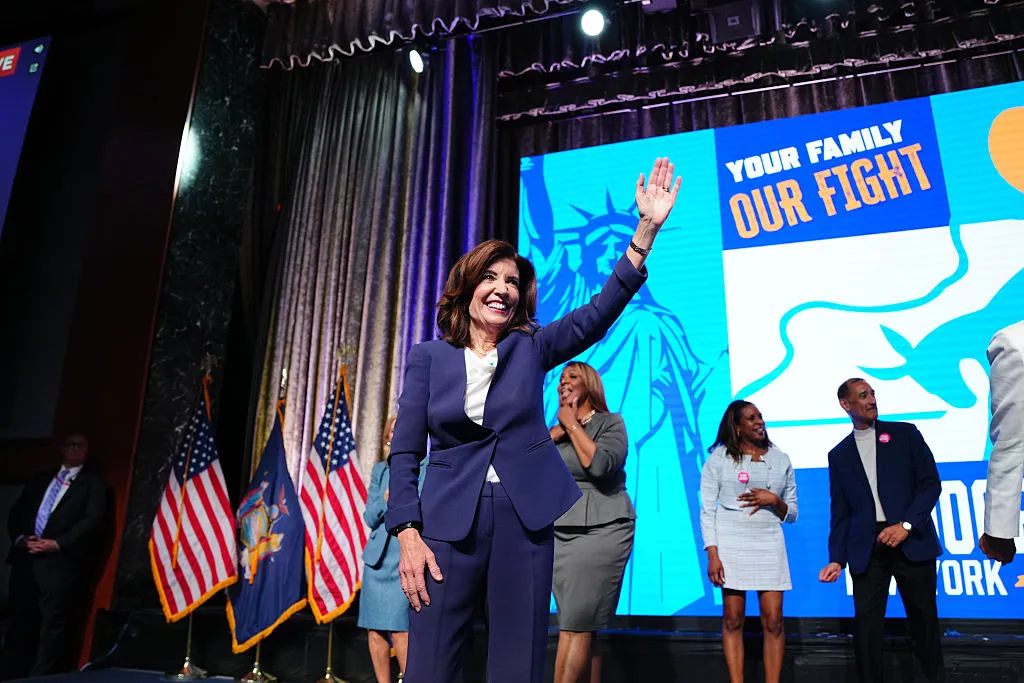
“Tech moguls tell us that their vision for AI is inevitable,” Governor Kathy Hochul said Tuesday during a press briefing. “They tell us get on board or get left behind …That any collateral damage is worth it as long as we win the race to the AI cliff.”
Hochul also launched the New York Center for AI Responsibility and Research at State University of New York’s Binghamton University. The centre will independently evaluate the safety, security, and operation of advanced AI systems. It will work with DIGIT to review companies’ safety frameworks. Hochul first announced the centre in January with $55 million in donations and capital.
“We’re building a national model for smart, sensible AI regulation, a model that puts communities above corporations and people above powerful technology,” Hochul said.
The RAISE Act is not the only safety law New York has passed. Last year, the state began enforcing a law requiring AI companion operators to inform users they are talking to a bot and to make reasonable efforts to detect suicidal ideation and self-harm.
In October, Hochul signed a separate chatbot safety law for minors. It restricts deceptive human-like interactions, emotionally manipulative or sycophantic responses, and encouragement of behaviours like suicide or disordered eating. That law takes effect June 1, 2027.
Other states have passed similar AI safety and transparency bills. California’s SB 53, which took effect in January, mandates that frontier AI labs have in place and publish safety frameworks, enact whistleblower protections, and report critical safety incidents within 15 days. Illinois’s SB 315, which will go into effect at the start of 2027, has similar requirements plus includes independent safety compliance audits.
What it means
Companies building and deploying large-scale AI models in New York will face new administrative burdens. They must maintain public records of their safety measures and report problems quickly. The state is also creating a dedicated body to audit these systems and penalise firms that do not comply.