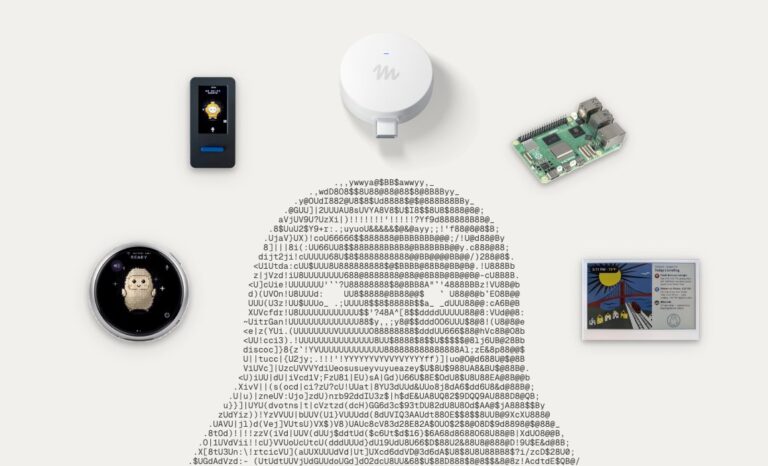
Tony Fadell showed three discontinued gadgets on a slide at the MIT Future Fest: the Rabbit R1, the Humane AI pin, and the Limitless pendant. He called them the first generation of AI hardware and said he turned down offers to advise the companies behind them.
The invitations came from a place of respect. Fadell built the iPod, co-created the iPhone, and founded Nest, the smart thermostat business acquired by Google.
He told the audience that these projects failed because they did not solve a real problem. They offered interesting technology for enthusiasts, but did not apply to daily life.
The devices promised a personal assistant but did not function as one. Most people have never worked with an assistant, so they cannot understand how to use or trust a robot helper.
Fadell noted that fewer than 0.01% of the world population has ever had a human assistant do anything. When companies claim to want an assistant, they are often speaking to the small group that already has one.
The remaining 99.99% do not know what an assistant is. Fadell explained that hiring a trustworthy personal AI is not as simple as choosing the best resume from a pile of applications.
He spent years learning how to use a human assistant and trusting them with sensitive data. He described setting up meetings and having them work with his bank. He believes there are many steps before the general consumer or business can follow this path.
Discussing the difficulty of building trust in a personal assistant can sound entitled, yet the point stands. When you hire a human, you do not give them your bank login on day one. We are entering a world where anyone can have a personal AI, but these tools are only valuable if we can trust them to be completely secure.
Establishing trust with an AI assistant appears harder than relying on a human. Meta recently launched Muse, its all-purpose AI assistant, but users have reason to be wary. A security researcher quickly found a serious vulnerability in Muse after launch. A recent 404 Media report states that some Meta employees discovered security issues that prompted multiple teams to work overtime to fix these problems before launch.
“Trust and safety are going to be paramount with anything that we turn over to some kind of intelligence,” Fadell said.
He suggested that Apple might be the only company capable of doing this right, perhaps one other. Apple has the hardware, the chips, and the pieces, but it does not have all the AI models.
Even if Apple does not produce the most sticky AI agent, Fadell predicts a successful agent must operate on-device. This approach protects privacy and keeps the technology lightweight.
“When you’re hearing all of these things about, ‘Oh, data centers are going to conquer the world,’ … I don’t believe it,” he said. “I’ve seen this before. I’ve seen this play out in the internet days and what have you. We have so much power on the device now, and even more compute, and they’re still battery operated.”
Keeping sensitive data on-device, rather than transmitting it through the cloud, has helped Apple gain trust from users to share biometric data through features like Face ID. Fadell notes that Apple has more goodwill with consumers regarding privacy than its competitors. Unlike other top tech companies, Apple does not have a world-class AI model of its own; the new Siri AI runs on custom-built versions of Google’s Gemini.
While Apple lags in proprietary AI, it is leaps ahead in hardware. Fadell theorises that companies like Meta and OpenAI are turning their attention toward gadgets because they do not have billions of devices in circulation like Apple does.
“It’s because they don’t have access to the sensors on your phone. They’re like, ‘Oh, we’ll need video,’ and you have to check, ‘Yes, I’ll give you video.’ Then they say, ‘Well, we need audio.’ Check. ‘We need your GPS location.’ Check. And before you know it, it becomes a list of 20 things or more than you have then allowed them to have,” he said.
So what do they do? They go and make a device with all that stuff in it without a screen… and then just Bluetooth or Wi-Fi into your phone and then back up to the web, or into a 5G network, so they can get all the sensor data.
Given his history creating the iPhone and iPod, it might seem like Fadell is still looking at his former employer through rose-colored glasses. While he may give Apple credit where due, he has not been shy to call Apple out when he thinks they are messing up.
When an audience member asked about the luck involved in finding product-market fit, Fadell pointed out that it is more difficult for startups to manufacture that luck, since a failed product can spell the end of the company.
“Because it’s a startup, you get one shot,” he quipped. “It’s not like Apple with the Vision Pro.”
What it means
The industry is moving away from disconnected AI gadgets toward on-device intelligence. Startups that rely on cloud processing and external sensors will struggle to build trust or compete with established hardware makers.