Meta’s Muse and Instinct assistant have reached a $10 billion valuation, yet the financial reality for consumer AI remains starkly limited.
The bull case
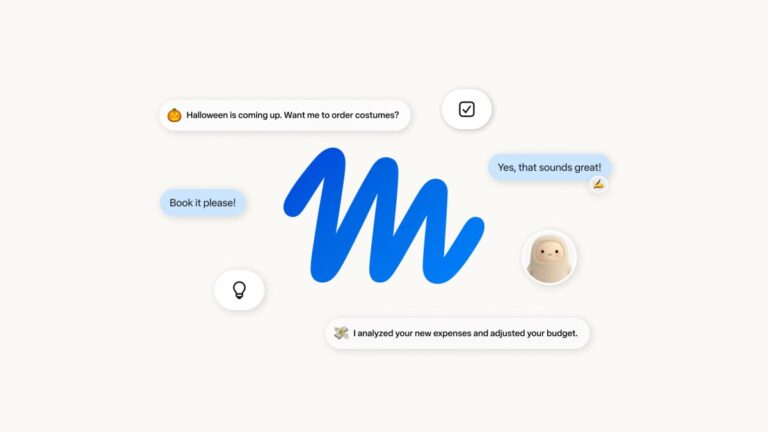
Recent launches suggest a resurgence in consumer-facing artificial intelligence. OpenAI’s Dots, released recently, mirrors the cartoony personal assistant concept that made Muse popular. Meanwhile, Instinct has secured its massive valuation based on agentic errand-running capabilities. These tools handle booking travel, making restaurant reservations, and cancelling subscriptions with a reliability that was previously missing.
Investors view this as a repeat of the ChatGPT launch in 2022. The argument is simple: raw AI power finally enables a product category that never existed before. If everyday people find genuine value in these services, the market logic dictates that investors should want a share of the action.
Why the industry shied away
Frontier labs have become cautious about consumer AI not because the technology is flawed, but because there is a ceiling on how much money consumers will spend. Better models do not automatically translate into a more profitable consumer business. Consequently, the industry has largely shifted toward the Anthropic model, focusing on enterprise contracts and expanding vertically within specific industries.
If products like Muse and Instinct ignore this trend, it is because they are less concerned with immediate monetisation. However, the underlying economics of consumer AI have not improved, and new entrants must grapple with these constraints.
The numbers
Andreessen Horowitz’s semiannual State of Markets report, drawing figures from a PNC research report, tracks the percentage of consumers paying for AI services and the amount they spend. As of May, 2.2% of consumers were paying for AI, with an average monthly spend of $31.
Andreessen describes this as early-stage adoption with significant room to grow. Yet the growth pace appears linear. Even as models improve, there is little movement in the number of customers willing to pay or the amount they will spend. The performance jump from GPT-5.2 to Astra is barely visible on the chart.
These per-consumer figures fall well below the standard break-even point. Using Netflix as a benchmark for market-saturated online services, which has 325 million subscribers, a price of $34 per customer generates $11 billion in annual revenue. This is less than a third of OpenAI’s operating costs.
Other data supports this picture. In March, Bank of America found that roughly 3% of US consumers paid for AI, a 40% increase from the previous year. A Menlo survey from September suggests a slightly more optimistic view, finding that a quarter of adults use AI daily, with half of those users paying for it.
Cost is the problem
The issue with the consumer approach is less about revenue and more about cost. AI is an unusually expensive technology to operate compared to lightweight predecessors like social networking or cloud computing. Even hundreds of millions of paying customers do not guarantee a break-even situation.
OpenAI has adapted well to these facts. The company’s pivot to enterprise has been largely successful, with enterprise bookings reportedly doubling since July. The Dots launch included a strong enterprise angle, demonstrating how the personal agent could benefit software engineers and agency creatives. One long-standing way to make money from popular but cheap consumer services is to sell them to businesses at a markup, and OpenAI seems to be following that playbook.
It is harder to say what this means for Muse and Instinct. Muse has the juggernaut of Meta’s personalised ad targeting behind it, providing more options for monetisation and more time before the issue becomes urgent. Notably, Meta is already exploring the enterprise angle.
Instinct has a separate plan involving taking a cut of purchases made through the agent, which might raise the ceiling. Presumably it will also avoid the cost of training a frontier model, which helps significantly.
What it means
The economics of consumer AI put a hard cap on how large a company can grow without tapping into enterprise revenue. This is a lesson the major labs have already learned, and it is one of the few things about the industry that does not seem to be changing.