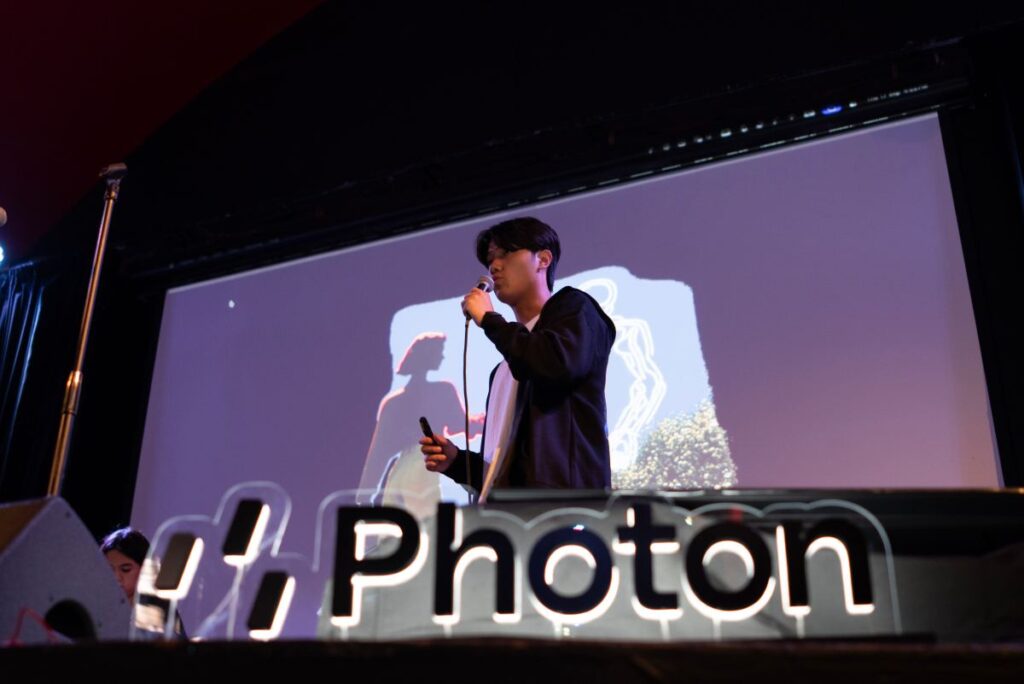
Photon held a funeral for mobile apps on September 17 in San Francisco. The event took place in a church and included speeches alongside a coffin containing app icons. The startup now has $4.5 million in seed funding to build agents that operate over iMessage and WhatsApp.
The shift to messaging
Photon co-founder and CEO Daniel Tian says the app era is ending. He believes the move to agents is inevitable, though it will take time. Users no longer want to install new software. They prefer access to tools that function through messaging apps they already use.
Meta’s Muse recently reached number one on app stores, testing the theory that consumer AI will dominate this space. Even if that happens, Tian sees a demand for developers who want their applications to work via messaging services. Photon provides a unified API, an extensible channel framework, a command-line interface, and an observability suite. These tools let developers build agent experiences for iMessage, WhatsApp, Telegram, SMS, RCS, email, and voice.
From students to startup
The idea began when co-founders Daniel Tian and Ryan Zhu built consumer apps as students. They often faced a bottleneck: getting people to discover their work. They realised that an agent working within iMessage could reach users through an app they used daily. Tian built a bot that texted friends as himself over iMessage. When he and Zhu made the technology open source on GitHub, thousands of developers adopted it.
Tian left UPenn’s M&T program to focus on the company. Zhu left high school and later became a visiting student at MIT’s Media Lab.
The open-source version of Photon still accounts for 98% of its use. This April, the founders launched a managed platform with subscription tiers. The hosted version offers 99.95% uptime, which is higher than running the open-source code on a local Mac. It is also SOC 2 Type II and HIPAA-compliant, allowing for healthcare agent use cases.
Growth and clients
The platform has attracted over 40,000 developer sign-ups and now includes paying clients. Usage beyond 10 users requires moving to one of three paid tiers. The company has not shared revenue figures but reported a tenfold increase in revenue. Churn is less than 3% and messaging volume grew fivefold in the last month.
Customers include Corgi Insurance, social introductions app Boardy, Gen Z dating platform Ditto, business banking platform Rho, finance AI assistant Fliptexts, and AI email client Slashy. Others are building agents for fintech and other verticals.
Integration partners include Vercel (Eve and ChatSDK) and Nous Research, whose Hermes agent uses Photon as its default iMessage layer. Photon also serves as the layer under Tencent’s QClaw and NanoClaw. Framework and infrastructure integrations exist across LangChain, Mastra, Convex, Render, Railway, and Telnyx.
Investors
Vercel is among the new backers. The seed round was co-led by Gradient and A* with participation from Vercel, HongShan, Z Fellows, Llama Ventures, Karman, and other angel investors.
Across both the hosted and open-source versions, the technology reaches millions of end users, Tian estimated.
While Photon currently connects agents with humans, Tian sees potential for connecting agents to other agents. He believes future agents will find other agents to complete tasks. For example, an AI assistant making travel plans could pull in a flight-booking agent or a hotel-booking agent. Tian noted that observing the agent-to-agent-to-person space has been powerful.
What it means
Developers can now build tools that live inside messaging apps rather than requiring separate installations. This removes the friction of downloading software for simple tasks. The new funding allows Photon to expand its infrastructure and support enterprise needs like healthcare compliance. Users get access to functionality without cluttering their phone with new icons.