Meta has launched Muse, a personal AI agent designed to perform everyday tasks for users in the US. This launch comes just under two weeks after the company agreed to an $18 billion settlement in a lawsuit regarding consumer harms from social media.
The shift from chat to action
Muse connects to applications and services that form part of a user’s daily routine. These include email, calendars, payments, health and fitness apps, smart home devices, and tools for dining, shopping, and events. The product represents a move away from chatbots that simply answer questions or act as digital companions. Instead, the focus is on software that can execute actions.
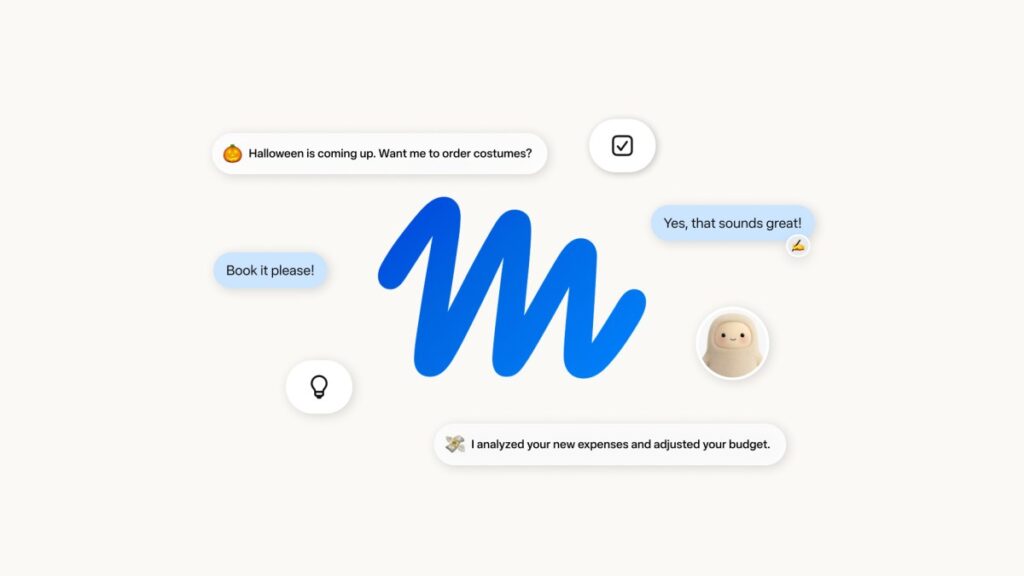
Examples of tasks include sending emails, booking travel, reducing bills, filling out forms, creating plans, converting recipe reels into grocery lists, sending party invitations, and making purchases. The checkout process uses Link by Stripe, which offers purchase protections. Shopify’s Shop Pay and 1Password integrations are scheduled to arrive later.
Users control which apps and services connect to the agent, doing so one by one to maintain transparency. Muse runs on Meta’s Muse Spark model and includes built-in connectors for several services. The company plans to add more over time. If a desired service lacks an API, Muse can set up a connection using credentials provided by the user. Where no API exists, the agent accesses the service through the browser.
Availability starts via the web at muse.ai, through iOS and Android apps, and within WhatsApp chats. The service will soon extend to Meta’s AI glasses. Access is free initially, though subscription plans apply as usage increases. A payment card is required to start the service.
Two paid tiers launch alongside the free version: Power at $20 per month and Maximum at $100 per month. Both subscriptions provide higher limits for handing off tasks. Meta expects most people to stay on the free tier. The application includes a usage meter showing the remaining percentage of free usage and warns users when that limit is reached, presenting subscription options.
The agent continues to operate after the user leaves the app. It also learns from conversations to make unprompted suggestions based on what matters to the individual.
Other companies are testing similar approaches. Some have built AI web browsers or services like Gemini Spark and Claude Cowork to initiate tasks on behalf of users. Others integrate AI into messaging platforms such as Apple’s iMessage, SMS, and WhatsApp.
These tools force users to consider how much privacy they are willing to trade for convenience. Early testers of the AI assistant Instinct were surprised to find it required a broad, perpetual license to access, use, host, cache, store, reproduce, transmit, display, publish, distribute, and modify user materials for model training.
Security measures and claims
Meta states that Muse runs in a dedicated, secure computer with its own browser, known as Muse Secure VM. This environment offers privacy, safety, and security protections for customer data. A separate Sentinel agent operates on the same virtual machine but is kept apart from Muse at the system level.
According to the company, Muse cannot see passwords or payment methods. It also claims not to share conversations or data with Meta’s advertising systems. Further details on these claims were released in a technical post, though security experts will need to investigate them.
History and trust
Meta’s history of privacy issues may hinder adoption. In 2011, the company settled with the FTC over charges that it deceived consumers by making private information public without approval. In 2019, the FTC penalised Facebook with a record $5 billion settlement for eight privacy-related violations. In 2023, the FTC charged Meta with violating a privacy order stemming from that 2019 settlement.
Technical missteps also occurred in 2019, when Meta discovered user passwords in readable formats, exposing people to potential hacks. The Cambridge Analytica scandal, where third parties collected data from millions without consent, remains a significant concern for many.
Meta has also faced repeated hearings before Congress regarding the protection of minors. This lack of legislative action led to multiple lawsuits, including the recent $18 billion settlement with 29 states. A separate New Mexico lawsuit ordered Meta to pay $942 million for harms to children, while thousands of personal-injury and school-district cases remain pending.
To address fears, Meta has provided technical documentation and designed Muse to feel more personal. Users can customise the agent by assigning a name, selecting an avatar, and configuring appearance and communication settings.
Whether this personal connection and the utility of the tool are enough to restore consumer trust remains to be seen.
What it means
Consumers now face a choice between the convenience of an agent that handles bills and travel and the risk of handing over sensitive data to a company with a contentious history. The opt-in design for each connection offers some control, but the requirement for a payment card and the potential for future subscription costs mean users are committing to a relationship that goes beyond simple chat.