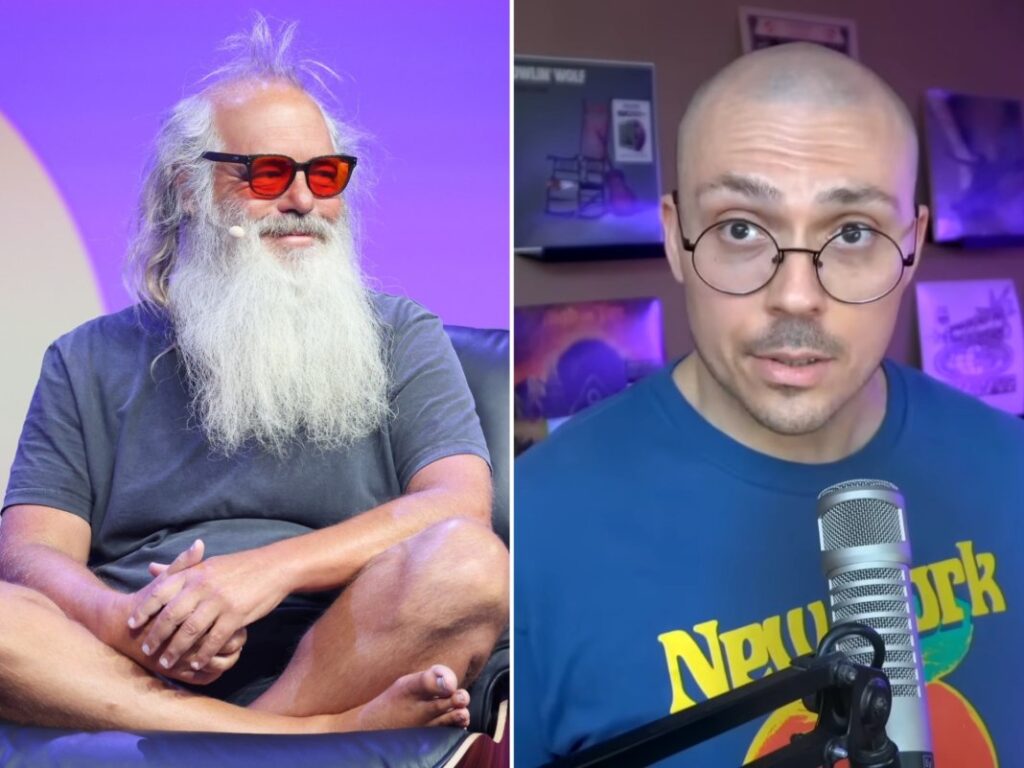
Rick Rubin is being called cringe by Anthony Fantano. The music critic argues that the producer’s influence has declined as his public profile has grown.
The decline of a producer
Rubin’s production style has always been divisive. His self-admitted lack of technical skill and musical theory knowledge relies heavily on instinct and atmosphere. This approach creates friction among artists. Kesha has named him her most admired creative mind, whereas Billy Duffy of The Cult believes Rubin possesses no musicality at all.
Even after publishing a book in 2023 titled The Creative Act, many musicians and journalists are questioning the strength of his methods. Fantano is the latest to voice criticism, stating he has become increasingly sceptical of Rubin in recent years.
Clinical decline
While critics often focus on Rubin’s limited musical knowledge, Fantano suggests the quality of his work has dropped as his fame has risen. He argues that Rubin now rides on the reputation of his own name rather than consistently delivering excellent records.
Fantano notes he respects Rubin’s career, calling him “one of the most significant big brains in the music industry ever”. He points to a direct hand in some of the most massive success stories in popular music over the last 50 years. However, Fantano claims the 2010s marked the beginning of Rubin’s downfall.
“Around this time period, I would argue the magic, consistency, and mystique of Rick Rubin really started to fall off,” Fantano says.
There is no denying Rubin has worked on marvellous records. These include revitalising Johnny Cash’s career with 1994’s American Recordings, producing System Of A Down’s 2001 album Toxicity, and working on the Beastie Boys’ 1986 release Licensed to Ill. Fantano insists that the weak output from 2010 onwards has highlighted glaring issues with Rubin’s production.
Fantano says it appears Rubin is focusing more on rebranding as a philosophical guru than creating quality records. Instead of accepting his role as a standard producer, Fantano critiques Rubin’s habit of posting quotes against white backgrounds on social media. This effort makes the various things he says seem more important than they really are.
Embracing artificial intelligence
Another issue is Rubin’s enthusiasm for AI. While much of the music industry has fought against the technology, Rubin has embraced it. He created an interactive online AI book titled The Way Of Code: The Timeless Art Of Vibe Coding.
Last year, Rubin branded AI as punk rock. On The Ben & Marc Show podcast, he explained: “[With punk rock music], you didn’t need the expertise or skill set, other than your idea and your ability to convey it. And vibe coding is the same thing – it’s the punk rock of coding.”
This stance aligns with Rubin’s insistence that he has no musical knowledge. He controversially wore this as a badge of honour during a 2023 interview with 60 Minutes. “I’ve no technical ability,” he admitted. “And I know nothing about music. I know what I like and what I don’t like. I’m decisive about what I like and what I don’t like.”
The interview and his love for AI add fuel to Fantano’s argument. Rubin is embracing technology that allows him to be even more hands-off in the studio. He is handing the reins over to a computer. While this does not remove Rubin’s influence on music, it is strange that he is embracing his lack of knowledge and actively seeking ways to avoid learning about music to improve his craft.
What it means
For artists working with producers like Rubin, the dynamic is shifting. The producer is moving away from detailed musical guidance toward a model that prioritises abstract concepts and technological delegation. This approach suits some collaborators but alienates those who value technical proficiency and traditional production oversight.