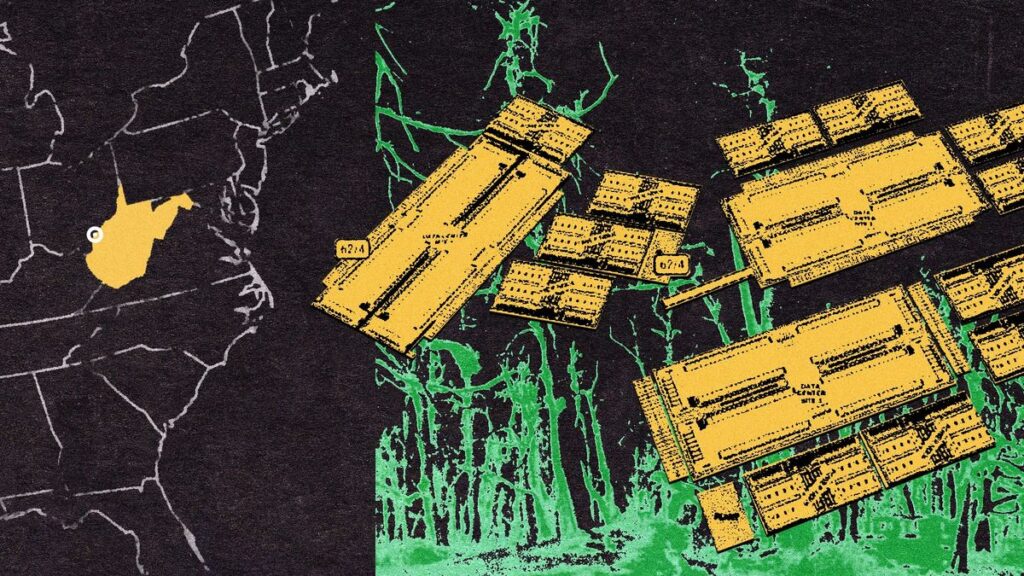
A historic American chestnut grove in Mason County, West Virginia, stands in the way of a 2,250-acre data center campus. The site, formerly Clements State Nursery, contains trees that could be cleared for Nscale’s Monarch Compute Campus, a project with clients including Anthropic, Nvidia, and Microsoft.
The American chestnut’s history
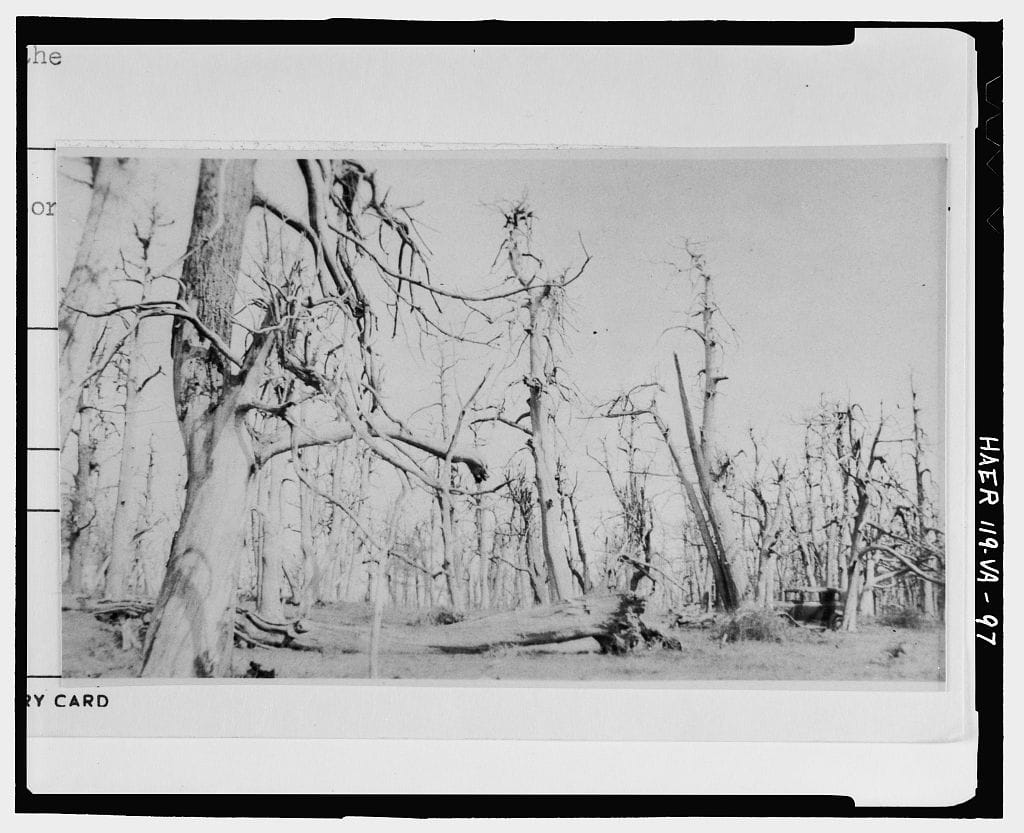
For thousands of years, the American chestnut tree supported life across hundreds of millions of acres from Maine to Mississippi. Roughly four billion trees produced nuts for humans and provided rot-resistant lumber for railroad ties and housing. The trees sustained black bears, white-tailed deer, and turkey. Some specimens grew 100 feet tall and 13 feet wide, representing one-fourth of all hardwoods. An old saying claimed a squirrel could scamper from New England to Georgia along their branches without touching the ground.
In 1904, a forester at the Bronx Zoo noticed American chestnuts dying in large numbers. A mysterious blight, thought to be brought from Asian chestnut trees, wiped out the population to near-extinction within 40 years. Conservationists have since worked to restore the trees and breed blight-resistant specimens. Today, a new threat has arrived: data centers.
Resistance against data centers
Communities across the country are pushing back against massive hyperscale data center projects. People protest noise pollution, environmental impacts, and the blow to property values near these computer warehouses. Elected officials often forge ahead with multi-billion dollar deals in direct defiance of their constituents’ wishes. Earlier this year, an Oklahoma farmer was arrested at a town hall meeting for speaking over his time against a 255-acre data center.
Data centers are easy to build but much harder and slower to power. Workarounds are egregious. Elon Musk’s xAI Colossus 2 data center in Tennessee skips the local grid and runs its own natural gas turbines. This worsens pollution and disproportionately impacts Black neighborhoods. But this tiny plot of American chestnut trees, just a little over an acre, has become a site of resistance in West Virginia.
A Small Town Is Fighting a $1.2 Billion AI Datacenter for America’s Nuclear Weapon Scientists
I first heard about the Clements chestnut grove after a 404 Media reader emailed me about it earlier this month. The reader said the trees faced “potential destruction after November 1, 2026.” Social media posts called the threat “urgent” and claimed bulldozers were lined up. Headlines declared the grove is “about to be destroyed.” In the last few weeks, the plight of a grove of fragile chestnut trees trembling in the shadow of a data center has gone viral.
Goldberry Grove, a local regenerative chestnut orchard, posted “They’re bulldozing the American chestnuts after November 1st,” sparking more outrage.
The deal and the delays
In 2023, Governor Jim Justice announced a multi-billion dollar deal with Fidelis New Energy for a lifecycle carbon neutral hydrogen production facility. The project included the “Mountaineer GigaSystem” and the Monarch Compute Campus. Nscale acquired the American Intelligence & Power Corporation, sponsored by Fidelis New Energy and including the Monarch campus, in March.
“The citizens of Mason County are elated with the announcement of Fidelis New Energy selecting Mason County, West Virginia, for its multibillion-dollar state of the art carbon neutral, clean hydrogen complex,” John Musgrave, the Executive Director of the Mason County Development Authority, said in Justice’s 2023 press release about the new data center plans.
With construction of the campus underway today, citizens do not seem elated. In September, heavy storms reportedly caused neighborhoods nearby to flood. Runoff from the construction site sent water and debris into adjacent properties as a section of the site’s fencing gave out. The Department of Environmental Protections (DEP) ordered Nscale “to immediately repair and strengthen the stormwater controls that failed, install additional erosion and sediment controls where needed, and take whatever actions are necessary to prevent similar releases from occurring in the future.”
Nscale told local news outlet WOWK 13 that it would pay for the damage. Separately, the company is trying to buy out homeowners, but the people living there are resistant. “What they’re saying is one thing, but they’ve got to prove it,” one homeowner told WOWK 13. “I’m staying. Fight for every one of these people.”
What it means
The fate of the trees has been a conversation among conservationists in the area for years. The American Chestnut Foundation (TACF) raised the issue in its May 2024 monthly newsletter. The foundation noted that communications had been made with West Virginia Secretary of Commerce James Bailey. He assured the WV chapter that the trees would remain and be taken care of by Fidelis. Bailey stated, “We value the chestnuts and will ensure that they are cared for. The state maintains ownership and control of the property, but if that ever changes, then the trees will be taken care of.”
The TACF noted that the future of the grove was “unclear.” Three years later, the picture is sharpening, as chestnut experts and the data center developers clash.
Sixty-two years ago, the first seedlings shipped out from West Virginia’s newly-designated Clements State Tree Nursery. The nursery was once owned by Mark Twain’s grandparents. The West Virginia Division of Natural Resources bought it in 1961 and the Division of Forestry operated it for decades onward. The nursery sold seedlings of several varieties of trees and kept 15 to 20 chestnut trees that showed promising traits of blight resistance. In 2021, the Charleston Gazette-Mail reported without announcement that the Division of Forestry pulled the plug on Clements State Tree Nursery.