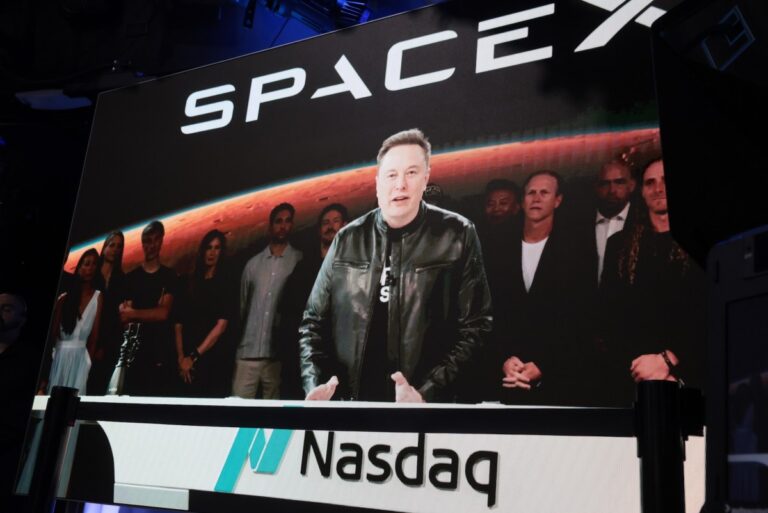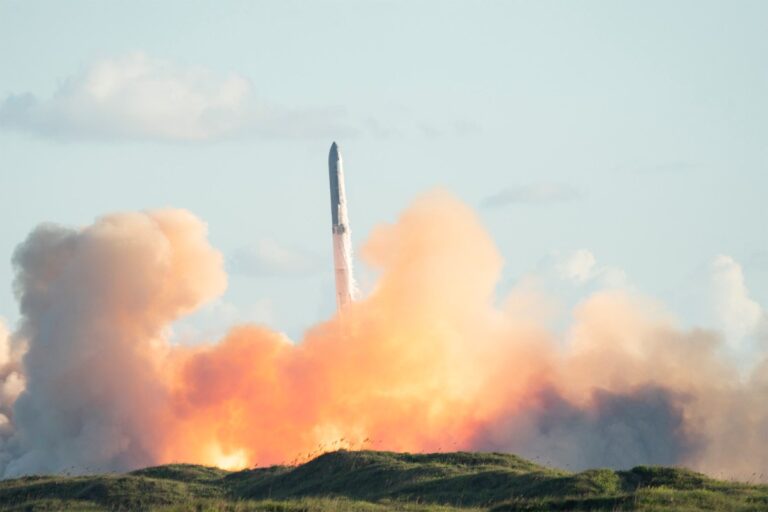
For creators and artists, the shift of SpaceX to public markets signals a seismic change in how massive capital fuels the future of digital infrastructure. While this news primarily concerns aerospace, the implications ripple outward: the company’s $75 billion raise cements its dominance in satellite connectivity, meaning the global internet backbone-and the AI tools that rely on it-will be increasingly dependent on a publicly traded entity. For makers relying on cloud compute or satellite data, the era of SpaceX is now one of strict quarterly scrutiny rather than experimental freedom.
The market reaction and initial volatility
On its debut day, shares on the Nasdaq surged, opening at $150 before climbing to $186.15 by 2:30 pm ET. That represents a jump of more than 15% from the initial pricing. Throughout the session, trading volume remained robust, with platforms like Robinhood reporting record-breaking traffic in the hours following the listing.
Executive commentary and internal culture
During an interview on June 12, SpaceX COO Gwynne Shotwell addressed the potential for a merger between her company and Tesla, suggesting such a move “might make Elon’s life a little easier.” This comment was noted particularly by Tesla shareholders watching the proceedings.
Meanwhile, founder Elon Musk took to his social media platform, X, to express his gratitude to the workforce. He shared a photograph of employees wearing green shoes, a visual nod to the “green shoe option”-an underwriting provision allowing the sale of up to 15% additional shares if demand proves strong.
Financial mechanics and the S-1 filing
The offering was priced at $135 per share for 555.6 million units, generating $75 billion in capital. This valuation transformed Musk into the world’s first trillionaire. The investment banks, specifically Goldman Sachs and Morgan Stanley, are estimated to have collected approximately $500 million in fees for orchestrating the deal.
The regulatory filing, the S-1, provided a rare window into the company’s operations. It detailed a business model dominated by the Starlink satellite network, while also highlighting the ambitions of the xAI division. The document revealed that despite revenues exceeding $18 billion in 2025, the company reported a loss of $4.9 billion for that year. Cumulative losses since inception are reported at over $37 billion.
Ownership structure and future risks
Elon Musk retains approximately 85.1% of the voting power, granting him a monarchical grip on the company’s direction. The filing also included a specific warning to investors regarding future dilution, adding weight to existing speculation about a potential merger with Tesla. Additionally, lower-tier SPV investors face a period of lock-up, meaning their true holdings and any associated fees will not be clear until restrictions are lifted post-IPO.
Key takeaways
- The $75 billion IPO marks the largest in history, pricing shares at $135 and creating the first trillionaire in the world.
- Starlink remains the financial engine of the company, while the S-1 filing highlights a $4.9 billion loss for 2025 against over $18 billion in revenue.
- Elon Musk holds over 85% of voting control, and the company has explicitly warned investors of potential future dilution.
- Strategic partnerships, such as the compute deals with Google and Anthropic, are now subject to public market scrutiny.