For creators and makers, this is a moment to watch closely. SpaceX’s initial public offering is not just a financial milestone; it reshapes the landscape for those building on the infrastructure of space and AI. The sheer scale of the deal-priced at $135 per share for 555.6 million units-raises $75 billion, cementing its status as the largest IPO ever. At this valuation, founder Elon Musk stands to become the world’s first trillionaire, a shift that will undoubtedly influence the trajectory of the tools and networks we rely on for our own work.
After 24 years of operations, this event dwarfs previous moments in the company’s history. While the media frenzy and public interest are expected, the mechanics of this launch are unprecedented. We are tracking the unfolding story, from the opening bell to the long-term implications for the industry.
Market reaction and trading volume
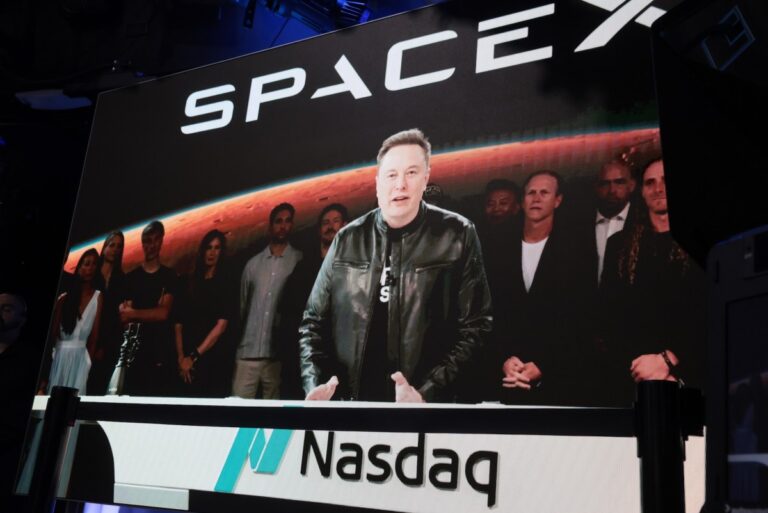
Shares listed on the Nasdaq opened at $150, marking an 11% surge on what is widely considered the most anticipated debut in history. The momentum has not slowed; by midday trading, the stock had climbed another 30%.
Trading activity has been intense. Robinhood reported record-breaking traffic on its platform in the hours following the debut, reflecting the global appetite for access to these shares.
Unlikely corporate connections
During an interview with CNBC, SpaceX Chief Operating Officer Gwynne Shotwell offered a remark that may resonate with Tesla investors. She suggested that a merger between SpaceX and Tesla could simplify Elon Musk’s life, hinting at a potential consolidation of his vast empire.
Tracking the listing
Behind the headline price, significant financial machinery is at work. For real-time data on the Nasdaq listing, investors should monitor the official exchange feed, which will display the record price once trading fully commences. The Nasdaq also provides video footage of the SpaceX team ringing the opening bell.
For the most granular updates, financial outlets like Bloomberg and CNBC remain the primary sources. Their liveblogs are essential for tracking any technical hiccups or market anomalies as the stock settles.
The figures behind the launch
The S-1 filing reveals stark financial realities. In 2025, SpaceX reported a loss of $4.9 billion against revenues exceeding $18 billion. This recent deficit is merely a fraction of the over $37 billion the company has lost since its inception.
Control remains firmly in Musk’s hands. As CEO, he retains approximately 85.1% of the voting power, a dominance that will be explored further in the breakdown of ownership.
The human cost of this valuation is significant. According to the New York Times, 4,400 SpaceX employees are poised to become millionaires following the listing.
The Equity podcast recently featured Elon Musk, noting that the sound of his $1.75 trillion paper wealth in the IPO might drown out any other noise.
Who benefits and who loses
This historic IPO delivers a massive payout to early investors, staff, and the founder. Musk’s paper wealth has officially surpassed $1 trillion, a figure that coincides with his peak influence and polarising public profile.
Musk’s grip on the public company will be monarchical. With over 50% of the voting power, his control extends far beyond the typical influence enjoyed by other tech founders.
While Musk holds the largest stake, others in his inner circle also stand to gain significantly. The breakdown of ownership shows a hierarchy of beneficiaries.
Conversely, lower-tier SPV investors face uncertainty. Until post-IPO lock-ups expire, their true holdings remain obscured, exposing them to hidden fees, delayed payouts, and the risk of fraud.
Insights from the S-1 filing
The registration document offers a rare, detailed look into the company’s operations. It paints a picture of a business driven by Starlink satellite internet, weighed down by historic losses, and looking toward future growth through its xAI division.
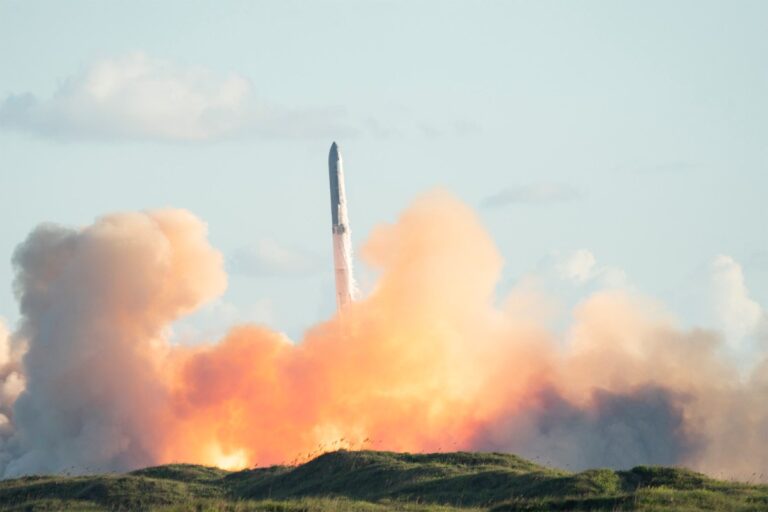
Regarding the Starship rocket, the path to reusability appears uncertain. The IPO filing and recent test flights provided two critical data points: a realistic vision for the near future, but also potential disappointments for both supporters and critics.
Investors were also warned of future dilution. The company amended its S-1 with language suggesting that significant share dilution could occur after going public, adding new fuel to speculation about a merger with Tesla.
Pre-IPO commercial deals
Leading up to the public listing, SpaceX secured several major compute contracts to strengthen its balance sheet.
- Anthropic: Agreed to pay xAI $1.25 billion per month for computing power, a deal first reported on May 20.
- Google: Committed to paying SpaceX $920 million per month. A Google representative characterised this as a short-term arrangement to meet unexpected demand for their new AI products.
- Contract duration: Opinions vary on the length of the Anthropic lease, with Musk reportedly downplaying the contract’s duration.
Key takeaways
- SpaceX has executed the largest IPO in history, raising $75 billion and listing on the Nasdaq at $150, with shares surging 30% in midday trading.
- Elon Musk is on track to become the world’s first trillionaire, retaining over 50% of the voting power and maintaining a monarchical grip on the company.
- The S-1 filing reveals a business dominated by Starlink, with $37 billion in cumulative losses and explicit warnings of future share dilution.
- Major compute deals with Google and Anthropic have bolstered the company’s balance sheet, while lower-tier SPV investors face risks of hidden fees and delayed payouts.