Vercel processes more than 1 trillion tokens daily through its AI gateway, with half of the 6 million daily deployments initiated by coding agents. The company, known for hosting software without server management, has quietly become a central hub for AI infrastructure.
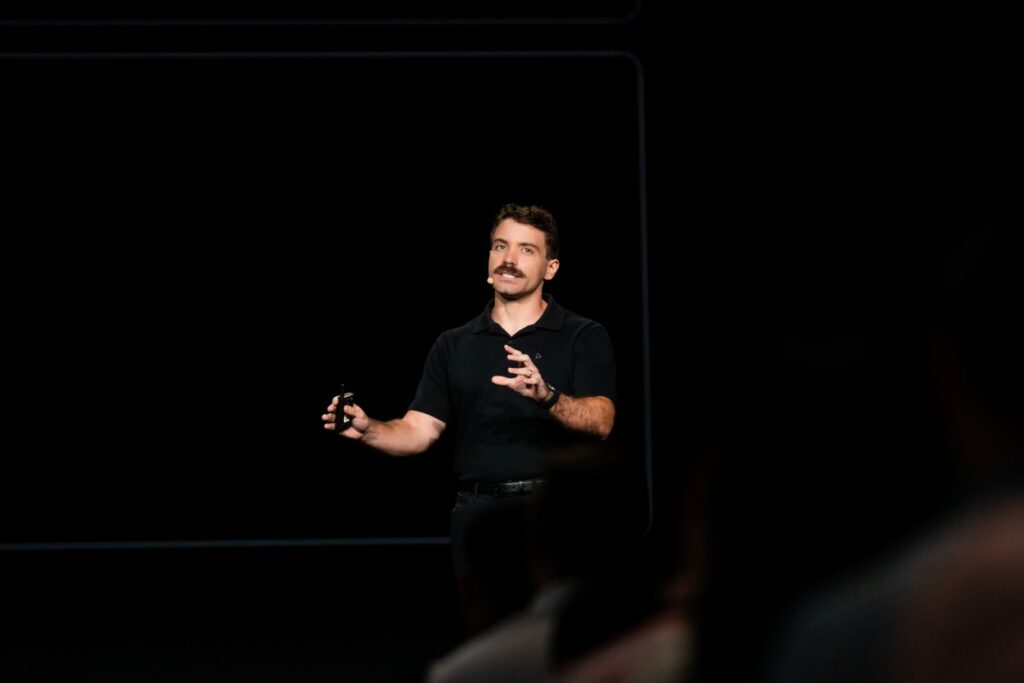
Following the ShipNYC conference last week, Vercel CEO Guillermo Rauch discussed how platform providers are increasingly competing with major AI labs. The conversation focused on the shift from experimental prototypes to practical production systems.
From prototypes to production realities
The community atmosphere has changed significantly this year. There is less focus on pilot programs and more attention on making systems function effectively in practice. Last year prioritised prototyping, with a culture of unleashing agents without constraints. The company deployed hundreds of agents organically, which revealed the difficulties of running them in production.
Rauch identified two primary use cases for agents. The first is the coding agent, which drives massive token usage. The second is the internal agent designed to run a company. The challenge here involves security and auditing. Teams need to know how to access data safely, audit agent actions, and maintain a complete trail of tool calls and access controls required to complete tasks.
To address this, Vercel created a framework called Eve. It allows users to define agent instructions and skills in natural language. Another tool, Vercel Sandbox, acts as a containment unit. Agents can express their intelligence freely within it, but strict policies control which data they can access or send outside the sandbox.
Preventing data leaks
The Sandbox offers significant data control. A persistent risk with AI tools is accidental training on private codebases. When a developer installs a tool like Devin or Cursor with incorrect settings, the entire codebase may be sent to the cloud for training.
Rauch recalled a conversation with the president of Airbus regarding this danger. The company holds decades of highly specific C++ code for aerospace engineering. A single misconfigured developer tool could expose that sensitive information to the public cloud for training purposes.
Breaking internal bottlenecks
The second killer use case involves internal corporate agents. At Vercel, a sales representative responsible for growing existing accounts faced a specific bottleneck. Her skills in building relationships were not the limitation; access to data was.
She could not ask for real-time insights, such as which five accounts added the most seats in the last two weeks. Previously, she had to wait for a quarterly project to build a new sales dashboard. Vercel experienced this same limitation for years, despite being a fast-moving R&D company. Rauch admitted to being incompetent with Salesforce engineering when he started, having never opened the platform before.
Now, Eve allows customer-facing agents to improve productivity across the entire organisation. The same technology used for external agents applies internally. Agents force companies to open their data structures, which creates long-term implications for the industry.
Many SaaS giants have built their business models on trapping user data. That strategy is incompatible with the requirements of agents, which need access to information to function.
Competition with AI labs
Client relationships with major AI labs are shifting. Last year, many companies committed to a single partner, building everything on OpenAI or Anthropic. Now, users understand that every component—model, data platform, sandbox, and gateway—is plug and play.
Developers can choose between OpenAI, Anthropic, or Gemini. Vercel has observed strong growth in Gemini usage, even though it receives less media coverage. Users are optimising for production, where Gemini offers excellent price and performance characteristics. Open models like Deepseek and GLM-5.2 are also gaining traction.
There are instances where infrastructure platforms compete directly with AI labs. Recently, OpenAI released tools that publish directly to the web without leaving the OpenAI environment. This allows them to host small websites.
This creates an opening for Vercel. Users may begin to view ChatGPT as a tool for building websites. If they ask follow-up questions about web hosting, the model may recommend Vercel. As models and platforms add new capabilities, they increasingly compete with existing infrastructure providers.
Rauch believes the industry is now deciding whether models and agents should remain coupled. The goal is to separate intelligence from the agent. Users should be able to take a module or library from one provider and build upon it, mirroring traditional software engineering practices.
Vercel aims to become the AWS of this generation. Consequently, the company is fighting for a world of open protocols rather than closed ecosystems.