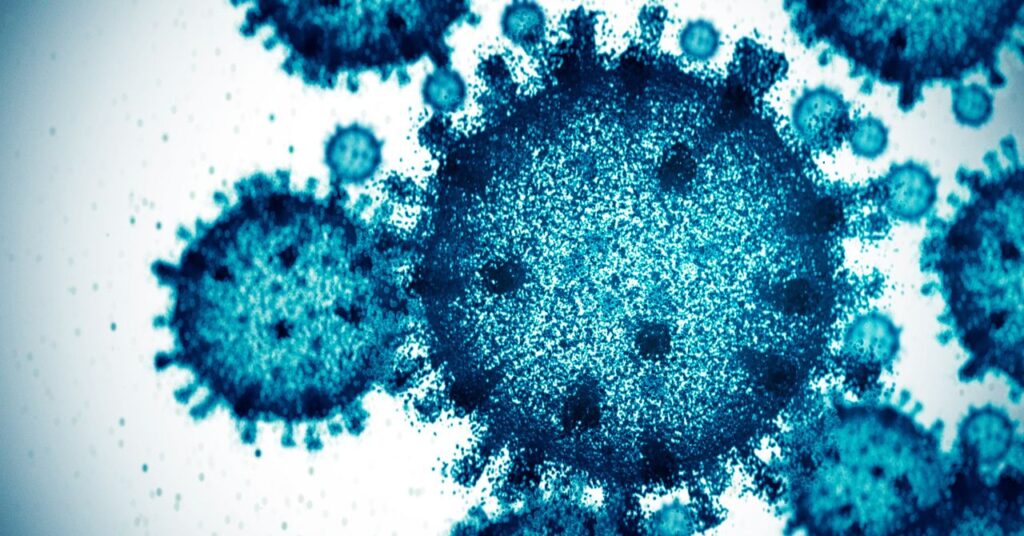
Scientists at Stanford University and the Arc Institute have used artificial intelligence to design 16 new viruses that infect and kill specific bacteria. The work, published in the journal Science, shows these engineered bacteriophages can overcome bacterial resistance, but it also highlights the risk of misuse for biological weapons.
Researchers have long been able to build viruses from scratch. These synthetic genomes usually copy known pathogens to test drugs or expand understanding of viral behaviour. This new study differs because the AI did not replicate existing viruses.
Instead, the system built entirely new viral genomes from genetic data gathered from millions of animals, plants, microbes, and viruses found in nature.
The team focused on bacteriophages. These are small viruses that infect only bacteria. They offer a potential alternative to antibiotics for treating infections where bacteria have become resistant to standard drugs.
The project relied on two AI models called Evo 1 and Evo 2. These tools were trained on vast datasets of genetic sequences to learn how genes are organised, which parts of the code are essential, and what biological limits keep an organism functioning.
The researchers used the bacteriophage Phi X-174 as a guide. This virus infects the bacterium Escherichia coli. The goal was not to copy it but to use its structure as a blueprint for the AI to generate thousands of new genomes capable of infecting E. coli.
The AI-created viruses kept the functional organisation needed to find the bacteria, insert their DNA, replicate, and assemble new particles. However, the specific DNA sequences were very different from those found in natural bacteriophages.
16 New Viruses Created Using AI
Scientists evaluated the AI-generated genomes to find the ones most likely to work. They looked at gene organisation, regulatory elements, and other biological criteria based on the Phi X-174 model.
This process produced a sample of 300 genomes. Laboratory teams synthesised these one molecule at a time. They then introduced them into E. coli cultures to see if they could produce active viruses.
Only 16 of the 300 synthesized genomes created fully functional bacteriophages. These new viruses had unpublished sequences, different genes, new regulatory elements, and varying genome sizes. Their behaviour also varied; some infected bacteria faster than others, while some showed different replication abilities.
The team tested whether these AI-designed phages could fight resistant bacteria. They exposed a mix of AI-generated viruses and natural phages similar to Phi X-174 to strains of E. coli that had already built resistance to the natural virus.
The results showed the AI-generated viruses rapidly overcame the bacterial resistance and established infection. The authors state this demonstrates “a path toward artificial intelligence–generated phage therapies against rapidly evolving bacterial pathogens.”
The Two Sides of the Milestone
This discovery offers new ways to tackle bacterial resistance. Researchers say this approach could lead to personalised treatments that evolve at nearly the same speed as the pathogens.
While this is a major advance for molecular biomedicine, it raises concerns about malicious use. Experts worry the technology could be used to design new diseases, highly toxic substances, or pathogens capable of triggering a pandemic.
Moritz Hanke, a researcher at the Johns Hopkins Center for Health Security, told The New York Times there are currently no safeguards to effectively prevent the creation of a lethal virus with AI help. He described “a huge disconnect” between how fast science and technology are advancing and the development of regulatory frameworks.
Debate over these risks is not new. A study by the Rand Corporation three years ago warned that advanced AI systems could refine planning and execution of biological weapon attacks. Now, with technology developing faster, fears grow that such capabilities will become even more sophisticated.
The nonprofit organisation also noted that the speed at which AI systems evolve often outpaces governments’ capacity for regulatory oversight.