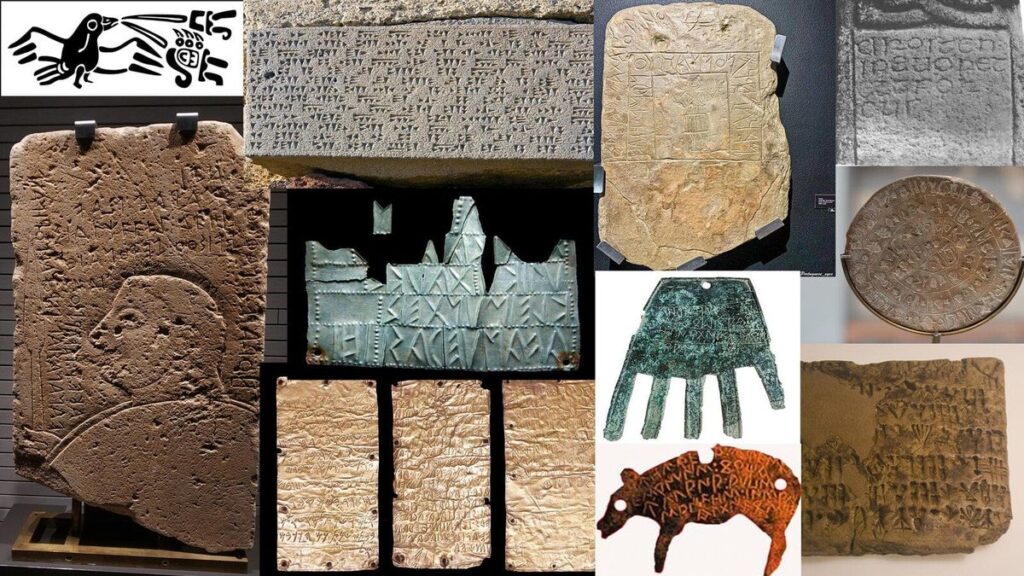
A new study confirms a surge in global language diversity occurred between 3,000 and 1,000 years ago, before a sharp decline began over the last two millennia.
The rise and fall of linguistic diversity
Researchers led by Damián Blasi of Pompeu Fabra University in Barcelona have reconstructed human linguistic history since the end of the Ice Age. The data suggests that 12,000 years ago, when agriculture began, the global population stood between 4.4 and seven million people. At that time, humans spoke between 4,500 and 6,000 languages.
The team built a model using 171 hunter-gatherer groups to estimate the distribution and size of these preagricultural populations. They then ran thousands of simulations to predict how language evolved as humans domesticated plants and animals. This process drove population growth and cultural complexity.
The models converged on a single scenario: linguistic diversity peaked around 2,000 years ago. At its height, there were possibly 75,000 tongues spoken worldwide.
“We uncovered a linguistic ‘golden age’ with tens of thousands of languages 3,000 to 1,000 years ago,” Blasi’s team said in the study. “In our model, this ‘golden age’ was followed by an extremely rapid decrease in linguistic diversity, especially over the last two millennia.”
Colonialism over the past 500 years accelerated this loss through the dominance of large languages such as English, Spanish, Mandarin, and Hindi. However, the study indicates the decline started at least 1,000 years ago due to the formation of smaller-scale multinational empires.
The researchers note that languages serve as proxies for other cultural units. Because language is often transmitted alongside marriage patterns, religious practices, kinship systems, and social organisation, other cultural variants have likely suffered a mass extinction alongside tongues.
Alan Turing’s unfinished erotic story
Sarah Dillon of the University of Cambridge has published a new study on Alan Turing’s short story “Pryce’s Buoy.” The mathematician, who helped break the Nazi enigma code, died at 41 following persecution for his sexuality.
The draft is an autofictional account of Turing’s relationship with Arnold Murray. It was written in Turing’s spare time and appears to have been left unfinished, either by his family or the author himself.
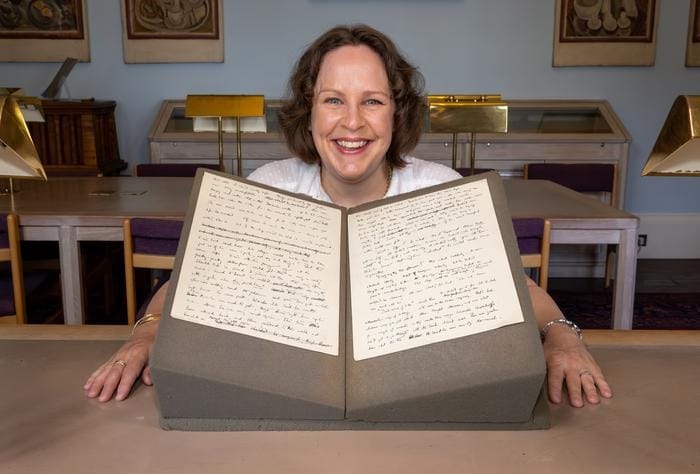
Dillon found that Turing copied stylistic choices from the gay writer Sir Angus Wilson. She noted that Wilson did not hide his homosexuality or his published work. Turing did not hide his sexuality either, though he did not publish his story.
“Wilson braved…dangers—he did not hide his homosexuality, and he did publish his work,” said Dillon in the study. “Turing did not hide his sexuality either, and although he did not publish his story, we cannot say whether this was through choice or because of the abrupt end to his life in June 1954.”
Dillon emphasised that the story represents Turing’s playful side, which persisted despite the immense injustice he faced.
A Jupiter-sized world orbiting a brown dwarf
A team led by Kevin Hoy of Diego Portales University reports the discovery of a Jupiter-sized world orbiting a brown dwarf. This brown dwarf orbits a star called CD-35 2722, located about 73 light years from Earth.

Astronomers have found thousands of exoplanets but have not clearly spotted an exomoon. Brown dwarfs are roughly the size of a gas planet without nuclear fusion in their core. Because moons orbit planets and brown dwarfs are intermediate objects, the team used the term “exosatellite.”
“Exoplanet satellites can be easily described as exomoons, but it is not clear if satellites of brown dwarf companions can be called the same, as the term lacks a formal definition,” said the researchers. “Perhaps we are approaching the limit of language invented to describe the Solar System, which is entirely unlike CD-35 2722.”
Ritual use of Cloggs Cave confirmed
For at least 25,000 years, Aboriginal Australians gathered at Cloggs Cave to burn grass and perform magic rituals. The site is located several hundred miles east of Melbourne.
Researchers led by Elle Grono of the Australian National University found layers of phytoliths. These are mineral structures found in plant cells. The evidence corroborates that the cave was a site of magic and healing for 25,000 years.
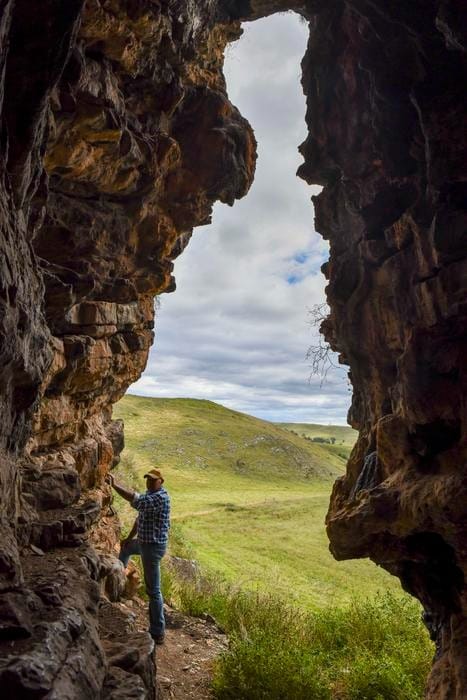
“Taken together, the archaeological features and multiple lines of archaeobotanical evidence at Cloggs Cave corroborates traditional GunaiKurnai knowledge and nineteenth century ethnography of ritual practices involving the use of plant resources, indicating that the cave was a special, secluded place used by mulla-mullung, powerful learned men and women, for the practice of magic, healing, cursing and spiritual practices,” said the team in their new study.
What it means
The discovery at Cloggs Cave validates traditional GunaiKurnai knowledge regarding the use of plant resources for ritual. It confirms the cave was a secluded place for mulla-mullung, powerful learned men and women, to practice magic, healing, cursing, and spiritual activities.