A new paper from Rikiya Takehi, Jayden Teoh, Alex Zhang, and Omar Khattab shows that large language models can read and write neural network weights directly. The authors call this weight-space programming. Frontier models like GPT-6 Astra can analyse raw floating point numbers to identify what a network was trained to do. They can also modify those numbers to improve performance without using code execution or training loops.
The researchers tested this by feeding weights from four policy networks to an LLM. Each network was trained to play a simplified 10×10 grid version of a classic game: Breakout, Pong, Pac-Man, and Freeway. The prompt instructed the model to identify the game using only the weight data. It explicitly forbade the use of calculators or code execution.
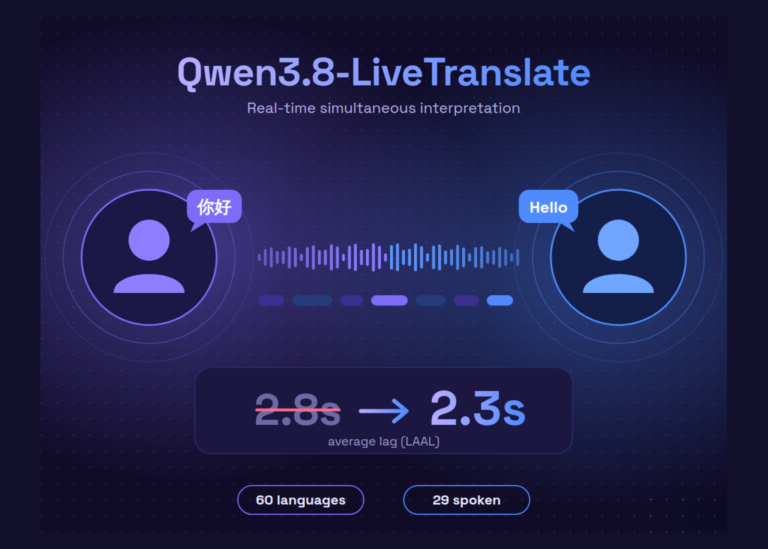
Testing Qwen 3.8 27B locally
I ran the experiment using Qwen 3.8 27B on my laptop. The model is 17GB in size and uses the Q4_K_M quantisation format. I loaded it in LM Studio with a context window extended beyond the default 8192 tokens.
I set the timeout to 900 seconds to allow for long reasoning traces. The model successfully identified Pac-Man, Pong, and Breakout. It failed to identify Freeway, likely because that game is less well known than the others.
Identifying the Pac-Man weights took 46 minutes and 12 seconds. The model consumed 43,506 reasoning tokens. The output described an agent moving through an 8×8 maze with wall blocks and reward targets. Confidence was rated at 72%.
Pong took 1 hour and 4 minutes. The model described a vertical paddle on the right side intercepting a moving ball. Confidence was 75%.
Breakout took 52 minutes and 25 seconds. The model identified the game as an Arkanoid-like paddle and ball game where bricks give reward when hit. Confidence was 88%.
The reasoning traces are dense with calculations. One section checks specific channel rows at row 8 column 7 and 8. It calculates indices by dividing line numbers by 5 to determine row and column positions. This manual arithmetic helps locate where the agent is positioned within the grid.
What it means
This capability does not change how customer products function or how API providers handle data. The research focuses on the internal mechanics of model weights. It shows that a sufficiently large model can act like a human researcher reading raw data. A human with a notepad and pencil could likely achieve similar results given enough time and effort. The technology does not imply that future models will edit their own code autonomously.