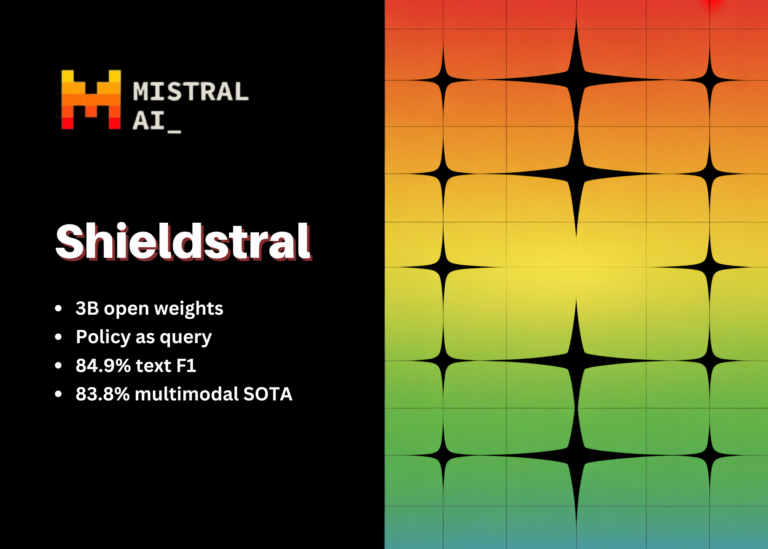
French AI firm Mistral has published the weights for Mistral Large 4, a trillion-parameter system designed for cybersecurity. The model, nicknamed Le Chonk, is available for immediate download and deployment by businesses and government bodies.
This move intensifies the competition between open-weight developers and closed-model providers like OpenAI and Anthropic. Open-source advocates argue that organisations should not depend on external companies for advanced capabilities. That stance carries particular weight in cybersecurity, where control over data and systems is paramount.
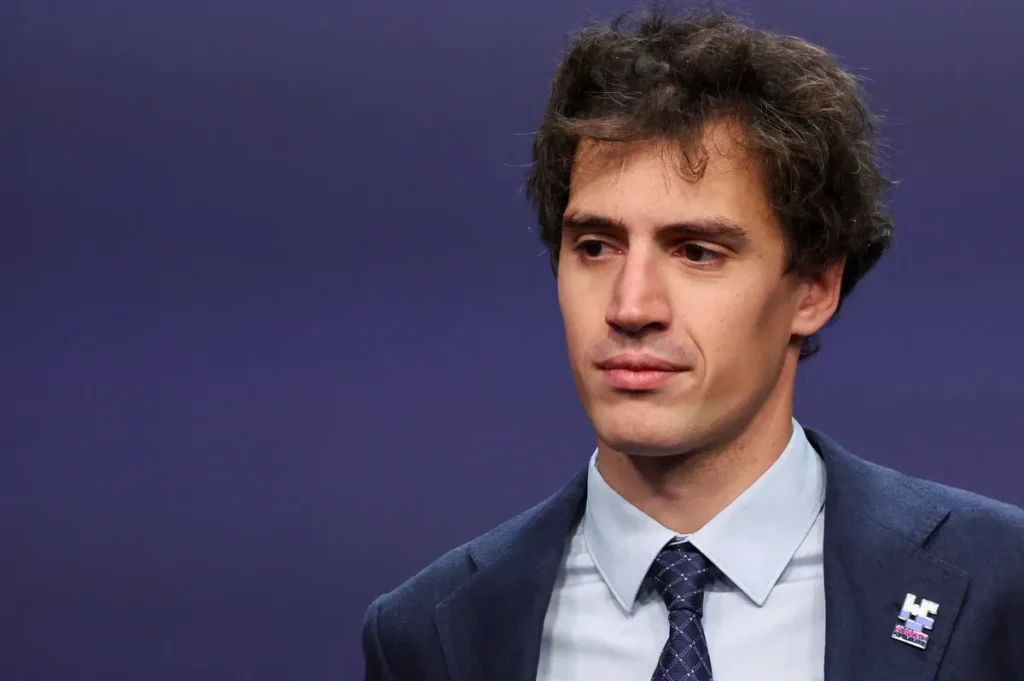
Arthur Mensch, CEO of Mistral, stated that AI should serve as a tool for empowerment, not dominance. With Le Chonk, the company claims to achieve state-of-the-art performance while committing a fraction of the compute and capital required by closed labs.
Releasing the model weights allows other entities to deploy ML4 for their specific needs. The weights represent the numerical training data that animates the system.
Mistral compares the model’s performance to GLM-5.3, a Chinese open-weight competitor previously regarded as a top choice for cyber work. However, Mistral asserts its model uses 47 percent fewer tokens per task, making it more economical.
The company also claims ML4 outranks all other open models on agentic coding tasks based on Artificial Analysis’ Coding Agent Index.
“Amid growing cyber threats, ML4 brings state-of-the-art sovereign cyber defense capabilities to enterprises and governments globally,” the company said Thursday. “Enterprise and public sector institutions can now download, deploy, and own frontier AI to detect, analyze, and respond to threats across code and IT infrastructure.”
The weights are available on Hugging Face and via the company’s API.
Pierre Stock, Vice President of Science at Mistral, told TechCrunch that releasing the weights gives organisations greater control over their own AI defence strategies.
“Concretely, it means that, for instance, as a business company or as a government, you’re able to have access to frontier intelligence to defend yourselves against cyberattacks. Access that can’t be cut off by definition because the model is open-weighted,” he said.
Stock added that the model could identify, coordinate, and respond in real time to major security incidents. The open-source nature allows companies to deploy the system on-premises within their own ecosystem.
While AI advances help security professionals find bugs at a higher rate, Stock believes it is vital to provide these capabilities to everyone as soon as possible. This approach aims to strengthen the ecosystem, as malicious actors might attempt to use their own technology to attack.
Separately, Stock addressed recent incidents involving rogue AI agents. He acknowledged the risks but cautioned against fearmongering.
“We don’t want to fearmonger people. We think it’s a problem that is solvable. It’s a hard problem to have good security,” he said.
What it means
Security teams can now host a frontier-level model on their own infrastructure rather than relying on third-party APIs. This ensures that access to the model cannot be remotely disabled by an external provider during a crisis. For creative and technical work, this means organisations retain full control over how the system processes sensitive data and executes defensive tasks.