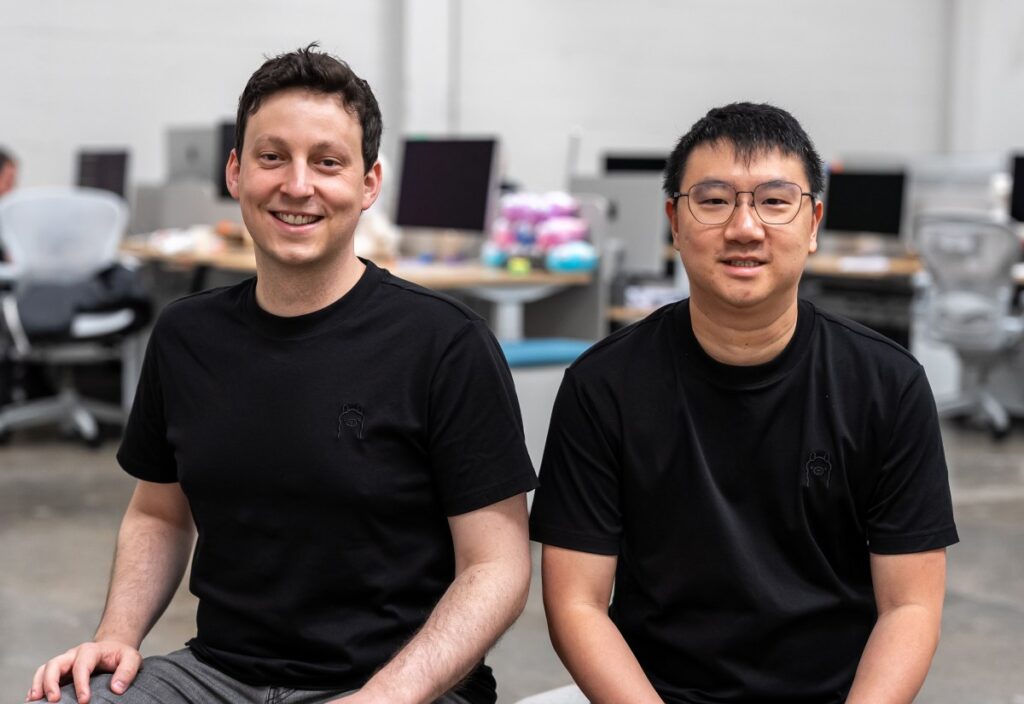
Ollama has raised $65 million in a Series B round led by Theory Ventures, according to CEO Jeff Morgan. The company now employs 14 people and serves nearly 9 million developers monthly.
The funding round
This latest investment follows a $15 million Series A led by Benchmark’s Peter Fenton. The total capital raised stands at $88 million.
Ollama launched in 2023 to allow developers to run open-weight AI models directly on their personal computers. Setup takes minutes. The project has gathered 176,000 stars and nearly 17,000 forks on GitHub.
Users can also access larger models hosted on the Ollama neocloud through subscription tiers ranging from free to $100 per month. Usage is tracked by GPU time rather than token limits.
From containers to models
Morgan and co-founder Michael Chiang previously built Docker Desktop. They joined Docker after their earlier startup, Kitematic, was acquired. Docker creates containers that simplify moving applications between clouds or from desktop to cloud, removing difficult hardware configuration tasks.
Ollama performed a similar function for AI. It removed the friction of setting up local environments for large models.
“Open models started coming out in 2023 but they were really hard to use,” Morgan said. “They had been geared toward researchers at the time, not programmers. As a result, it was really hard to get them up and running.”
Three years after launch, the tool is used by over 8.9 million developers every month. It appears in 85% of Fortune 500 companies.
Peter Fenton, who joined the board, noted the rarity of building a product that reaches such widespread adoption among developers.
“What Jeff and Michael built with Docker is being used by 10 million-plus developers every day. The creative powers to create a product that goes to ubiquity for developers is extremely rare,” Fenton told TechCrunch.
Business growth and enterprise adoption
Morgan and Fenton declined to discuss specific revenues or the new valuation. Morgan identified January as the turning point for the business. That month, OpenClaw gained significant attention. Larger open models suddenly became capable of agentic tasks like coding.
Since then, industry discussions have focused on paying users, especially large enterprises and fast-growing application-layer startups, shifting toward more affordable open models. These users reserve closed models from providers like Anthropic for specific, as-needed situations.
Fenton argues the debate is not an either/or choice between open and closed models. Both will have business. However, any company with high inference expenses has a vital project driving them toward open-weight models.
There is evidence that startups and enterprises are already using open models for daily needs. This trend supports Ollama’s cloud business.
A new wave of open source companies
Ollama illustrates how AI is spawning a new crop of open source projects that attract venture capital. Other examples include Inferact, maker of vLLM, and RadixArk, maker of SGLang.
There are also companies like OpenClaw and its alternatives, such as NanoClaw. Tiny startups like Arcee are building their own open models from scratch.
Addressing the backlash
Not every fan has been happy about the company pursuing a commercial path. About a year ago, blog and social media posts complained that the cloud business drew attention away from the free project. Some cited Ollama as an example of “Enshittification” of developer tools.
Morgan views the cloud service as an evolution of the open source mission. State-of-the-art large open models are often too big to run on a personal computer. The team decided to help find the compute for that.
“Nothing has changed for the core product that’s free on the desktop. There’s zero change to the premise that this is the place you can discover and run local models,” Fenton added.