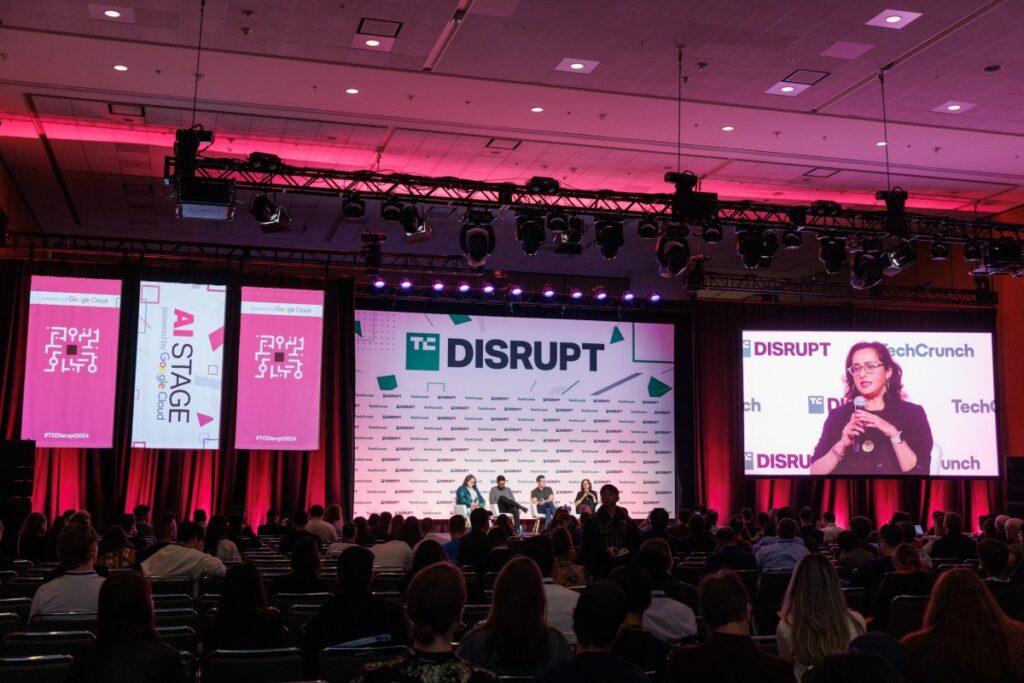
Founders at TechCrunch Disrupt 2026 are no longer forced to pick a single AI model for their products.
Open source tools are getting better. Frontier APIs keep improving. Companies can now customise models for specific tasks or build systems that call on several models at once. This gives founders more options, but it also adds more decisions about where to spend money, what to own, and how much flexibility to keep as the technology shifts.
Four sessions at the event explore these choices from different angles. They cover multi-model applications, customised models, infrastructure, and the chips underneath.
Secure your Disrupt pass to hear how AI leaders are making these calls. Save up to $100 on your pass now and get a second pass at 50% off. Or, for a limited time, get a $75 Expo+ Pass if you’ve been affected by a layoff.
When one model is not enough
Picking between open and proprietary models assumes a company must choose just one. Increasingly, AI products call on different models for different jobs.
The session “The Real Tokenmaxxing: How the Best AI Companies Navigate a Multi-Model World” brings together Mo Jomaa, partner at CapitalG; Vipul Ved Prakash, co-founder and CEO of Together AI; and Zuzanna Stamirowska, CEO and co-founder of Pathway, on the Builder’s Stage.
They will explore why companies use multiple models; how they balance cost, performance, and flexibility; and when open models can outperform proprietary alternatives.
For founders, that flexibility affects more than model performance. It influences operating costs, product decisions, and how quickly a company can take advantage of better models as they emerge.
Get your ticket to Disrupt to hear how companies are deciding which model makes sense for which job. Grab yours now to save up to $100 and get a second pass at 50% off.
How much of your AI stack should you own
Model choice raises a bigger question: what does your company need to own?
Manos Koukoumidis, CEO and co-founder of Oumi, will take the Real World AI Stage for “Which AI Should Your Company Actually Deploy: Rent, Customize, or Build.” He will tackle whether startups should build their own models, when customisation can become a competitive advantage, and how to choose between open and proprietary AI.
Through audience polls, startup scenarios, and a practical framework, Koukoumidis will help attendees evaluate frontier APIs, customised open weights, and owning AI outright. Attendees will come away with three decision principles they can bring to their next architecture conversation.
The choice founders make can shape both the product and the business behind it. Building more of the AI stack can offer greater control and differentiation, but it can also require more time, talent, and resources than relying on existing models.
Add the Oumi session to your Disrupt agenda for a practical framework for deciding how much of your AI stack your company really needs to own. Grab your pass now to sit front row in this discussion.
Where open and proprietary AI fit
For some startups, the decision will still come down to the trade-offs between open and proprietary models.
Nader Khalil, Director of Developer Tech at Nvidia, and Sydney Sykes, Global Head of VC Partnerships at Nvidia, will take the Builders Stage for “Building AI Startups Worth Betting On.” They will examine what founders are choosing today, the trade-offs between frontier APIs and open-weight models, and how those choices can affect product strategy and long-term differentiation.
Those trade-offs have business consequences. Model choice can shape everything from costs and infrastructure requirements to how much control they have over their product. It can also determine where, and how easily, a startup can create differentiation competitors cannot replicate.
Secure your Disrupt pass to hear how builder and venture perspectives are shaping model decisions. Save up to $100 on your pass and get a second at 50% off.
When architecture reaches the hardware
Model architecture is only part of the equation. AI performance ultimately depends on the hardware underneath it, and advances in AI are beginning to change how that hardware gets designed.
Anna Goldie, founder and CEO of Ricursive Intelligence, and Azalia Mirhoseini, founder and CTO, will take that idea to the Disrupt Stage in “When AI Starts Designing Its Own Hardware.” They will explore how AI is optimising chips and hardware, why model architecture and hardware are becoming more closely connected, and what an increasingly open AI ecosystem could mean for the infrastructure underneath it.
For founders, the connection between AI and hardware could affect how quickly new capabilities reach the market. Faster chip development could also change the infrastructure available to startups building the next generation of AI products.
Get your ticket to Disrupt to hear what happens when AI starts helping design the hardware that powers it.
Learn how to keep your AI options open at Disrupt 2026
These conversations are part of 200+ sessions across six industry stages, roundtables, and breakouts at Disrupt, taking place October 13-15 at Moscone West in San Francisco. More than 10,000 founders, investors, operators, and tech leaders are expected, along with 250+ speakers and 300+ exhibiting startups.
In addition, matchmaking, dealmaking, and ad hoc networking give attendees opportunities to connect with founders, investors, potential partners, and other builders facing many of the same technology and business decisions.
A startup may use a frontier API today, customise an open model tomorrow, or eventually move workloads among several models. Preserving flexibility could be as important as choosing the right model now.
Secure your pass to TechCrunch Disrupt 2026 and hear how AI leaders are approaching the choices shaping what, and how, they build. Save up to $100 now and get 50% off a second pass. Laid off? Grab your Expo+ Pass at just $75.
What it means
For people making things, the pressure to commit to one engine is fading. You can mix and match tools to fit the task at hand. This lowers the risk of locking into a bad choice today. It also means you might need to manage several connections instead of just one. The event offers a chance to see how others are handling that mix.