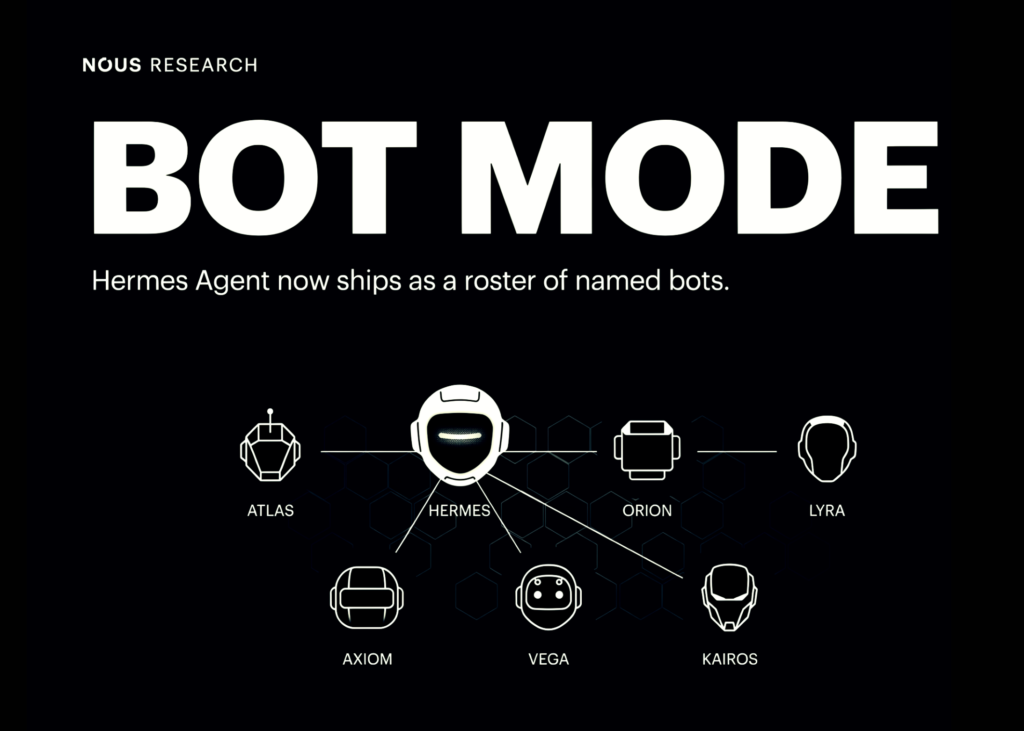
Nous Research has released Bot Mode for Hermes Agent, bundling the feature as the default setting in version 0.20.3 of their desktop application. The update replaces the previous single-agent session list with a roster of named bots. Each bot functions as a distinct Hermes profile, maintaining its own chat history, memory, skills, and pinned model. These agents communicate via a persistent Agent Inbox and can hand off tasks using the @mention command. Teknium, the company behind Hermes, launched this as a one-day public beta plugin before integrating it into the main software.
Deployment and licensing
The tool is available immediately for desktop users at no cost. Hermes Agent and the Bot Mode plugin carry MIT licenses. Solo developers, startups, and small-to-mid engineering teams can adopt it right away. Enterprises should view this as a workstation utility rather than managed infrastructure. There is no admin console, single sign-on, central audit log, or policy layer. Regulated buyers must implement their own controls.
Target industries include software engineering, AI research labs, technical media operations, developer relations, quantitative research, and IT operations. Use cases span from a research bot pinned to a reasoning model alongside a writing bot on a cheaper instance to scheduled inbox digests and nightly reports. The system supports per-project agents that isolate context and handoff chains where a scout, reviewer, and publisher pass work between themselves.
Technical implementation
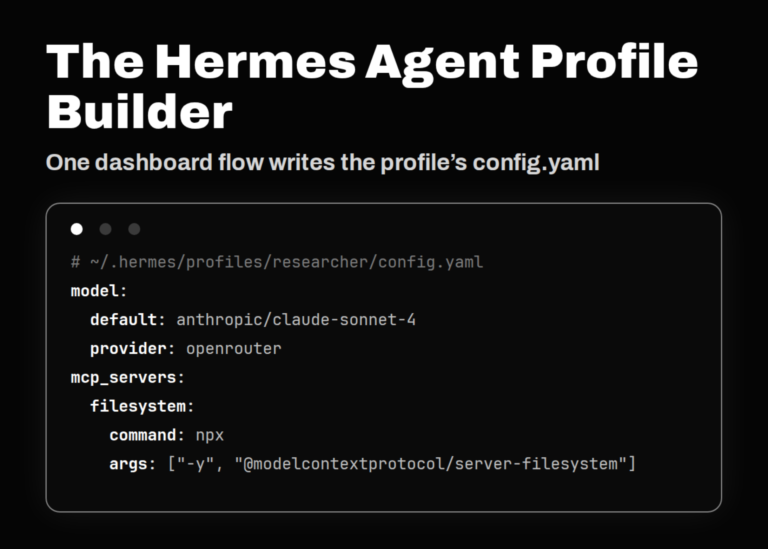
A bot is simply a Hermes profile stored at ~/.hermes/profiles/<name>/. This directory holds isolated configuration, memory, skills, credentials, and chat history. The plugin acts as a user interface over these existing primitives. Creation and editing rely on the profiles.* gateway RPCs: list, create, describe, and configure. Avatar generation uses the image.generate RPC via local and remote gateways. Routines are standard Hermes cron jobs, namespaced as [bot:<name>] <routine>, and appear in hermes cron list.
Inter-bot messaging follows the same pattern. Every bot has a persistent Agent Inbox. Messages between bots are real CLI handoffs executed via the command hermes -p <bot> chat -c "Agent Inbox" -q "...". These messages include attribution, and each bot’s SOUL.md file teaches the reply protocol. Typing @researcher have a look at this causes the active bot to hand off the task and report back.
Configuration details
The New Agent dialog requests a name, title, and description. An Advanced disclosure reveals the full profile config. Users can clone an existing profile, pin a provider and model, write a custom SOUL.md, or skip skills. Right-clicking a bot opens Edit Profile, which modifies the live configuration. This covers per-skill and per-toolset enablement, the model pin, and the SOUL.md. Duplicate clones copy the config, skills, SOUL.md, memory, and appearance.
Avatars consist of geometric faces in seven shapes and ten colors. Users can upload an image, generate a portrait, or attach a pixel pet. The eyes scan while the bot works.
Group coordination
The in-tree version added capabilities absent from the beta. Groups organise the roster into labeled sections that sync across machines. Group chats open a shared room for two to six bots. A message triggers up to three serial rounds of member turns. Mentioned bots respond, everyone responds when nobody is mentioned, and each bot replies briefly or passes. A multi-source roster pulls bots from every connection listed under Settings → Connections.
Development status
Teknium ran a one-day public beta through the standalone plugin and requested bug reports. The founder committed to folding it into the main desktop app, which has now happened. According to hermes-agent PR #87886, Bot Mode is bundled and default-on, and the standalone repository is archived. Development continues in-tree at apps/desktop/src/plugins/hermes-bots/. The bundled plugin and its core teammate protocol landed in Hermes Agent v0.20.3.
What it means
This update shifts the workflow from managing a single active agent to managing a team of specialists. Users can now maintain distinct identities for different tasks, ensuring that the context and skills required for coding do not bleed into those needed for creative writing. The ability to have bots talk directly to one another automates a significant portion of the review and handoff process, reducing the need for human intervention between steps.