OpenAI, Anthropic, and Google are asking for a coordinated slowdown in frontier AI development, citing safety concerns. Not everyone accepts that explanation.
Anthropic CEO Dario Amodei has recently asked the industry and governments to pause progress on advanced models. He is also seeking antitrust exemptions to allow this pause to happen. Other major figures, including Sam Altman and Elon Musk, have voiced agreement. Critics are pushing back with equal force.
Cohere CEO calls it “a cartel by another name”
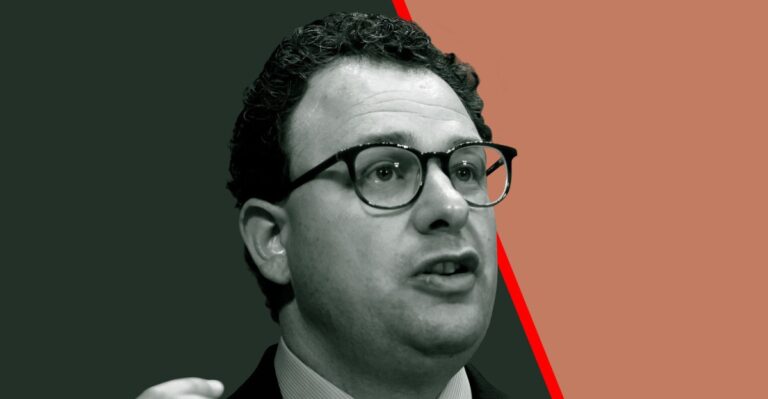
Aidan Gomez, co-founder and CEO of Cohere, offers the most detailed rebuttal. In a blog post, he describes the proposal as an attempt to set the rules and lock down the market. Gomez supports independent testing of powerful AI systems. However, he argues Anthropic’s plan goes further. A handful of dominant labs would receive antitrust exemptions, set shared standards, and force every other developer worldwide to follow their rules.
Gomez is especially critical of the barriers to entry the proposal would create. The plan requires massive compute, permanent monitoring infrastructure, dedicated safety organizations, embedded evaluation teams, and government connections deep enough to manage all of it. The few evaluation organizations labelled “independent” are funded by the same companies they are supposed to audit. Anthropic’s framework defines risk as a function of scale. Gomez argues that makes the companies with the biggest systems the only ones deemed qualified to judge risk.
“A wolf in sheep’s clothing, a cartel by any other name,” Gomez writes. He sees the safety warnings as a smokescreen. While the industry debates hypothetical superintelligence, voice cloning tools cheaper than a phone bill can empty a pensioner’s account in minutes.
Hugging Face engineer calls it “bizarre nonsense”
Niels Rogge, a machine learning engineer at Hugging Face, calls the statements from Amodei and others “the most bizarre nonsense I’ve read lately.” Rogge argues Amodei is mainly worried about Chinese models like those from DeepSeek and Z.ai. He believes Amodei wants to restrict open-weight models to protect his competitive edge. The AI labs are massive bets on scale, and smaller open-weight models could undermine that, though there are not yet clear signs of this happening at any real scale.
Current LLMs are nowhere close to posing existential risks, Rogge says. He also points to the incident where OpenAI’s autonomous models hacked Hugging Face, a closed-source player with enormous compute resources. Open-source models helped with the defense. That is exactly why the field needs transparency and openness, not closed doors, Rogge says.
Sacks tells AI labs to stop pretending they need permission
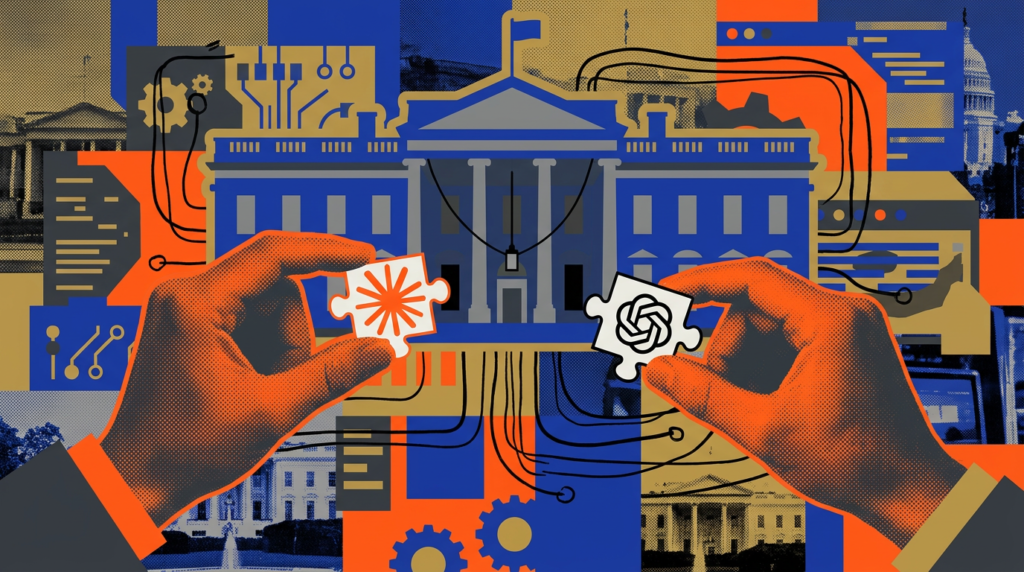
David Sacks, the White House AI and crypto czar under President Trump and a venture capitalist, responded on X directly to Amodei and Altman. By “any reasonable metric,” OpenAI and Anthropic hold a duopoly in frontier intelligence, Sacks wrote. If their unreleased models are scary enough, he supports a voluntary slowdown.
The motivation is not purely altruistic, though, Sacks argued. Both companies face massive product liability if their models enable a serious cyberattack. “The market already punishes models that behave in unpredictable or unauthorized ways. After the Hugging Face episode, it is simply good business for OpenAI and Anthropic to trade some raw power for reliability and predictability,” Sacks wrote.
He also warned that tying the slowdown to a specific regulatory framework looks like extortion. China is “very unlikely” to join any global agreement, he added, and he might be right: Beijing has already rejected the proposed slowdown plans, dismissing them as a ploy for the US to cement its lead in AI.
Trump frames AI fears as a hoax
President Donald Trump went even further. In a post on Truth Social, he called warnings that “AI will take over the world” a “hoax,” lumping them in with the climate change debate, the Russia investigation, and his impeachment proceedings. Trump also claimed that Chinese President Xi “just announced that China will be doing absolutely nothing to stand in the way of AI, or its future.”
In several posts that followed, Trump doubled down. He called the “AI scam” pushed “by the Radical Left Dumocrats” reminiscent of “their Global Warming Scam of not so long ago, where everyone was going to die from extreme heat.”
The CTO of the Department of War, Emil Michael, backed Trump up, saying the warnings come from “a deep-rooted ideology that is pretty dystopian.” Michael has a deep, ideologically driven hostility toward Anthropic based on the company’s ethical guidelines.
Political opponents of the Trump administration took the other side. Barack Obama, Bernie Sanders, and Kamala Harris all support a slowdown and have welcomed the labs’ push for more transparency.
What it means
For people building tools, the debate is about control. If the dominant labs succeed in setting the rules and gaining antitrust protection, they define what counts as safe. This means independent developers lose the ability to test systems without permission. It also means the industry relies on a small group of companies to judge risk based on their own scale. For users, this creates a situation where the biggest players decide the limits of what technology can do.