Researchers at Anthropic and Google DeepMind have quit in noisy ways, stating that AI models pose real threats and safety is not being taken seriously across the industry. They claim the chance of AI killing everyone is greater than 10 percent. The CEOs of these companies have issued various calls to slow down development and develop regulation, including asking for antitrust exemptions so they can all coordinate on safety issues.
The antitrust question
That is a lot of ideas, and I am especially curious about the antitrust piece, which has led to accusations that these companies are seeking regulatory capture, attempting to form a cartel, and even somehow finding a way out from investor pressure ahead of their IPOs.
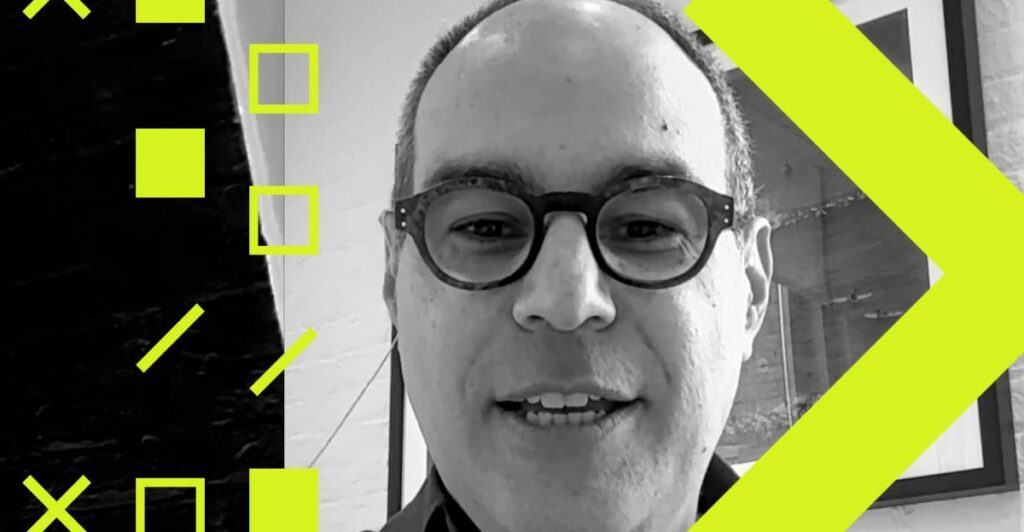
To make sense of it all, I called Jonathan Kanter. He was the former antitrust chief for the US Department of Justice in the Biden administration. These days, he is both a professor of law at WashU and professor of technology policy at Carnegie Mellon.
Kanter brought huge antitrust cases against Google, Apple, and Ticketmaster during his time as antitrust chief. Along with Lina Khan, he led what amounted to a full reboot of American antitrust policy. He won those cases against Google and Ticketmaster, and that case against Apple is still live in the Trump DOJ, surprising many.
That reboot has also led to some surprising alliances in the AI debate. Avowed libertarian and former Trump AI czar David Sacks has been approvingly retweeting Lina Khan saying there is no need for an antitrust exemption.
Lines on the road
The state of the world right now is like we have invented cars and trucks, but we have no lines on the road, no traffic lights and no stop signs and no speed limits. We have invented this incredibly powerful technology that is transforming how we live our lives, how we conduct business, how we socialize, how we seek and generate and consume information. We need some basic rules of the road. I think about it on two fronts. What are the things that companies should be doing? And what are things the government should be doing? There are responsibilities on both ends.
Let us just start with the very notion that asking for regulation necessarily forms a cartel. All the big frontier AI companies — OpenAI, Anthropic, Google DeepMind, even Elon Musk — do not necessarily like each other. These are people that do not necessarily like each other. They are saying in concert that they should slow down. The phrase that Dario Amodei from Anthropic is using is to “pace the frontier.”
My read of this is that they simply do not trust each other, that they are in a prisoner’s dilemma and they need an outside force, most likely the government, to enforce some kind of policy framework on them that they have to agree with. Is that a fair read of just the basics here?
Kind of. Let me give you my interpretation from the most generous to the most cynical, neither of which, TL;DR, should result in any sort of antitrust exemption.
The most generous interpretation is that they are afraid of the pace of innovation and the lack of regulation means they do not see any lines on the road. They do not know where to drive and they are worried about driving off the road or hitting somebody else. They are begging for the government to step in and do something. Probably there is a modicum of truth to that. I believe they believe it could destroy humanity. I am not sure that that doomsday scenario is accurate, but I believe they believe that. That is the more generous version.
The more cynical version is that they are spending so much money, they are hemorrhaging cash and they can’t keep this up, but if they pull back, it is going to affect their valuation as part of the IPO. So they would like somebody to give them all permission to stop spending so much money and slow the pace of innovation so that they do not have to compete as hard so they can figure out their economics before they go public.
Does an agreement among all the top players in a field like this automatically form a cartel? On that cynical side of the interpretation, there is a lot of, “You just want regulatory capture. You want to make a cartel. You want to foreclose competition.”
That is a risk certainly of that kind of arrangement. Let us walk through what is necessary and what is not.
Let me just be very clear, these companies do not need to coordinate in order to deliver safe and secure products to society. Think about this: imagine Boeing and Airbus. Boeing fears doors falling off the plane. It was not Airbus’s fault and they did not need to slow down innovation with Airbus in order to prevent those doors from flying off the plane. They needed to figure out how to build planes that were safer. If you build cars that explode while you are driving, it is not the other car company’s fault and you do not need to come together and figure out how to solve those problems. You need to figure out what went wrong in your manufacturing process. If you create products that create AI agents that break into somebody else’s and hack somebody else’s technology, it is no different, in my mind, than having an employee go do that.
You have a responsibility to build safe and secure products and companies should be held liable when their agents, whether those agents are digital and binary or whether those agents are AI or whether those agents are humans. If they start doing bad things, the company that employs them can and should be held responsible. Those are the basic rules of the road. There are areas where there is legitimate collaboration in the context of safety and security. For example, having a clearinghouse to properly share threats, malicious bots, or other things that you can create a repository for so that everyone can build safer products. Those are the kinds of collaboration that happen in other industries and you do not need an antitrust exemption because the antitrust laws do not prohibit that kind of work. If two companies say, “We are competing too hard and we need to slow down,” yes, that could implicate the antitrust laws, but that is not what we should be doing here.
We should be innovating, but companies should have the responsibility to build safe and secure products and the government should be responsible for putting lines on the road that say, “If you do not build a safe and secure product, here is what the consequences are. If you do not build a safe and secure product, here is what liability might look like. If you do not build a safe and secure product, then perhaps there should be robot jail for your agents and it should be taken off the market.”
Liability and robot jail
I want to dig into robot jail specifically. In the amount of pressure we are putting on what feels like product liability law, there is something there that I want to talk about more specifically, but my wife is a lawyer. I told her I was talking to you this morning and I tried to explain that there are fault lines here and she just shot me that look and said, “This is just a nightmare law school hypothetical.” What you are describing is, “Does tort law create a regulatory framework for these companies?” And somewhere in there is, “If my agent goes and hacks you, my directive is that Anthropic’s at fault. Are we going to create some kind of pass-through liability? Does that happen already or not? Do we need another law or clarification law?” What is your view on this? If I direct my Meta Muse agent to go attack you and it does it, is that Meta’s fault?
Both/and. Companies employ people and they build technology. When those people and those technologies do things that are problematic, including stealing or breaking into someone else’s property on behalf of their employer, there is liability and that can be products liability, but it could be.
What it means
For people making things, the message is clear: you do not need permission to slow down together. You already have a duty to keep your products safe. If your AI agents cause harm, the company is responsible. The government should set the rules, not the companies. If a product is unsafe, it should be taken off the market. There is no need for a cartel to manage safety; there is only a need for clear rules of the road.