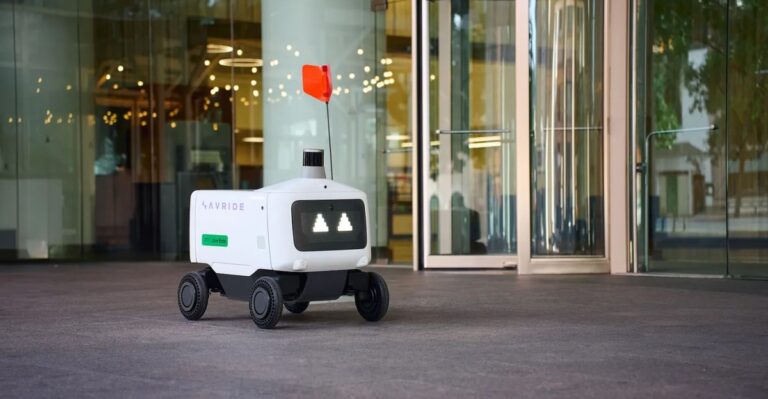
A FedEx text confirmed the delivery of my ebike while I was air-frying chicken in the kitchen. The bike never arrived, and a month of chasing it has left me out about $1,700.
My fiancée and I bought two ebikes a few months ago after receiving work bonuses. We live in a hilly part of Atlanta, and the cost was manageable for the moment. Her bike arrived quickly. Mine, ordered from a different seller, was delayed repeatedly.
On a Wednesday evening, the text message appeared. It stated the package was delivered and signed for. I was not home. Checking the confirmation later showed a signature from initials “M.M.”, which did not match anyone in our household.
I called FedEx the next day. The call routed me to a chatbot. I spent weeks in virtual waiting rooms with FedEx, the bike seller, my bank, my credit card company, and the Atlanta Police Department. I could not reach a human.
The New Sludge
Using artificial intelligence in customer service has become routine. Corporations have adopted these tools often at the expense of human staff.
A survey published in April found 31 percent of customer service leaders had reduced or planned to reduce headcount due to AI adoption. Most leaders said they were moving human agents to new roles rather than firing them outright.
Verizon CEO Dan Schulman told Bloomberg recently that AI would replace a large percentage of customer service work. He noted the sector is highly exposed to such technological changes.
Consumers now face sharper versions of the bad service that has defined the industry for decades. Long waits, on-hold music, and non-answers are now automated.
Industry experts call this tactic “sludge”. It is an intentional design meant to discourage customers from seeking resolution.
Ryan Hamilton, a marketing professor at Emory University, says AI has simply updated the face of sludge. “Sludge existed before AI,” he says. “But AI, like with everything else, has just sort of ramped up the dystopian nature of it.”
A report published in May showed 59 percent of consumers in the US, UK, and Canada were frustrated with AI agents. Eighty-five percent said they preferred speaking to a real person.
My Chatbot Hell
Every phone call regarding the missing bike led to a chatbot. FedEx’s AI agents ignored my requests to speak with a human.
The police department made the situation worse. When I called to file a missing property report, a chatbot prompted me to leave information and wait. No officer called back.
I filed two reports. The first yielded no response. The second resulted in a missed call during a work meeting. There was no voicemail. Returning the call sent me back to the chatbot-run waiting room.
Eventually, I got FedEx to open a claim. They resolved it via email with an automated message stating the bike was missing but that I must contact the shipper for restitution.
I called the bike company and bypassed their online chatbot to reach a person. They could only convince FedEx to compensate me for shipping. That was one-tenth of the total cost.
I then appealed the purchase through my bank and card company. Both led through chatbot-filled rabbit holes. A human finally told me they could not help because the loss was on FedEx’s watch.
Sunk Cost
Agentic AI is still in its infancy. Meta’s Toolformer, a model capable of calling external tools, is only three years old. A better system might have directed my calls correctly or tracked the bike using shipping data.
What remains to be seen is whether corporations can use advanced tools to benefit consumers.
Hamilton says some companies adopt agentic AI bots without fully appreciating the negative impact on the customer experience.
“Sometimes they’re aware,” he says. “They’re willing to accept that trade-off.”
While some industries can tolerate poor service, others cannot. As AI-led interaction becomes the norm, executives must find other ways to differentiate, potentially through better service.
Hamilton warns these changes are “smoothing out the service dimension,” where every industry ends up with the same AI call center.
Ravi Dhar, a professor at Yale, sees a sunk-cost fallacy driving AI implementation across sectors. Global spending on AI tools is expected to rise sharply this year. Leaders may feel pot-committed to their implementation even if it fails.
“If you’re a CEO,” Dhar says, “you’re getting questions from all of the investors, from Wall Street, like, ‘Hey, what is your AI strategy, first of all, and is it showing any return on investment? You’re spending all this money.'”
Hamilton believes many companies base decisions on optimism, assuming an all-in approach will eventually pay off. In the meantime, they damage their reputations with bad service.
“They kind of assume that AI will catch up, or it won’t be that bad,” he said. “And it can, in some circumstances, be quite bad.”
I was annoyed by the chatbots themselves. More so, I was annoyed that no one cared I was stuck with them. The idea that a corporation could hide behind a wall of under-equipped AI tools was a tough pill to swallow.
Nearly three months later, the bike and I remain trapped. FedEx never found the package. I received no reimbursement beyond shipping fees. I am still out around $1,700.
The Atlanta Police Department confirmed they dispatched an officer to my address the day I missed a call. They promised to send one again. They also confirmed that when they called, it was an operator, not an officer, and returning the call sends you back to the non-emergency line.
FedEx sent a statement saying: “While we leverage AI and digital tools to offer fast, convenient self-service for everyday questions, we recognize that complex situations require human care and deeper support. We use technology to amplify our team members’ ability to deliver the Purple Promise. We are continuously refining our processes so that customers can get the assistance they need seamlessly and swiftly.”
It seemed impossible at the start that I would leave so much money on the table. After endless hours dealing with AI agents, which often felt intentionally designed to gatekeep a real interaction, the chatbots are starting to wear me down.
What it means
Companies often prioritise cost-cutting over solving actual problems. This approach leaves consumers stranded when things go wrong. The result is a system where technology acts as a barrier rather than a bridge.