Ladybird has released its first alpha build, a browser running on macOS and Linux that implements its own HTML parser, CSS engine, layout system, JavaScript runtime, and WebAssembly support. The project still relies on external libraries for text shaping, 2D graphics, video processing, and database storage. Everything else is either native code or code ported from the SerenityOS project.
The team has made the software available for download without requiring a manual compilation step.
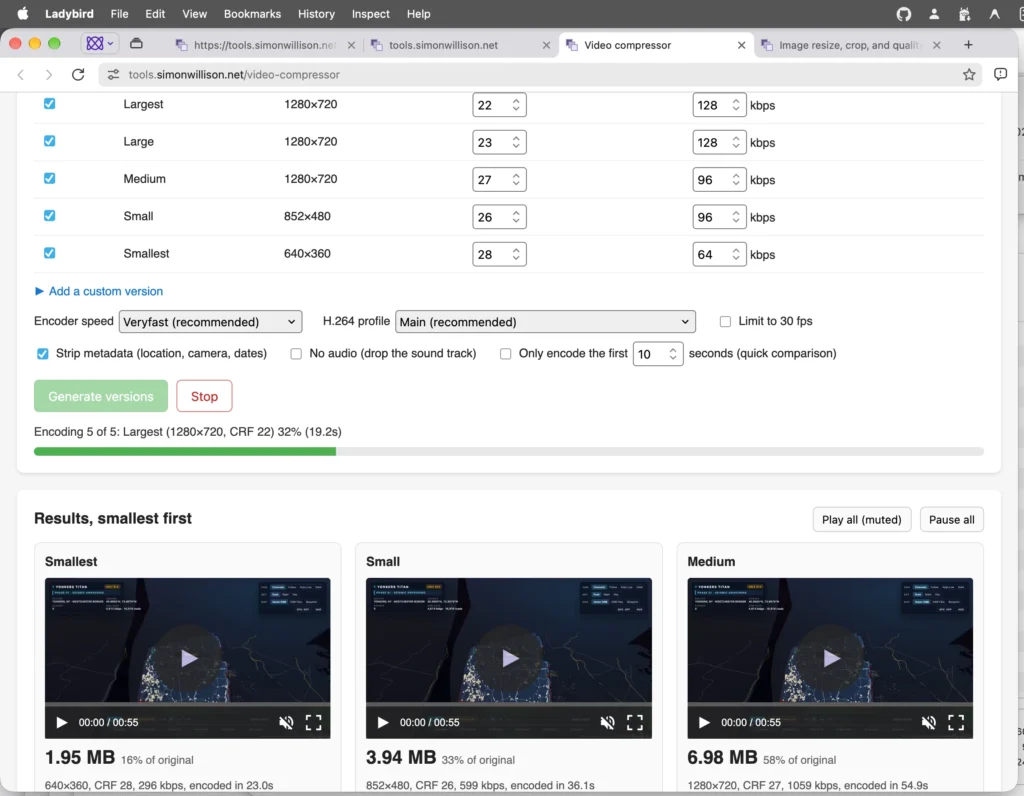
Testing the build shows a fast performance and a lightweight interface. Most websites load correctly, including a tool that runs ffmpeg via WebAssembly.
The architecture separates tabs into distinct processes. Opening six tabs in one window and another in a second window results in a process tree where each content area runs independently.
Advanced tools using WebAssembly, such as a Python REPL or an image resizer, function as expected. One exception is a site running a complex service worker setup, which fails with an error stating that a function is undefined.
The project has relied heavily on coding agents this year. In February 2026, the team announced a port of their JavaScript engine from C++ to Rust, completing 25,000 lines of code in two weeks with the help of AI tools.
Activity on the GitHub repository remained low for the first half of 2026 before spiking sharply in October. A newsletter from that month details the improvements, including a new JavaScript JIT compiler and a switch to a Cranelift WebAssembly engine. This change improved JetStream 3 benchmark scores by seven times and added 75,650 passing tests to the web-platform-tests suite, surpassing Safari.
The majority of that test gain occurred in five days between late October. The team directed AI agents at the test suite to fill in missing functionality. The agents made numerous small fixes, with the largest improvements coming in CSS and editing categories.
It is unclear which specific model versions were used for this surge, as the project lead has not confirmed the exact versions beyond general references to Codex and Claude Code.
Andreas Kling, the project lead, warns that the alpha build will crash occasionally and that some websites may not work. Users can report broken sites from within the browser. The team explicitly asks security researchers to find vulnerabilities, noting that a new browser will be hacked repeatedly as part of the development process.
Given the current state of the software, it is not suitable for logging into sensitive accounts like Gmail or GitHub. It is better suited for anonymous browsing and testing. The release offers a sign of optimism in a browser engine market that has otherwise seen little growth.