When AI hallucinations collide: a Mississippi judge cancels a trial after both sides lied
For makers and artists working with generative tools, this ruling sends a stark message: if your output is fake, the consequences are immediate and severe. In a federal court in Mississippi, a judge has thrown out an entire trial because lawyers on opposing sides both relied on artificial intelligence to fabricate legal arguments. The result was a courtroom where two clients essentially paid for a large language model to argue against itself, wasting judicial time and undermining the integrity of the legal process.
The case of the rubber-stamped justice
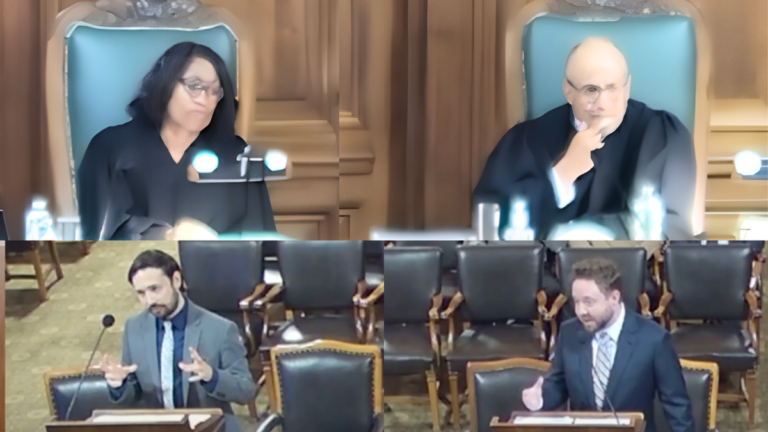
Sharion Aycock, the senior United States District Judge for the Northern District of Mississippi, issued a blistering sanctions order detailing the failure of the legal profession to verify its own work. She noted that the case presented a unique scenario where attorneys for both litigants engaged in similar sanctionable conduct. Aycock wrote that the court was once again burdened with addressing AI hallucinations in court filings, describing the situation as a prime example of the risks associated with serving as a rubber stamp for unverified AI outputs.
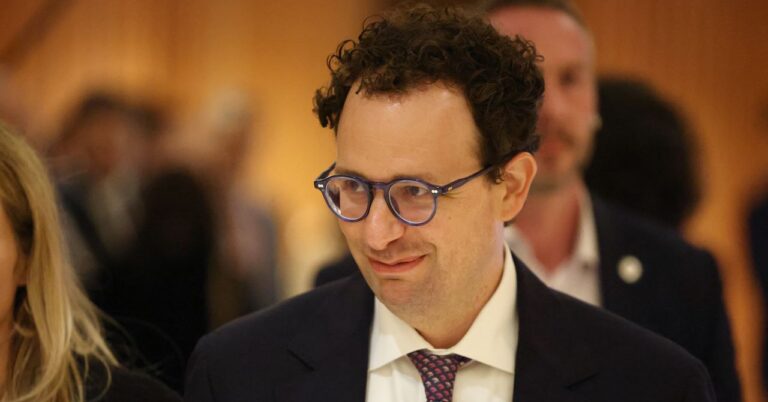
At the heart of the dispute was a contractual disagreement between lawyer Tom Withers and the city of Aberdeen, Mississippi, regarding unpaid legal fees. Withers was not representing himself and had not been sanctioned by the court prior to this incident. The case came to light through Rob Freund, a lawyer who frequently highlights issues with AI hallucinations. Freund described the situation as a “comedy of AI errors,” suggesting that the two clients were effectively paying a ChatGPT-like tool to argue against itself.
Why this case stands out
While 404 Media has previously covered lawyers using AI to prepare filings, this instance follows a familiar pattern with a critical difference: every lawyer involved was implicated. In previous cases, only one side might have relied on hallucinated citations. Here, both sides did. This led Judge Aycock to pause proceedings, cancel the trial, and disqualify all four lawyers involved.
The penalties were swift and significant. Two of the lawyers were barred from appearing before the court for two years. All four lawyers received fines ranging from $1,000 to $3,500, depending on Aycock’s assessment of their culpability for failing to verify the AI outputs they submitted.
This is not an isolated incident. Judges across the country have recently shown increasing frustration with lawyers who rely on unverified AI. Last week, another judge in New York publicly reprimanded various lawyers for citing hallucinated cases in their submissions.
Admissions and incredulous excuses
All four lawyers admitted either to directly using AI or to rubber-stamping legal briefs prepared with the tool without proper review. During a hearing in January, each attorney expressed embarrassment and apologised to the court. One lawyer admitted using an AI tool for legal research, while another, Kathleen Wilson, confessed to using a tool called First Drafts to write the entire briefing.
The remaining two attorneys admitted they did not review the briefs in question before submitting them to the court. Judge Aycock highlighted a particularly troubling aspect of Wilson’s behaviour. She noted that Wilson had continued to use AI after the court had detected her violations.
Wilson claimed she was shocked when the court issued a show cause order pointing out the hallucinated cases in her filing. She stated she was unaware that AI could produce hallucinated cases and did not even know what a hallucinated case was. Aycock found this explanation insufficient and incredulous.
The judge further noted that Wilson had continued this practice of AI misuse in other cases after being put on notice. Other judges had found hallucinated cases in Wilson’s filings as recently as April, four months after she was initially asked to explain her AI use. Aycock concluded that Wilson’s continued misuse demonstrated an extreme dereliction of professional responsibility. Although the court cannot consider subsequent conduct when determining sanctions for the current case, it found that Wilson’s apologies on January 20, 2026, were not sincere.
Another lawyer, Kathryn Williams, admitted to using an unnamed AI tool to conduct research. Notably, this tool was designed for “in-house legal research” and is not supposed to hallucinate cases. Williams explained that the software was built to produce results from jurisdictions where her law firm typically practiced, which did not include Mississippi. She admitted that since this was the only Mississippi case she had ever been involved in, she resorted to using the software despite knowing it was not designed to encompass Mississippi law.
Key takeaways
- Both sides of a Mississippi legal dispute were sanctioned after their lawyers used AI to generate hallucinated case citations, leading to a complete cancellation of the trial.
- Four lawyers faced penalties including a two-year ban from appearing in court and fines between $1,000 and $3,500 for failing to verify AI outputs.
- Kathleen Wilson received particular criticism for continuing to use AI after being warned, with the judge finding her initial apologies insincere given her subsequent violations.
- The court emphasised that using tools known to hallucinate for jurisdictions outside their training scope constitutes a serious breach of professional responsibility.