When lawyers rely on generative AI to draft legal arguments, the risk is no longer just a hallucinated sentence; it is the fabrication of entire case citations. For creators and practitioners in the legal tech space, this represents a critical failure of verification systems. Unlike creative tools where a wrong note might be a stylistic choice, a non-existent legal precedent cited in court can lead to immediate sanctions, public humiliation, and a loss of credibility that no amount of polish can fix. The recent spectacle in New York serves as a stark warning to anyone using AI to generate legal text without rigorous human oversight.
A live airing of legal fabrication
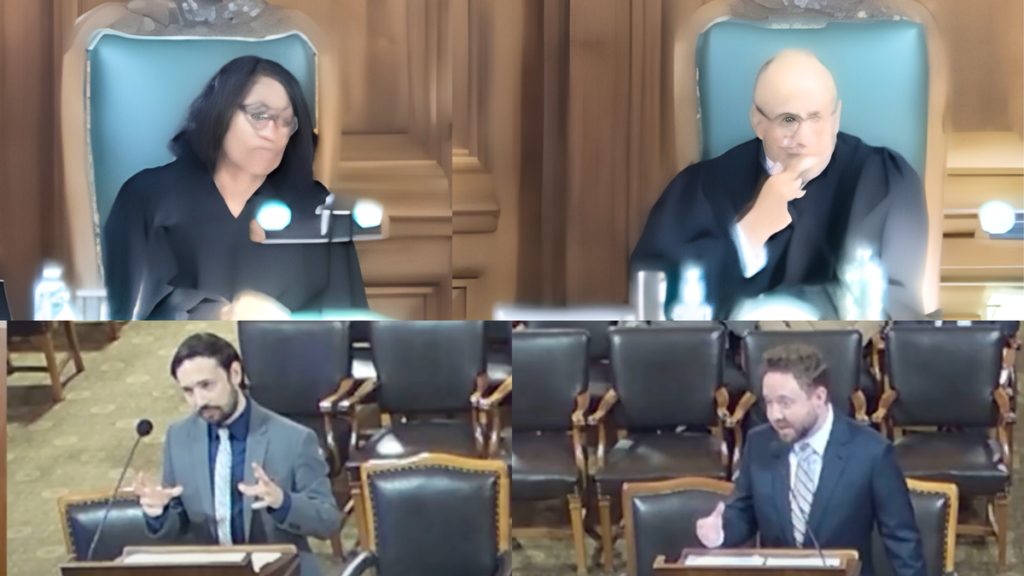
On May 20, during an appeal hearing before the Supreme Court of the State of New York Appellate Division, the dangers of AI-assisted drafting were laid bare in real time. Justices Valerie Brathwaite Nelson and Hector LaSalle spent over twenty minutes dismantling the arguments of two attorneys who had submitted filings containing fictitious case law. The justices described the situation as “striking, concerning, disappointing, and saddening.”
The case involved Judith Landberg, who is suing the city of New York after tripping over uneven bricks on a sidewalk caused by tree roots. While her lawyer, Michael Sanders, attempted to argue the definition of a sidewalk, the court pivoted to the integrity of his brief. Nelson pointed out that the document cited at least three cases that appeared to be completely fictitious, stating that neither the cases nor the quoted language existed.
“None of these cases, nor the quoted language, appears to exist,” Nelson said.
Nelson added that Sanders had also cited ten other cases that misrepresented the law. When asked how he responded to such glaring errors, Sanders admitted he was not prepared to speak on the specific citations. Nelson immediately cut him off, citing Rule 3.3 A of the rules of professional conduct, which forbids lawyers from knowingly making false statements of fact or law to a tribunal.
The grilling begins
LaSalle asked where Sanders had obtained the citations. His response was non-committal: “I don’t know what these cases were specifically.” While the judges did not explicitly mention generative AI, the context of the growing epidemic of hallucinated citations in legal filings suggests it was the likely culprit. Attorneys caught in similar situations elsewhere have blamed everything from head colds to rushed deadlines and paralegal errors, but the pattern remains the same.
LaSalle expressed his frustration, noting that he had hoped the lawyers would have caught the mistake in their preparation. “We saw this last week,” LaSalle said. “I was hopeful that, in preparation for today, that you were going to read this and say, ‘Oops, we made a mistake, Judge.’ It happens sometimes, right? That’s what I was hoping for. We didn’t get that.”
Sanders estimated it would take longer than fifteen minutes to look up the cases, prompting a tense back-and-forth. LaSalle and Nelson took turns emphasising the severity of the error, making it clear that this was not a minor slip-up.
The opposing counsel joins the fray
Ross Friscia, the attorney representing the property owner facing the sidewalk, stood to speak but was interrupted by LaSalle. Friscia had raised an appeal standard that did not exist, using it as a component of his argument. When LaSalle questioned why he had not alerted the court to this error, Friscia claimed he did not notice the principle of law was incorrect.
LaSalle was baffled by the lack of due diligence. “I’m sorry, I’m going to give you every opportunity to make your argument,” LaSalle said. “But I’m befuddled. I honestly am. I’m absolutely-and I’m not here to-lawyers make mistakes. It’s not an easy profession. I don’t want to sit here beating up on lawyers, but we rely on the bar so much in what we do.”
Friscia, fearing the consequences, offered a profuse apology to the court and promised to conduct further due diligence. LaSalle corrected him, noting that the apology should be directed to the client, not the judge. Friscia agreed and vowed to check every single case, even those standing for general principles, before submitting future briefs.
Responsibility lies with the bar
Nelson seized the moment to highlight the gravity of the misrepresentations. She argued that as appellate attorneys, Friscia and his team would have had to notice the errors in the wording of the appellant’s brief if they had read it carefully. “It’s concerning because we are all officers of the court, and there is a responsibility that you also have to notify the court,” she said. She emphasised that alerting the court to fictitious cases and misrepresentations of holding is a duty, not an option.
Friscia briefly explained that he tailors briefs to respond to specific issues but did not stay long to defend his position. He apologised again, promised to be more thorough, and returned to his argument regarding the city’s responsibility for the askew bricks.
Finally, Elizabeth Freedman, representing the City of New York, faced similar questioning from Nelson regarding her failure to bring the fabrications to the court’s attention. Freedman stated that she certainly read all the briefs, but the transcript cuts off before her full explanation is recorded.
Key takeaways
- Generative AI can create entirely fictitious legal precedents, leading to immediate sanctions and public humiliation for attorneys who fail to verify citations.
- Justices in New York have made it clear that lawyers have an ethical and professional duty to alert the court when they discover misrepresentations in opposing briefs.
- The recent hearing demonstrates that courts are increasingly intolerant of sloppy drafting, regardless of whether the error stems from AI hallucination, haste, or negligence.