For the independent creator and the audio engineer, the SpaceX Initial Public Offering signals a new era where the rules of the market are being rewritten to accommodate singular visionaries. If you build software, art, or code, the precedent set here suggests that traditional metrics of fairness and shareholder accountability may yield to the sheer scale of a founder’s ambition. The coming weeks will likely see a public company valued at nearly $2 trillion, a figure that dwarfs almost every other entity in history, yet it faces scrutiny not for its product, but for how it bends regulations to launch.
This discussion centres on a conversation between Decoder‘s host and Ryan Mac, a technology reporter at The New York Times and coauthor of Character Limit: How Elon Musk Destroyed Twitter. The book, published in 2024, examines the social platform Musk acquired in 2022, which is now buried within the larger SpaceX structure.
Mac recalls a piece he wrote shortly after the acquisition titled “Welcome To hell, Elon,” which predicted that Musk could not grow the platform without compromising its moderation, ultimately damaging his reputation and his other ventures. The SpaceX filing provides the data to test that hypothesis. While X is shrinking across the board, the financials reveal a company that is an afterthought compared to ventures like Starlink, yet serves as a crucial distribution channel for Musk’s own voice.
The decline of X and the rise of the trillionaire
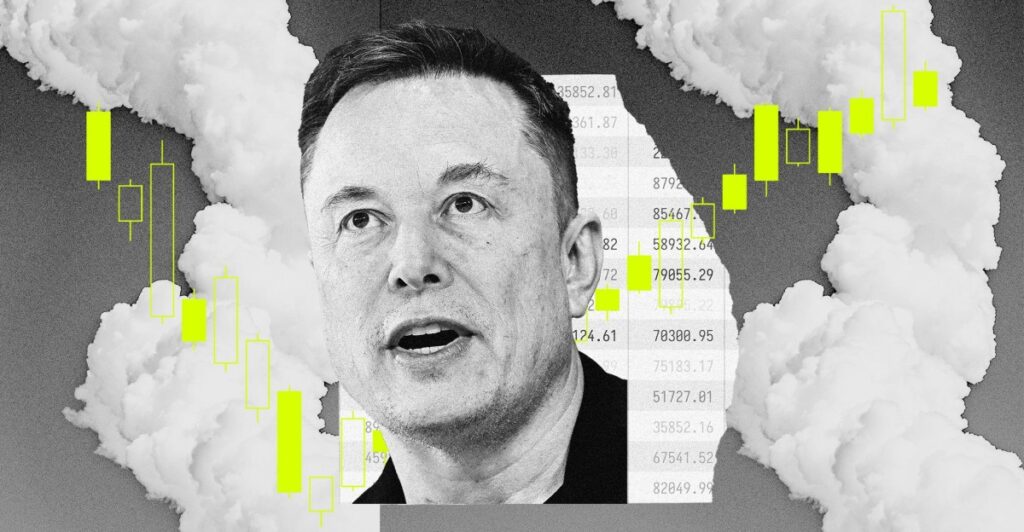
According to Mac, X has stagnated in both user growth and revenue. The platform, once pitched as a WeChat-style everything app with integrated payments and taxi booking, has failed to deliver on those promises. Instead, it has been absorbed first into xAI and now into SpaceX. Despite this, Musk’s net worth has surged from approximately $300 billion at the time of the purchase to fluctuating between $600 and $800 billion, with the SpaceX IPO poised to push him past the trillion-dollar mark.
The financial reality is stark: X is a failure as a standalone business. Revenue has dropped by $100 million year over year and sits at less than 40 percent of its pre-acquisition levels. The only growth comes from data licensing to artificial intelligence firms. However, in the broader context of Musk’s portfolio, the loss on X is viewed as a strategic investment that secured the path to a historic IPO.
Corporate governance and the index funds
The IPO filing highlights significant departures from standard corporate governance. The company is seeking inclusion in major index funds, a move that bypasses traditional levers of market accountability. Major fund managers have not raised objections, eager to participate in what could be the largest financial windfall in recent memory. This willingness to overlook standard regulations allows Musk to maintain control without the usual checks and balances.
The filing claims a $28 trillion addressable market for SpaceX services, a number that exceeds the total global economy. This valuation, combined with the dilution of X into xAI and then SpaceX, creates a financial picture that defies conventional business fundamentals. It relies on a cadre of investors willing to back the project to the end.
He has bought a distribution platform for his own tweets. He’s the most followed person on the platform now. He controls the algorithm, he controls the content that gets boosted on the platform. I don’t know how to say this more, but he’s winning and that’s just where we are right now in society.
Musk previously argued he did not need marketing for Tesla, using his platform to drive demand for electric vehicles. While that strategy worked for years, the reputational damage from his political stance on X has reportedly affected Tesla sales, making its cars less popular than before. Yet, the financial gains from the broader empire outweigh these setbacks.
Key takeaways
- The SpaceX IPO represents a potential trillion-dollar valuation, marking a historic moment where a single founder’s wealth eclipses traditional economic scales.
- X has become a non-factor in Musk’s business portfolio, with revenue down significantly, serving primarily as a tool for Musk’s personal influence and algorithmic control.
- Traditional corporate governance and market accountability are being bypassed to facilitate the IPO, with major index funds willing to overlook standard regulations.
- The financial losses on X are framed as a strategic investment that enabled the success of the SpaceX venture, illustrating a “Musk math” approach to valuation.