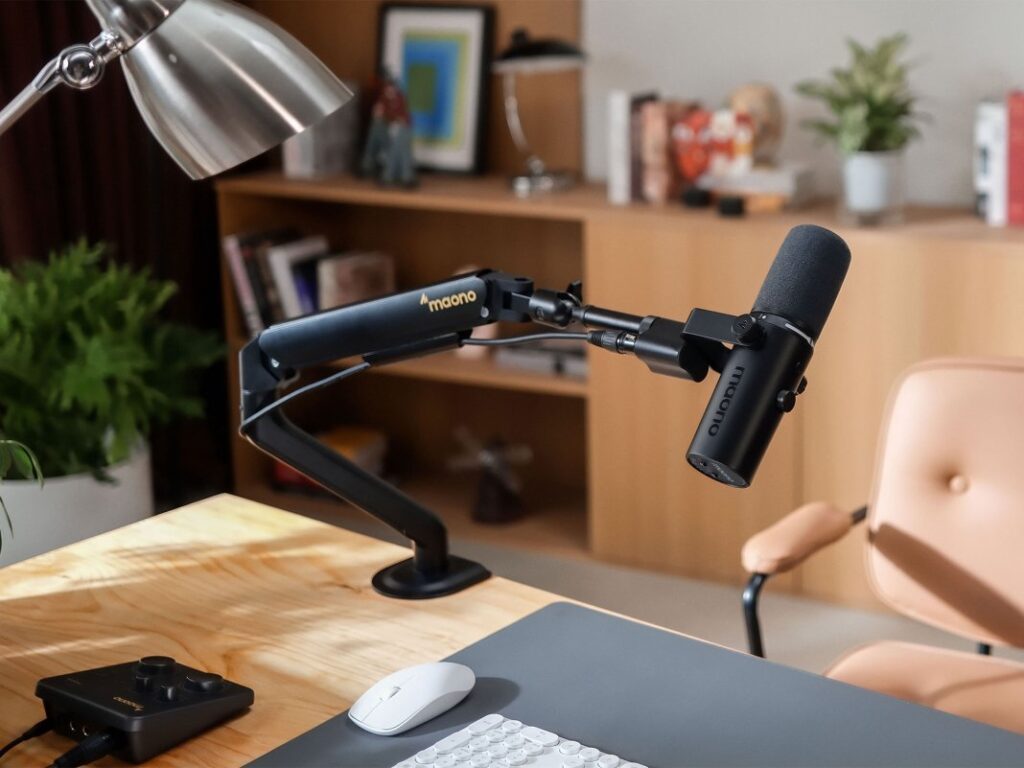
Maono is preparing to launch a Kickstarter campaign for the PD500W, which it describes as the world’s first AI-powered hybrid microphone. The device targets content creators, particularly podcasters, by integrating machine-driven audio processing directly into the hardware. Key features include digital de-poppers to eliminate plosive sounds and built-in limiters to manage rapid volume fluctuations. These tools are designed to reduce the time spent on post-production editing, addressing the need for efficiency in a competitive market where platforms like Spotify host over 5 million podcasts. The microphone also supports translation and transcription via upcoming software tools. Beyond its AI capabilities, the PD500W offers versatile connectivity through USB-C, XLR, and 2.4GHz wireless options, allowing users to record on the go and stream directly to mobile devices. It includes 32GB of internal storage for safety when a wireless destination is unavailable. Technical specifications feature a maximum SPL of 147dB, a 48kHz sample rate, and a 24-bit resolution with a cardioid polar pattern. Funding will be available through contribution tiers ranging from $319 to $689 once the campaign opens.
This development marks a significant shift in how audio hardware interacts with artificial intelligence, moving beyond simple voice assistants to active signal processing. By handling common speaking hiccups at the source, the PD500W streamlines the workflow for creators who need to publish episodes quickly without extensive manual cleanup. The integration of AI with physical recording gear suggests that future microphones will not just capture sound but will actively improve it in real time. This approach could lower the barrier to entry for high-quality production, making professional-grade audio processing accessible to a wider range of users. Ultimately, the move signals that AI is becoming a fundamental component of the recording chain rather than an add-on utility.
- The PD500W integrates AI-driven de-popping and limiting directly into the microphone hardware to reduce post-production workload.
- Support for wireless connectivity and internal storage allows for flexible recording in mobile environments without immediate editing.
- Upcoming software tools will extend the device’s capabilities to include automated translation and transcription services.