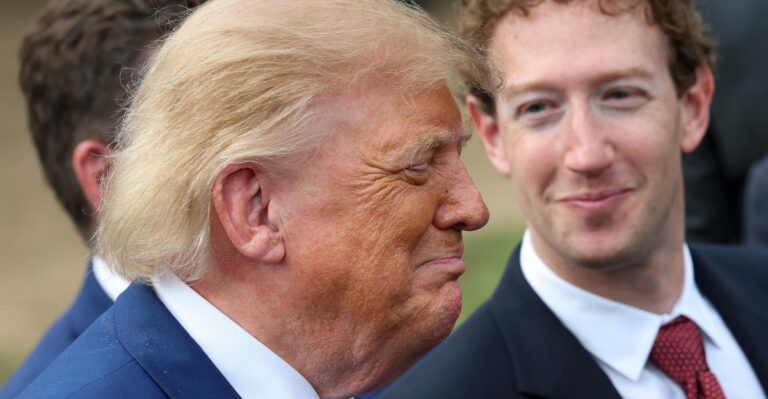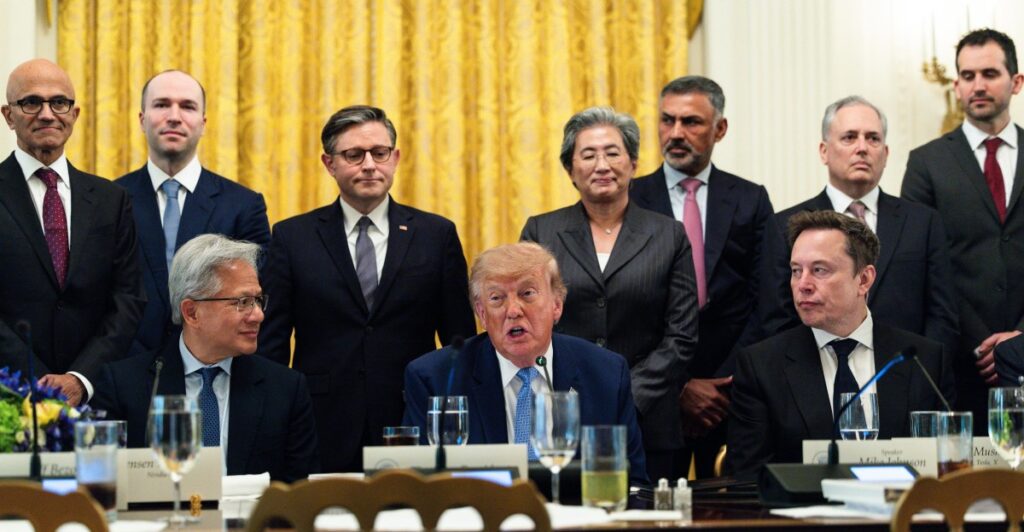
President Donald Trump and top technology executives signed the Joint Commitment On Frontier Responsibilities on Tuesday, a document that requires companies to self-regulate their artificial intelligence systems without new government oversight. The agreement, which President Trump described as morally binding, was signed by Sundar Pichai of Google, Dario Amodei of Anthropic, Mark Zuckerberg of Meta, Greg Brockman of OpenAI, Elon Musk of XAI, and Jensen Huang of Nvidia. The text states that every company is responsible for developing safe technology to build a positive future for the American people and the world. Tech founder and presidential advisor David Sacks shared the accord online after the White House meeting.
The deal matters because it replaces potential federal legislation with voluntary industry rules while the administration pushes for deregulation. By asking leaders to police themselves, the government avoids creating new agencies or legal frameworks that could slow down development. This approach shifts the burden of safety entirely onto private firms, removing federal accountability for future incidents. The lack of independent verification means compliance relies on the honour of the signatories rather than legal enforcement.
- The agreement has no legal penalty for non-compliance.
- It was signed by six major US tech leaders.
- It relies on voluntary industry standards instead of federal law.