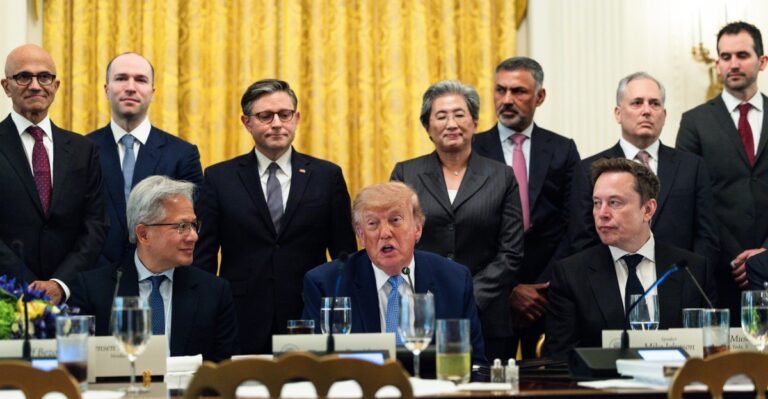
President Donald Trump told reporters on Tuesday that his previous warnings about artificial intelligence safety were a hoax fabricated by Democrats, claiming the technology is now called Super Intelligence. He dismissed concerns regarding a lack of government guardrails by stating that US companies dominate China, implying they have a vested interest in restraint. Instead of introducing federal regulations, the administration has adopted a model where the smartest people in the world watch over each other. This approach relies on industry self-policing rather than legislative oversight. Tech leaders present at the White House briefing, including figures from major firms, were asked to confirm this arrangement. The strategy suggests that market competition and corporate responsibility will suffice to manage risks associated with advanced systems. It removes the need for independent regulatory bodies to enforce safety standards. This shift places the burden of control directly on the organisations developing the technology. The administration argues that external interference is unnecessary when companies are already competing globally. This framework prioritises speed and innovation over formal compliance mechanisms. It assumes that corporate leaders will act responsibly without legal mandates. The result is a system where industry peers monitor one another for potential dangers. This method avoids the delays often associated with passing new laws. It also sidesteps the complexity of defining legal liability for AI outcomes. The plan depends entirely on the willingness of executives to police their own sectors. Critics note this leaves little room for public accountability. The approach treats safety as an internal corporate matter rather than a public good. It relies on the assumption that competition drives ethical behaviour. This model differs significantly from traditional regulatory structures. It places trust in market forces rather than government intervention. The outcome remains dependent on voluntary compliance by tech giants. This strategy avoids the friction of legislative processes. It assumes that industry leaders will prioritise safety over profit. The arrangement leaves the definition of safety largely undefined. It relies on informal agreements rather than binding contracts. This approach shifts the responsibility entirely to the private sector. The administration believes this ensures faster implementation of safety measures. It avoids the delays of bureaucratic review processes. This method assumes that companies will self-regulate effectively. The plan depends on trust between competitors. It avoids the need for new legislation. This strategy leaves regulatory gaps unaddressed. It relies on industry consensus rather than law. The outcome remains uncertain without formal oversight. This approach assumes that market forces will drive safety. It avoids the complexity of legal definitions. The plan depends on voluntary cooperation. It leaves enforcement mechanisms unclear. This strategy relies on corporate goodwill. It assumes that competition ensures safety. The outcome remains dependent on industry self-interest. This approach avoids legislative delays. It relies on informal industry standards. The plan depends on executive discretion. It leaves public input out of the process. This strategy assumes that companies will act responsibly. It avoids the need for regulatory bodies. The outcome remains uncertain without legal frameworks. This approach relies on market competition. It leaves safety definitions vague. The plan depends on corporate self-regulation. It avoids formal oversight mechanisms. This strategy assumes that industry leaders will police themselves. It leaves public accountability undefined. The outcome remains dependent on voluntary compliance. This approach relies on trust between competitors. It avoids the delays of legislation. The plan depends on industry consensus. It leaves enforcement unclear. This strategy assumes that market forces drive
Here’s what AI leaders are saying about Trump’s new safety plan
President Donald Trump told reporters on Tuesday that his previous warnings about artificial intelligence safety were a hoax fabricated by Democrats, claiming…
Source Read original →