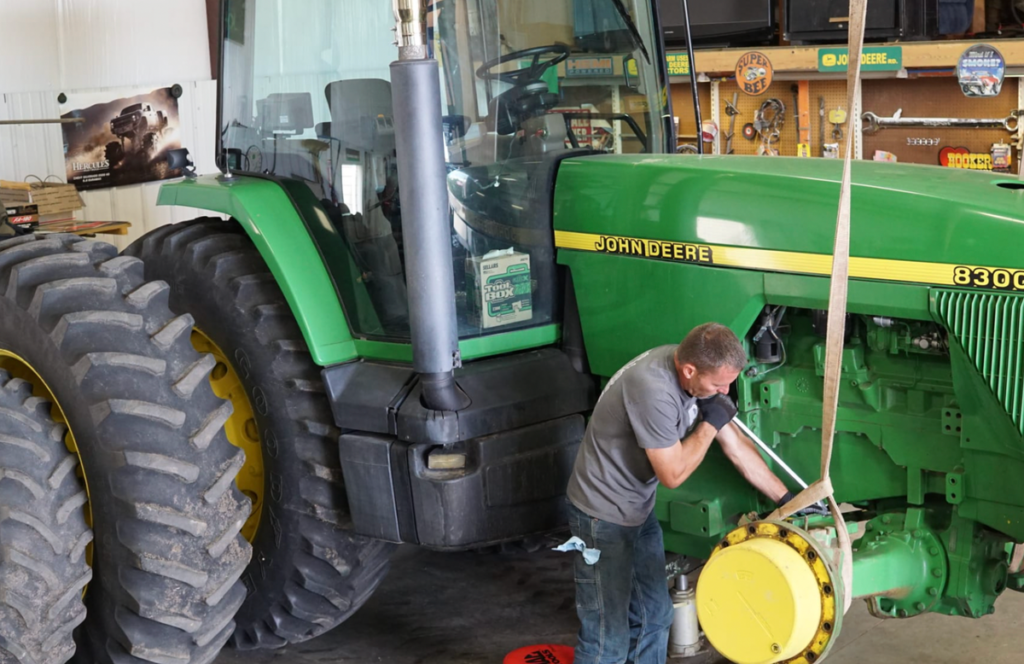
On Wednesday, John Deere agreed to broaden access to tractor and farm equipment repairs under a new antitrust settlement with the Federal Trade Commission. This agreement stands as one of the most significant victories in the long campaign for the right to repair.
The deal represents the latest and most substantial development in a series of recent lawsuits against the manufacturer. It is an agreement that avoids the half-measures and massive loopholes seen in previous attempts.
This FTC settlement is far superior to a controversial class action lawsuit settled in Illinois just two years ago. Back then, several farmers filed a complex antitrust suit. Judge Iain Johnson issued several scathing opinions regarding Deere’s anti-repair practices, suggesting stiff penalties were imminent.
However, the plaintiffs in that case settled in April, securing a $99 million payout for farmers who paid for repairs over the last decade. This sum included several right-to-repair protections that lacked legal teeth.
After deducting legal fees, the net payout was roughly $79 million to be divided among more than 200,000 farmers. Each farmer would receive approximately $395. Willie Cade, a longtime farm right to repair advocate, noted this was less than the cost of a single authorised dealer service call for a typical 500-acre farm.
“Bottom line is that farmers are getting $0.79 per acre for the eight years of Deere abuse,” Cade said. “Bad settlement. The settlement is insufficient … the money is a small fraction of what the class could recover at trial, the claims process depends on labor-hour data only Deere holds, and the repair ‘fixes’ are riddled with loopholes that leave Deere’s monopoly intact.”
The Illinois settlement prohibited covered farmers from filing any future repair-related litigation against Deere. It required the company to provide parts and repair guides under poorly defined “fair and reasonable” terms. Manufacturers often use this standard to claim parts are out of stock or priced astronomically.
“The ‘fair and reasonable terms’ standard is not price equality with dealers, nor is it a guaranteed price ceiling,” Cade wrote. “Disputes about whether Deere’s pricing meets this standard are subject to Court oversight, but individual farmers may have limited practical ability to challenge pricing that does not obviously cross the line.”
One plaintiff, Wilson Farms, filed a formal 53-page objection to the deal. The farm argued there were many “unlitigated and uncompensated” cases where farmers suffered under the monopoly. Under the settlement, farmers lose the ability to collectively challenge Deere’s repair aftermarket monopolisation for a generation.
“Rather than provide any meaningful benefit to the Class, it appears that the proposed Settlement’s most important effect will be to give Deere its most powerful tool yet in its decades-long effort to block farmers from repairing their own equipment,” the objection stated. “Extinguishment of farmers’ rights under the law.”
Other farmers called the Illinois settlement “disingenuous” and “unfair.”
Fortunately, the disappointing outcome of the Illinois case is mitigated by the FTC settlement announced this week. The FTC case was brought by Lina Khan under the Biden administration. To its credit, the Trump administration decided to continue litigating the matter.
The FTC settlement lacks monetary damages for farmers, but it offers far stronger right-to-repair protections for customers moving forward. The “fair and reasonable terms” are better defined and are based on the price John Deere dealers actually pay for repair parts and tools.
Deere and its dealers cannot “discriminate or retaliate” against farmers who repair their own equipment. The agreement also grants farmers access to “future repair resources,” including repair tools, guides, software, and parts that Deere creates in the future.
Deere must file “compliance reports” with the FTC, which will oversee the process. Crucially, the FTC settlement does not affect farmers’ private grievances against Deere, meaning it remains possible for farmers to sue the company if its repair practices have harmed them.
This agreement has actual legal teeth and enforcement mechanisms. Earlier agreements and right-to-repair “wins” were often half measures. In practice, promised tools and parts were frequently unavailable, inferior to what dealers possessed, or unreasonably expensive. Previous memorandums of understanding had few or no enforcement mechanisms.
Cade told 404 Media in an email that this settlement order “gives farmers real hope.”
Nathan Proctor, senior right to repair campaign director for consumer rights group U.S. PIRG, stated that the FTC settlement “is much better than the deal secured in [the Illinois] class action lawsuit.”
“Deere has now agreed to make available all materials needed to conduct repairs, including some which it has previously withheld,” Proctor said. “I want to thank the FTC for its work on this case. Our goal from the start of our campaign was to ensure that farmers and independent mechanics get everything they need to fix equipment. We will continue to monitor the situation and advocate to ensure that goal is a reality.”
What it means
Farmers now have a major win in the right-to-repair fight that goes beyond earlier moral victories. The new agreement ensures access to necessary materials, including future resources, while removing the ability for the company to block independent repairs through vague pricing standards or litigation threats.