AI models require more compute, energy, and infrastructure with every improvement in capability. The question is whether this growth can continue indefinitely.
Cerebras Systems has spent ten years challenging the idea that powerful AI must rely on standard chip designs. The company builds its systems around wafer-scale computing, offering on-premise solutions and cloud access.
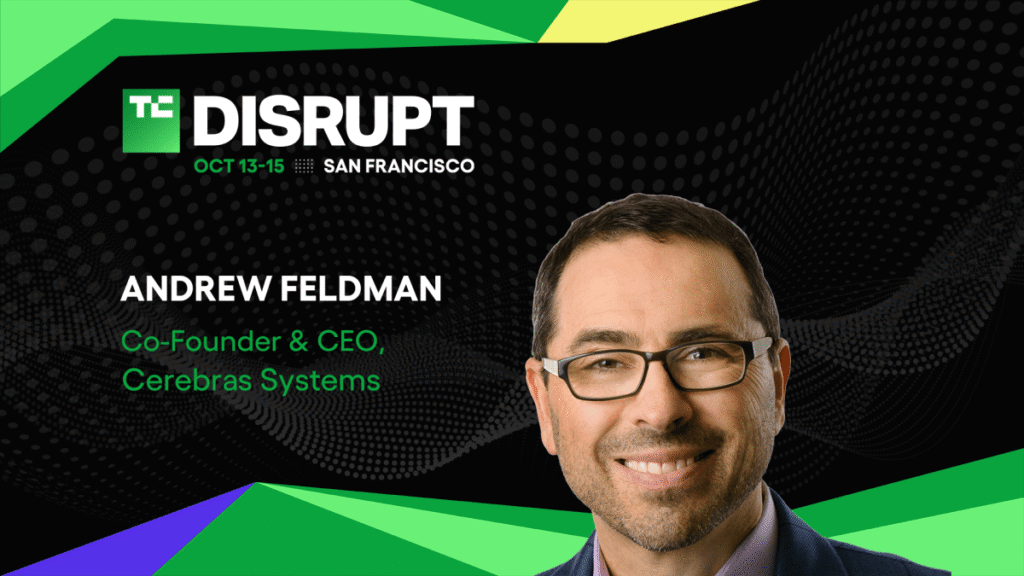
Andrew Feldman, CEO and co-founder of Cerebras, will speak on the Disrupt Stage at TechCrunch Disrupt 2026. The session, titled “Can AI Keep Scaling?”, examines the rising demand for resources and how Cerebras addresses these constraints. He will also discuss what happens if current hardware reaches its limits.
Cerebras rejects the standard chip model
Feldman co-founded Cerebras in 2015 after working on computing infrastructure for other firms. He previously co-founded SeaMicro, an energy-efficient microserver company that AMD acquired in 2012. His earlier roles included leadership positions at Force10 Networks and Riverstone Networks.
At Cerebras, Feldman and his co-founders tackled a problem many deemed unworkable: wafer-scale computing. Instead of slicing a silicon wafer into separate chips, Cerebras built a processor using the entire wafer. This architecture targets demanding AI workloads.
As demand for AI compute rises, Cerebras is expanding this approach. The company raised $5.5 billion in its May IPO. It also signed a multiyear deal with OpenAI to deploy 750 megawatts of Cerebras systems between 2026 and 2028. In August, the firm introduced CS-4, the latest generation of its wafer-scale AI infrastructure.
Can methods like Cerebras provide the compute increasingly powerful AI needs? Can the supporting infrastructure match that pace? Feldman has spent over a decade betting on a different way to build AI hardware.
Scaling AI requires scaling the infrastructure behind it
More powerful processors do not solve the scaling problem on their own. These systems require data centers, electricity, cooling, and manufacturing capacity.
Cerebras is already facing this challenge. In August, the company reported more than 600 megawatts of data center capacity that is live or under contract for delivery by the end of 2027. It said it increased manufacturing capacity more than tenfold during 2026. The firm also plans to launch its first European data center this year and reach 200 megawatts there by the end of 2027.
Scaling AI is not just about designing faster processors. It requires enough physical infrastructure to run that compute.
For founders, investors, and technology leaders deciding on AI infrastructure, Feldman can contextualise these constraints. He will outline where compute demand is heading, what is required to support it, and where current hardware might fail. The Disrupt event offers a chance to hear how Cerebras’ experience informs the next phase of AI scale.
See what happens when current hardware hits its limits at Disrupt
Cerebras pursued wafer-scale computing before the recent AI infrastructure boom. It is now scaling its computing and manufacturing capacity as demand accelerates.
At Disrupt, Feldman will discuss the implications of growing demand for compute, energy, and infrastructure on AI’s future. He will also address what occurs if conventional hardware can no longer keep pace. For anyone building, funding, or deploying AI, this is an opportunity to hear from a founder testing a different approach to one of the industry’s biggest constraints.
His session is one of 200+ sessions across six industry stages, roundtables, and breakouts at Disrupt. The event takes place October 13-15 at Moscone West in San Francisco. More than 10,000 founders, investors, operators, and tech leaders are expected, along with 250+ speakers and 300+ exhibiting startups. Beyond the agenda, matchmaking, dealmaking, and networking create opportunities to connect with the founders, investors, and builders shaping what comes next.
What it means
The industry must address physical limits, not just software efficiency. Feldman’s data on megawatts and manufacturing capacity shows that supply chain logistics are now the primary bottleneck for AI growth.