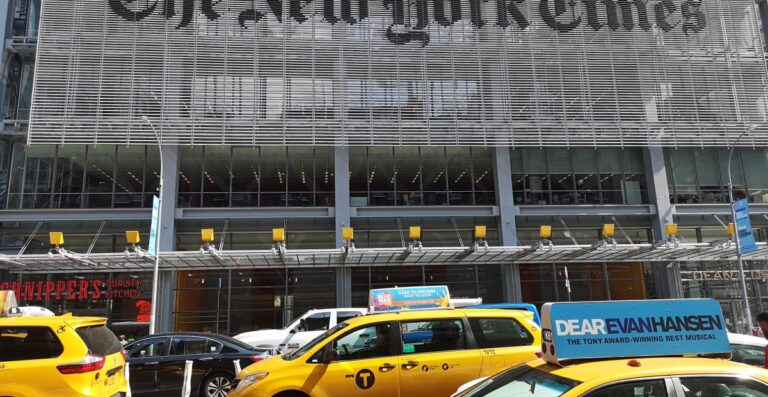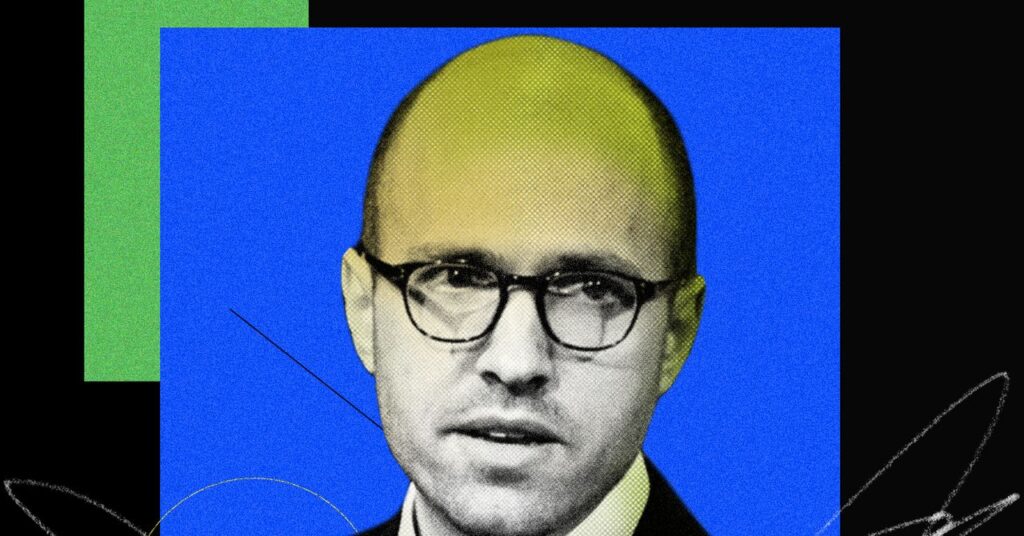
A.G. Sulzberger, the publisher of The New York Times, says a legal fight costing upwards of $20 million is simply the price of defending journalism. He refers to the case against OpenAI and Microsoft, where the paper alleges illegal use of reporting to train AI models. Motions are still being filed regarding discovery requests in that dispute.
The publisher faces more than just that lawsuit. The Trump administration is targeting press freedoms, recently attempting to subpoena Times journalists over coverage of a Qatar-donated jet used as Air Force One. At the same time, AI companies are reshaping how people find information online.
The business and the threat
The Times has arguably never been stronger as a business, having recently surpassed 13 million subscribers. Its newsroom is widely seen as one of the most stable and well-resourced in the industry. Sulzberger believes journalism still faces existential dilemmas. These range from an administration willing to target reporters to AI products that depend on the very reporting they risk undermining.
I sat down with Sulzberger in late July at WIRED’s offices. We discussed the lawsuit, how AI is transforming reporting inside the newsroom, and why he thinks journalists and media executives need to team up even while they continue to compete fiercely. You can read our entire conversation below, or listen to it here.
This interview has been edited for length and clarity.
The subpoenas
KATIE DRUMMOND: AG, welcome. Thank you for being here.
A.G. SULZBERGER: It’s great to be here. Thanks for inviting me.
I want to get into AI, and I will, but I would be a terrible journalist if I didn’t start with news that has recently affected your paper.
Specifically, I’m talking about the subpoenas that the Justice Department has issued to several Times journalists about their reporting on the Air Force One jet that was gifted to the Trump administration by Qatar. The Justice Department also issued subpoenas to third-party phone service providers to obtain text messages and phone calls between some of those journalists and their family members.
Thanks for starting there, because it’s obviously yet another disturbing escalation in the Trump administration’s efforts to punish and undermine the free press in this country.
First I should say, I have so much admiration for the reporters who have done this work and who are doing it under a different kind of pressure than we have seen in generations. I think that by any objective metric, this is the biggest effort to go after the press that we’ve seen from a White House probably since Woodrow Wilson, so in more than a century.
These reporters just continued, day after day, to put their heads down, right? Not to get baited by the folks booing them or the folks cheering them on, and just to do their work. That work includes reporting things that the President of the United States doesn’t want the public to know because it may be unflattering or embarrassing.
In this case, they reported a story, as you said, on the Qatari-donated jet, and it’s a little unclear: Was it donated to the Trump administration or to Trump himself? A donation worth hundreds of millions of dollars.
Right.
When that occurred, a lot of people had questions about whether it could ever be secure enough to hold the President of the United States and ferry him around the world. Sure enough, our reporters found out that on one of its inaugural trips, its first trip overseas to Turkey, there were concerns that it was insufficiently equipped to respond to a threat, that the president had to fly back on the original Air Force One. He denied this initially. But we exposed the truth, which has subsequently been confirmed.
Then it gets even stranger.
Every administration, we will publish something that the President of the United States doesn’t want the American people to know. Upsetting a president of either party is nothing new to us. What is new is that the administration defied many of its own standards and practices and explicit guidelines to very rapidly, in the course of a day or two, serve subpoenas on these reporters. They went straight to the homes of reporters, in an obvious attempt to intimidate them. As you said, we are now learning that they sought to get records, not just from the reporters themselves, but from members of their families. It’s a gross overreach.
How unusual is this?
Just to contextualize for listeners, how unusual is all of that? To have law enforcement at your home as a journalist, to be subpoenaed right out of the gate, to have those phone records called up by the Justice Department. How weird is that?
I mean, it’s extremely unusual. It’s very rare. The closest comparison that I have had at the Times in my tenure—I’ve been in this job roughly a decade—happened in the first Trump administration, when some of our reporter records were secretly seized by the Justice Department. In fact, that led to some reforms in the Justice Department aimed at curtailing that type of abuse.
On one side this is objectively very rare—there was similar overreach, you may remember, in a Washington Post case some months ago, where they actually raided the reporter’s home and seized her devices—[but] on the other [hand], this is building naturally off of what I think is a broader effort.
Peers capitulating?
You have also criticized other media outlets for capitulating to the administration, particularly around settling what you’ve called winnable cases to appease Trump. Do you still see your peers as largely capitulating?
I don’t think I ever said largely capitulating. I actually think that the industry has largely held its ground. And to be very clear, holding your ground does not mean an adversarial posture. It means being willing to publish the truth even when powerful people get angry at you for publishing it.
It means being willing to ask any question, no matter who it might upset. I actually think that the industry, by and large, has done very good work. WIRED’s done good work. The [Wall Street] Journal has done terrific work. The Associated Press. When the White House conditioned their continued access to the White House on them switching from calling a big body of water the Gulf of America instead of the Gulf of Mexico, they didn’t take that sitting down.
I remember this.
They sued, and I think rightly. They sued regardless of whether they win the case, right?
Right.
One of the things that I’m saying to peers in the industry regularly is that your rights only hold if you seek to enforce them.
You may not win every battle, but the surest way to lose your rights is to avert your eyes, drop your head, and try to avoid notice and just take what comes.
I do think that some news organizations have clearly felt the pressure from the administration and I think allowed that pressure to affect coverage.
My colleagues in Washington tell me that they’re regularly talking to reporters at other news organizations who are saying that they will no longer pursue certain stories, because they’re too worried that their editors will kill them because of fear of retaliation, and that their model is actually to wait for an institution like the Times to report the story, and then they’ll follow it, and they think that that’s a fight they can win. But breaking the story, being the one to first upset the White House, seems like a road too far.
That is the definition of chilling, right? That’s when the message that retaliation and punishment must be avoided gets down to the lowest levels of the newsroom. Now, my job as publisher of the Times is to make sure the opposite message is getting through, right?
After these great reporters were served these subpoenas, I called each of them and I said, “We have your back, and we’ll do whatever we need to support you.” One of the things that I was most encouraged to hear in those conversations, although not surprised, these are tough guys, was that they said, “Oh, we’re not gonna let go of this story.”
Good. As a journalist myself, and I run a publication that takes heat here and there, I worry sometimes about how we better translate that to the audience. So making sure the public understands how essential this work is, and exposing them to the work itself, especially in the context of AI. How do you think about that? What else can news organizations be doing to make sure that audiences are exposed to the work and see and understand the value of the work, and what it means when that work stops happening?
The value of the work
Look, I agree that we haven’t done good enough of a job as an industry on that. We’ve sort of taken it for granted. At the Times I think about just the outsize investment we are making on behalf of the public’s right to know. We put reporters on the ground in 150 countries last year. Every year, over 150 countries. Last year, we had reporters on the ground in Myanmar, in Sudan, in Lebanon, in Iran, in Venezuela, in Gaza, in Israel, in Russia.
In Ukraine alone, we had more than 70 journalists on the ground. And I am sure, although we’ve never done it, that if we dug in, it’s really hard to find the financial case for those expenditures.
Yes. I would agree with you there.
I am sure, though I’ve never done it, that when I look at all the investigative reporting we’ve done, and this is reporting that takes months, sometimes years of work to produce a single story, that it would be very hard to justify all those expenditures, right?
But I think the public sometimes doesn’t know how much institutions like ours think about the civic good. I really believe, as our Founding Fathers did, and across all their lines of division, the Founding Fathers agreed that a free people need a free press and that a country that aimed to steer itself needed access to independent and reliable information.
Jefferson famously said, given the choice between a government without a press or a press without the government, he wouldn’t hesitate to choose the press. And that’s because this work really does matter to society.
Journalism is quite simply very often how you know what you know. Shifting over to AI, it’s how AI knows what it knows.
AI in the newsroom
Yes, let’s get into that. In the context of AI in journalism, I break it into two buckets. For WIRED, there’s reporting on this technological moment in time, which is really important. And then there’s the separate question, although we cover that as well, of how AI will affect the practice of journalism and the consumption of journalism.
I mean, there are really difficult lines to walk here, and I’m curious about how you think about that at The Times.
I think my philosophy is you very rarely in life need to be first. There is a risk of jumping too quickly into an emerging technology. And there’s probably more risk in that than waiting, watching, learning, studying, experimenting quietly behind the scenes