Google’s Gemini is bringing AI to the World Cup, and it matters for every creator in the room
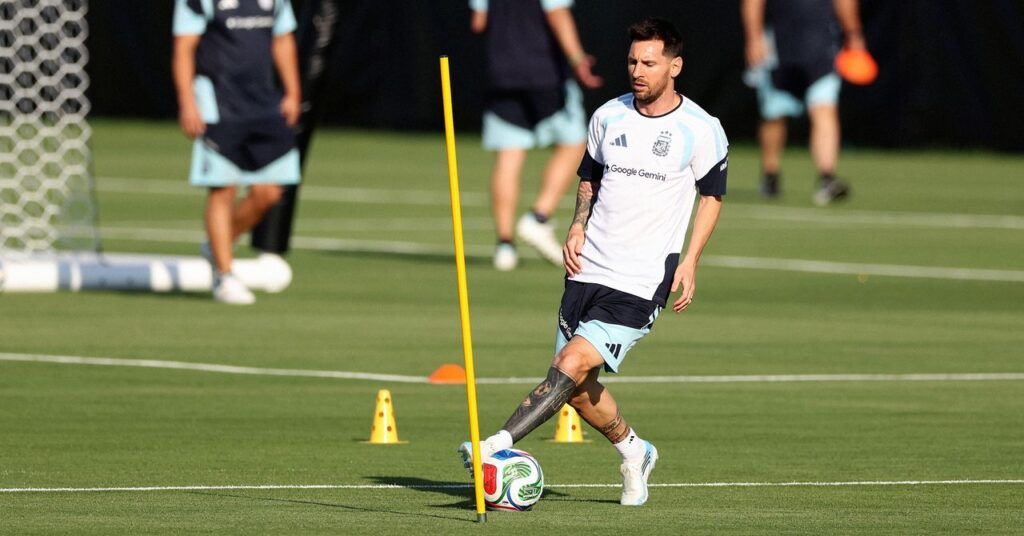
Artificial intelligence is finally stepping onto the football pitch, and the latest battleground is this year’s World Cup. Google has struck a deal with Argentina, the defending champions, to deploy its Gemini model across the tournament. This partnership positions Gemini as the primary global sponsor of the Albiceleste, meaning the AI’s branding will appear on training gear while the software itself crunches data on player form, tactics, and match statistics.
Flor Sabatini, a spokesperson for Google, framed the initiative as a practical lesson rather than a marketing stunt. “It’s not just about opening the door [to] AI,” she stated, “but about understanding its real limits while improving experience.” The goal is to see how the technology holds up under the intense scrutiny of professional football.
On the pitch, coaches and players will utilise these models to dissect opponent strategies and accelerate the translation of data into actionable tactics. While Google has not disclosed the specific internal tools Argentina will employ, the setup serves as a high-stakes stress test for Gemini in a live, high-pressure environment.
For fans and content creators, the application is far more visible. Google is reconfiguring its search engine to function as a dedicated fan companion. This means real-time answers to queries, automated analysis of key moments, and deep-dive statistics. Crucially, the tool will empower users to generate songs, memes, cartoons, and other visual assets to fuel social media engagement during and after every match.
Although the deal was finalised in March, Google delayed the announcement until May to maintain leverage in negotiations with other nations. While the spotlight falls heavily on Argentina-partly due to Lionel Messi’s star power-Google has simultaneously secured agreements with Brazil and France, two other World Cup winners.
Sabatini emphasised that the World Cup is the year’s most significant cultural moment. “The passion that the Argentine national team arouses transcends Argentines. It is a shared emotion,” she noted. For the Argentine Football Association (AFA), the partnership offers a bridge between deep-rooted tradition and the modern necessity of brand monetisation.
However, the risks are substantial. Exposing a generative AI model to millions of concurrent queries, diverse cultural nuances, and the volatile nature of football matches is a gamble. If Gemini hallucinates a statistic, invents a starting lineup, or produces an image with a distorted crest, the error will be broadcast globally.
Historically, World Cups have accelerated tech adoption, from colour television to GPS tracking in training sessions and the introduction of video-assistant referee (VAR) technology. Now, the focus shifts to artificial intelligence.
The scale of this integration is unprecedented. Never before has a technology firm plastered its AI branding on players’ jerseys while simultaneously embedding it into the smartphones of millions of spectators.
Key takeaways
- Google has become the main global sponsor of the Argentine national team, deploying Gemini to analyse performance and generate fan content.
- The partnership serves as a live stress test for the AI, exposing it to millions of real-time queries and high-stakes scrutiny.
- While the technology aims to enhance fan engagement, the risk of hallucination or error is magnified by the global audience.