For creators and artists, the new pricing landscape means access to high-end AI tools is becoming significantly cheaper, effectively dismantling the financial barrier that previously separated hobbyists from professionals.
Google slashes AI Plus prices in the US
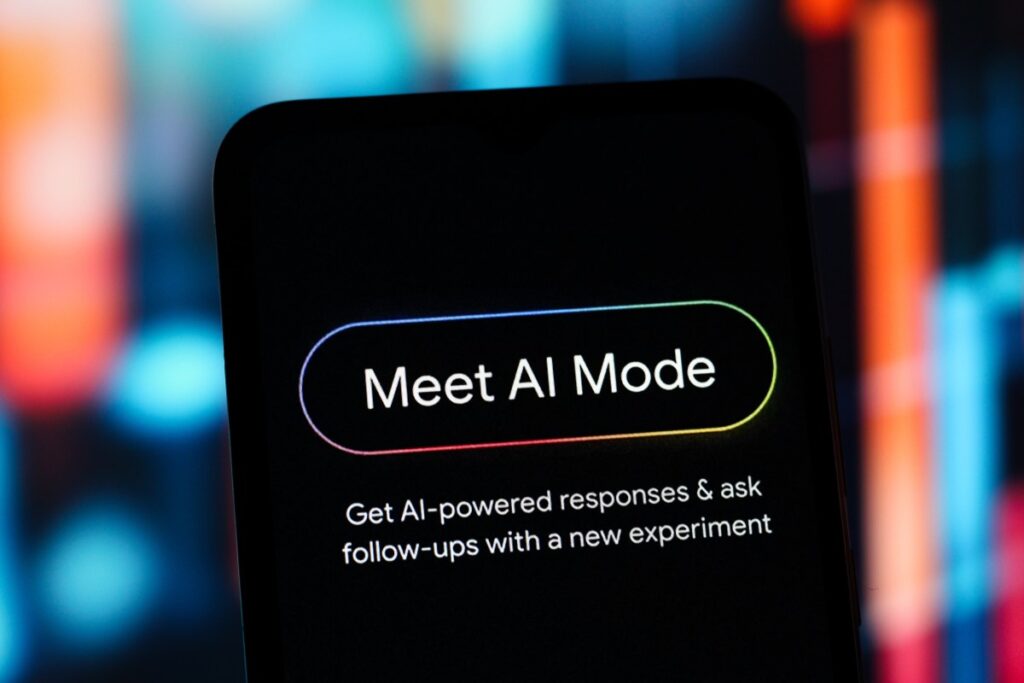
Google has officially lowered the monthly cost of its Google AI Plus subscription from $7.99 to $4.99. At the same time, the service is doubling the included storage allowance from 200 gigabytes to 400 gigabytes.
Vikas Kansal, product lead for Gemini AI subscriptions, confirmed on X that these storage updates will be deployed to users over the coming days.
When Google AI Plus launched in January, it positioned itself as the most affordable paid AI subscription available to individuals and students in the United States. Clearly, that price point was not low enough to secure a dominant market share.
The plan bundles a robust suite of capabilities, including video generation via Omni Flash, the creative studio Google Flow, and NotebookLM, the company’s AI research assistant. For power users requiring higher limits, Google still maintains the AI Pro and AI Ultra tiers at elevated price points.
Why this matters beyond product features
While this adjustment benefits consumers directly, it signals a broader shift in how AI infrastructure is valued and sold. Subscription pricing has not traditionally been a primary battleground for US-based AI providers, but that dynamic is shifting rapidly.
Chi-Hua Chien, co-founder and managing partner at consumer venture firm Goodwater Capital, views Monday’s announcement as a key moment in the commoditization of AI infrastructure. He argues that Google’s structural advantages-specifically its vertical integration, distribution networks, and bundling capabilities-are forces likely to erode margins for pure-play AI providers over time.
Chien draws a historical parallel to the early web era. “If you look at the web era, the infrastructure companies were Microsoft, Cisco, Oracle, Northern Telecom, Lucent, Akamai, Equinix,” he told TechCrunch. “A lot of those companies survived for a period of time but aren’t worth a lot today.”
According to Chien, the reason for this decline is that during major tech shifts-from the PC to the web to mobile-infrastructure players get commoditized aggressively because end users do not care about the specific hardware powering their experience. They simply want to move their data as cheaply as possible.
He predicts this exact same dynamic will soon affect today’s AI infrastructure layer, including the frontier model providers themselves.
“My prediction for a lot of these infrastructure companies, and when I say infrastructure, I mean an OpenAI or an Anthropic, or the backend components, energy, chips, hosting, there will be a period of time when these companies are valuable,” he said. “But over time, you will see them get increasingly commoditized.”
This valuation shift is already on the radar of investors. Both OpenAI and Anthropic have filed confidentially to go public, and their ability to command premium valuations may soon be tested by the intense price competition Chien describes.
The battle moves from emerging markets to the US
This competitive pressure has been building for nearly a year in markets like India, one of the world’s fastest-growing AI user bases. OpenAI struck first there in August of last year, launching ChatGPT Go at roughly $4.60 a month-a fraction of its standard $20 Plus plan. Google followed in December with its own sub-$5 AI Plus plan for Indian users.
Monday’s announcement suggests the logic that drove those emerging-market strategies-undercut rivals, bundle features, and capture users before competitors do-has now crossed over to the US market.
Anthropic stands out as the only major player that has not yet followed suit. Unlike OpenAI and Google, it has yet to introduce localized pricing for India or a budget tier anywhere. That strategic gap may become increasingly difficult to maintain as rivals continue to slash prices.
Key takeaways
- Google AI Plus is now $4.99 per month with 400GB storage, making advanced AI features accessible to a wider range of creators and students.
- Industry experts warn that infrastructure providers like OpenAI and Anthropic face a future of aggressive commoditization similar to the decline of early web-era hardware giants.
- While OpenAI and Google are racing to capture market share with low-cost tiers in the US, Anthropic remains the only major competitor without a budget option.