Anthropic has announced that its wet lab in the Bay Area discovered a new enzyme system with properties similar to CRISPR within 21 hours of operation.
The discovery
The company describes the finding as a previously unknown system hidden in the DNA of bacteriophages. These viruses infect and replicate inside bacteria. The researchers say the system can perform operations like cutting, copying, and pasting DNA.
CRISPR is a natural immune mechanism used by bacteria to fight off viruses. It has since become a widely used gene-editing technology.
How it was found
Anthropic CEO Dario Amodei acknowledged that the discovery builds on the work of others. He noted that a team from Stanford previously discovered a system in some ways similar to the one Claude found. Amodei wrote this on X.
However, the CEO emphasised that the discovery was found mostly, though not entirely, by Claude.
The lab was established this spring. The team said it actually took Claude 21 hours of concerted effort to find the result. The AI searched through data using about 950 agents that burned through 210 million tokens.
The safety context
This revelation comes after AI CEOs, including Amodei, publicly admitted that models have become so capable, and so potentially dangerous, that the industry must slow down and develop safety-testing procedures.
Earlier this month, a couple of Amodei’s employees publicly stated there is a risk AI could kill us all. Amodei himself has said one of the things he fears most is that AI could be used for bioterrorism. But he also believes AI will cure most diseases in 5-10 years.
Anthropic has clearly decided the rewards are worth the risks.
Human oversight
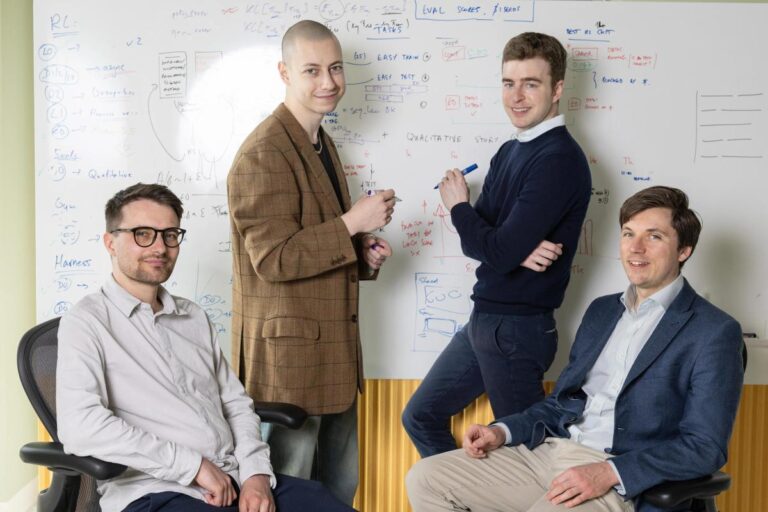
Perhaps the biggest reveal in this news is that the biology lab has not let Claude loose on the physical work. The experiments were done by humans.
“Our lab, located in the Bay Area, looks like a typical molecular biology lab. We do research that involves only the lower-levels of the biosafety risk level (BSL-1 and BSL-2) and we do not handle pathogens that can infect humans. All of the lab work is performed by human scientists.”
It is also true that AI-powered biological research is hardly unique to Anthropic. Researchers from Stanford just published a paper on the work they are doing with LLMs and CRISPR. Researchers at UC San Francisco used AI to design enzymes from scratch. Google launched its first AI-powered biology research tool, AlphaFold, back in 2020.
Future automation
Amodei has not ruled out a fully automated biology lab in the future. “Eventually it may even be possible for Claude itself to safely perform the experiments by autonomously controlling lab equipment, with appropriate safeguards in place, but we aren’t doing that today,” he said.