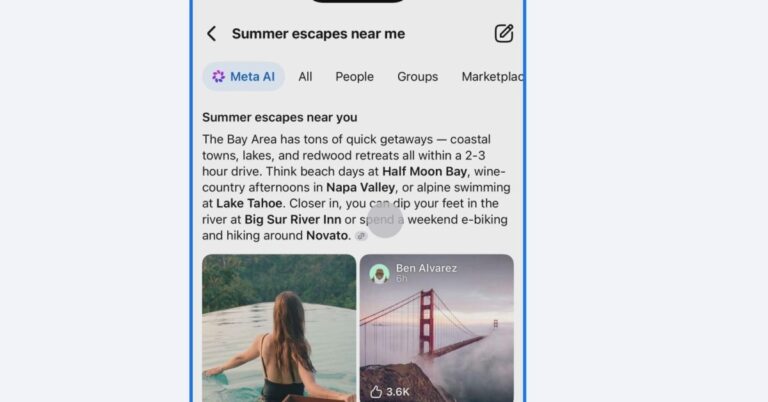
Meta has introduced a new AI Mode within its search functionality, specifically targeting users of the Facebook app. This feature allows the system to draw upon public posts from Facebook Groups and Instagram Reels to answer complex queries, distinguishing it from competitors like Google that rely primarily on traditional web indexing. The tool aims to assist users with planning by synthesising local information found in community discussions, such as recommendations for weekend activities or neighbourhood events. While the concept of leveraging social data for search results is theoretically sound, early hands-on testing reveals significant reliability issues. The current iteration struggles to filter out outdated or irrelevant content, often failing to provide accurate answers to simple questions about scheduling or local events.
This development matters because it shifts the paradigm of AI search from curated data to unverified social content, introducing unique risks regarding accuracy and privacy. Unlike standard search engines that index published articles, this model relies on user-generated content which may be incorrect, temporary, or contextually inappropriate for a general query. If the system cannot reliably distinguish between helpful community advice and noise, it risks providing misleading information that could affect user decisions. Furthermore, this approach raises questions about how personal data shared in private groups might be utilised for public-facing search results without explicit consent, potentially eroding trust in the platform’s data handling practices.
- Meta’s new AI Mode uses public posts from Facebook and Instagram to answer search queries, differing from Google’s reliance on the open web.
- Early testing indicates the feature currently lacks the reliability needed to accurately answer questions about scheduling or local events.
- The shift to social data introduces risks of misinformation and potential privacy concerns regarding how user-generated content is processed.